Defining the Photoelectric Sensor: Beyond a Simple "Point"
A common misconception in industrial automation is viewing a photoelectric sensor as merely a "point" of detection. While its effective sensing area can be conceptually simplified to a point for basic understanding, this characterization is fundamentally incomplete and can lead to oversights in system design. A photoelectric sensor is a sophisticated optoelectronic device that utilizes a light transmitter (typically an LED or laser diode) and a receiver (a phototransistor or photodiode) to detect the presence, absence, or distance of an object. The interaction between the emitted light beam and the target defines a sensing "field" or "zone," which is far more complex than a dimensionless point. This zone is shaped by the optics, the beam's divergence, the sensor's design (through-beam, retro-reflective, or diffuse), and environmental factors.
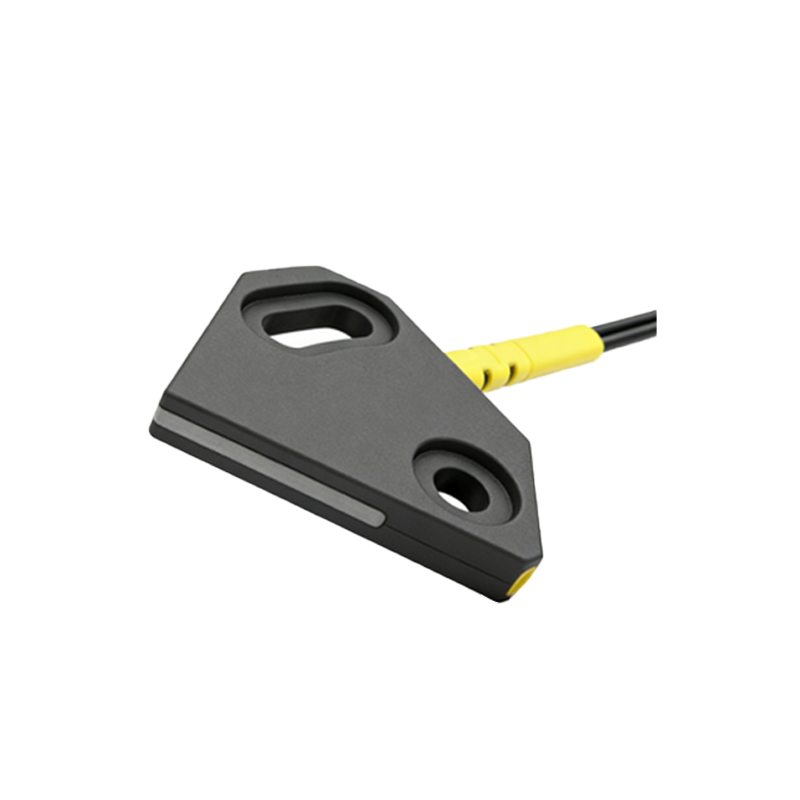
The Anatomy of the Sensing Beam and Spot Size
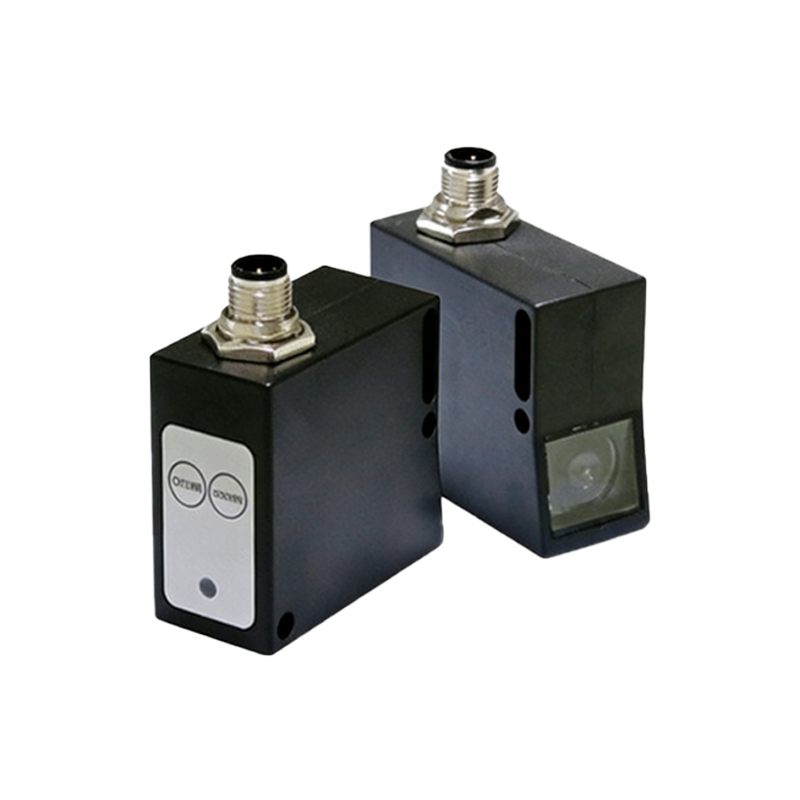
The core of the misunderstanding lies in the beam's physical properties. The light emitted from the transmitter is not an infinitely thin line. It has a specific diameter and diverges over distance. The "spot size" – the area where the beam intersects an object – increases with distance from the sensor. For a precise, focused sensor like a laser type, this spot can be very small (e.g., 0.1mm to 1mm), approximating a point at a specific working range. However, for standard LED-based diffuse sensors, the spot size is larger and less defined. Therefore, the sensor does not detect at an infinitesimal point but rather responds to an object interrupting or reflecting light within this entire spot or beam path. The receiver integrates light over its sensitive surface area, further negating the idea of a singular detection point.
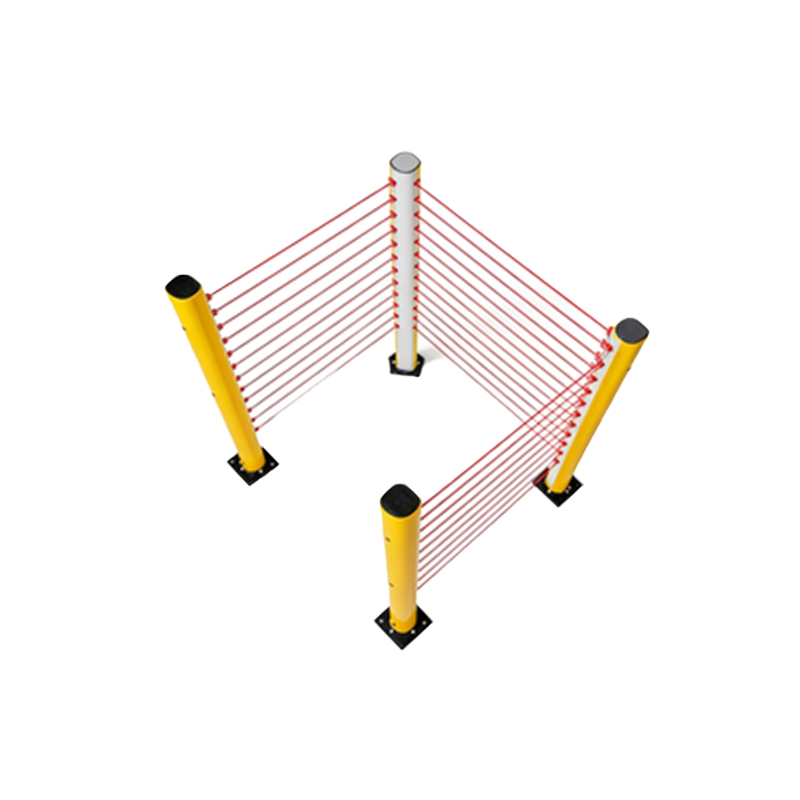
Sensor Modes and Their Spatial Detection Characteristics
Different operating modes illustrate the spatial nature of photoelectric sensing. In a Through-Beam (or opposed) mode, detection occurs when an object breaks the beam between separate transmitter and receiver units. The effective sensing "point" is anywhere along the beam's axis, creating a "line" of detection. A Retro-Reflective mode uses a single housing and a reflector; detection happens when the beam bouncing back from the reflector is blocked. Here, the critical zone is the conical volume between the sensor and the reflector. Most telling is the Diffuse (or proximity) mode, where the sensor detects light reflected directly from the target. Its sensing range and area are highly dependent on the target's size, color, and surface texture, defining a three-dimensional detection volume in front of the sensor, not a point.
The Critical Role of Background Suppression and Focus
Advanced features like Background Suppression (BGS) or Fixed Field sensors explicitly manage the detection zone's boundaries. These sensors use triangulation or specialized optics to detect objects only within a precise, defined distance range, effectively creating a sharp "cut-off" plane. Objects beyond this plane are ignored. This technology creates a very well-defined detection "window" in space, which, while more precise, is still a volumetric zone (albeit thin) rather than a mathematical point. It highlights the engineering effort to control and define the sensing field for reliable operation, moving further from the simplistic point concept.
Practical Implications in System Design and Selection
Viewing a sensor as a "point" can result in application errors. For instance, when detecting small parts, the beam's spot size must be smaller than the target's feature to ensure reliable interruption. In high-speed counting, the sensor's response time and the beam's coverage area determine maximum throughput. For edge detection or precise positioning, the gradient of the sensor's output as an object enters the beam (the "switching characteristic") is crucial, which depends on the beam's profile. Engineers must consider the sensor's data sheet parameters like beam diameter, spot diagram, sensing range, and response time—all describing a spatial and temporal behavior—not just a point location.
Conclusion: A Precision Tool with Defined Spatial Properties
In conclusion, a photoelectric sensor is not simply a point. It is a device with carefully engineered optical characteristics that define a one-dimensional (beam), two-dimensional (spot), or three-dimensional (detection volume) sensing field. Describing it as a "point" is a useful abstraction for initial conceptualization but is technically inaccurate for professional application. Successful implementation in packaging, material handling, assembly, and safety systems requires an understanding of its true spatial properties—the shape, size, and behavior of its light beam and detection zone. Recognizing this complexity is key to selecting the right sensor and ensuring robust, reliable performance in any automated system.