Introduction to Proximity Sensor Wiring
Proximity sensors are essential components in industrial automation, detecting the presence or absence of objects without physical contact. Among various configurations, the 3-wire black normally closed (NC) proximity sensor is a common type used in control systems. This sensor typically operates on DC voltage, with wires color-coded for easy identification: black often represents the signal output, while brown and blue denote positive and negative power connections, respectively. The "normally closed" designation means that the output circuit is closed (conducting) when no target is detected, and it opens (stops conducting) when a target is within sensing range. This behavior is crucial for safety and logic design in applications like machine guarding or emergency stop circuits, where a broken signal indicates a fault or triggered condition. Understanding this wiring scheme helps engineers integrate sensors seamlessly into electrical panels, ensuring reliable operation and compliance with industry standards such as IEC 60947-5-2.
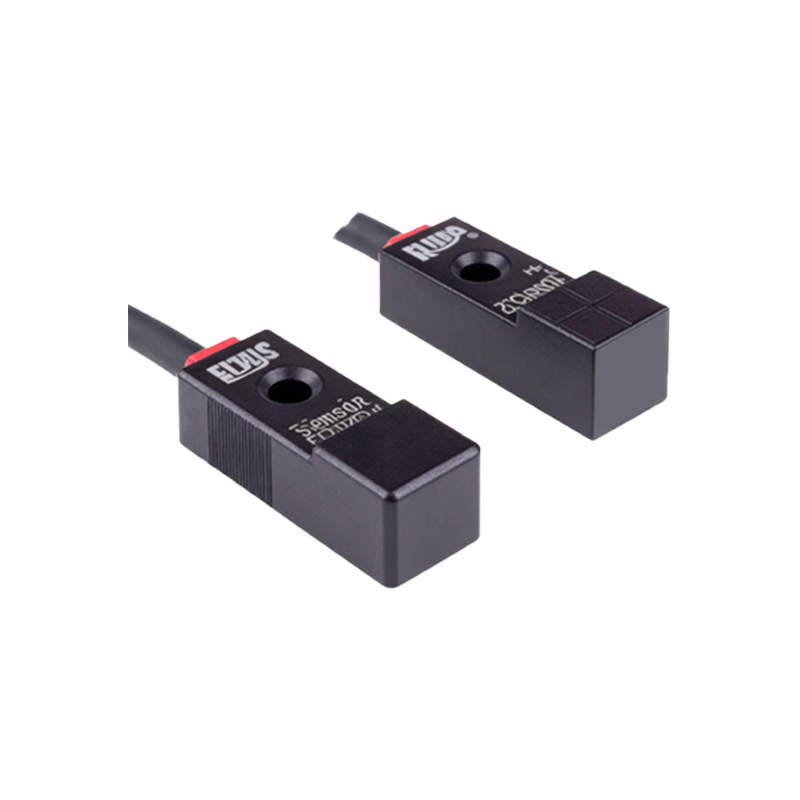
Working Principle of Normally Closed Configuration
A 3-wire black normally closed proximity sensor functions based on electromagnetic or capacitive sensing principles, depending on whether it is inductive, capacitive, or photoelectric. In the NC setup, the output transistor (typically PNP or NPN) is in a conducting state when idle, allowing current to flow through the black wire to the load. When a target object enters the sensing field, the internal circuitry switches the transistor off, interrupting the current. This design provides a fail-safe feature, as any wire break or power loss results in an open circuit, signaling an alarm or shutdown. For instance, in conveyor systems, an NC sensor might monitor material flow; if blockage occurs, the sensor opens, triggering a stop command to prevent damage. The black wire's role is critical here—it carries the switched output to controllers like PLCs (Programmable Logic Controllers), where logic programs interpret the signal change for decision-making. Engineers must verify voltage ratings (commonly 10-30V DC) and load current limits to avoid sensor damage.
Installation and Wiring Guidelines
Proper installation of a 3-wire black NC proximity sensor ensures longevity and accuracy. Start by connecting the brown wire to the positive DC supply and the blue wire to the negative ground. The black wire links to the input module of a control device, with a pull-up or pull-down resistor if required by the system. Mount the sensor securely, considering sensing distance and environmental factors like metal interference or temperature extremes. For example, in automotive assembly lines, sensors detect parts on robotic arms; misalignment can cause false triggers. Testing involves using a multimeter to check continuity: in the absence of a target, the black wire should show low resistance to ground (closed), and high resistance when a target is present (open). Label wires clearly in panels to aid maintenance, and follow manufacturer datasheets for specifics like IP ratings for dust and water resistance. Regular calibration checks help maintain performance, especially in high-vibration settings like packaging machinery.
Applications in Industrial Automation
The 3-wire black normally closed proximity sensor finds widespread use across industries due to its reliability and safety benefits. In manufacturing, it serves as a limit switch in CNC machines, where an open signal halts operations if a tool exceeds boundaries. In material handling, NC sensors monitor bin levels, with an open output indicating fullness to prevent overflow. The black wire's NC configuration is also favored in emergency stop loops, where a series of sensors create a chain; if any sensor opens, the entire system powers down. For instance, in printing presses, sensors detect paper jams and immediately cut power via the NC circuit. Additionally, these sensors integrate with PLCs for process control, such as in bottling plants where they verify cap placement. Choosing between PNP (sourcing) and NPN (sinking) output types depends on the control system's compatibility—PNP is common in Europe, while NPN prevails in Asia. Engineers should assess response time and switching frequency for dynamic applications like high-speed sorting.
Troubleshooting Common Issues
Despite their robustness, 3-wire black NC proximity sensors can encounter problems that affect performance. Frequent issues include false triggering due to electrical noise, which can be mitigated by shielding cables and using ferrite cores. If the sensor fails to switch, check power supply stability and wiring connections—a loose black wire may cause intermittent signals. In cases where the output remains closed despite target presence, inspect for sensor damage or contamination from oils and debris. For example, in food processing, residue buildup can reduce sensing range. Use diagnostic tools like oscilloscopes to analyze signal integrity on the black wire. Additionally, ensure the load (e