Introduction to GUC100 Proximity Sensor
The GUC100 proximity sensor represents a significant advancement in non-contact detection technology for industrial environments. Engineered for reliability and precision, this sensor is designed to detect the presence or absence of metallic objects without any physical contact. Its robust construction allows it to perform consistently in harsh conditions, including areas with high levels of dust, moisture, and temperature fluctuations. The core principle behind the GUC100 involves generating an electromagnetic field; when a metallic target enters this field, it induces eddy currents that cause a change in the sensor's oscillation amplitude. This change is then processed by the internal circuitry to trigger a switching signal. This mechanism ensures high-speed, wear-free operation, making it indispensable for applications requiring frequent and rapid detection cycles. Industries ranging from automotive manufacturing to material handling have integrated the GUC100 to enhance automation efficiency, reduce maintenance costs, and improve overall system safety. Its versatility and durability set a benchmark in the realm of inductive proximity sensors.
Key Technical Specifications and Features
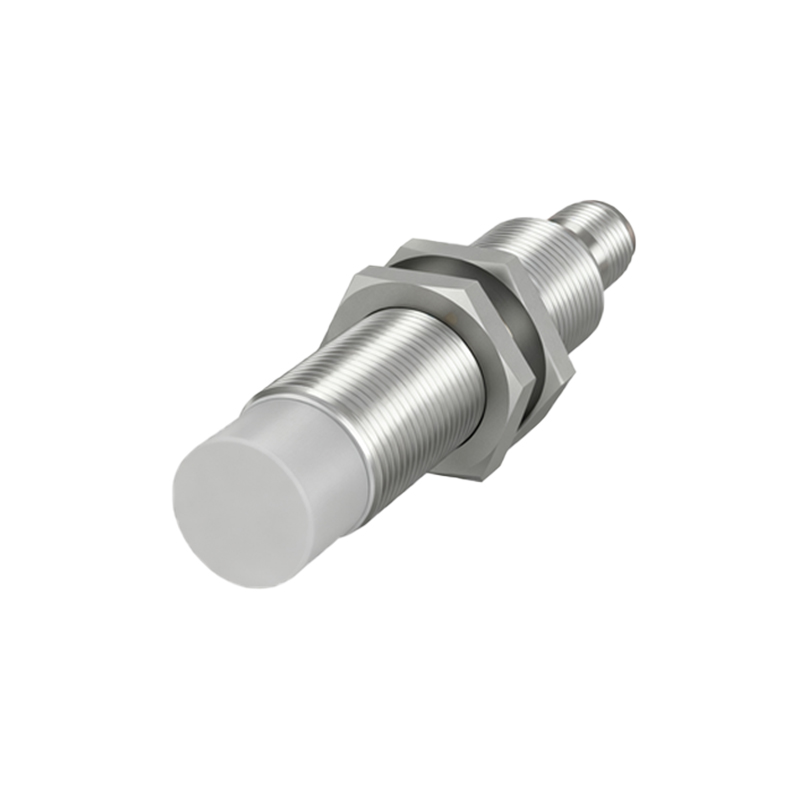
Delving into the technical specifications, the GUC100 boasts an impressive set of features tailored for demanding industrial applications. Typically, it offers a sensing range from 2mm to 15mm, depending on the specific model and target material. The sensor operates on a standard DC voltage supply, commonly 10-30V DC, ensuring compatibility with most industrial control systems. A critical feature is its short-circuit and reverse polarity protection, which safeguards both the sensor and the connected equipment from electrical faults. The housing is usually constructed from nickel-plated brass or stainless steel, providing excellent resistance to corrosion and mechanical impact. Furthermore, the GUC100 is characterized by its high switching frequency, often up to 2 kHz, enabling it to detect objects in very high-speed production lines. The LED status indicator is a practical addition, offering visual confirmation of the sensor's operation and power status, which simplifies installation and troubleshooting processes. These specifications collectively ensure that the GUC100 delivers consistent, accurate performance with minimal downtime.
Installation and Wiring Best Practices
Proper installation is paramount to harnessing the full potential of the GUC100 proximity sensor. First, ensure the mounting location is free from excessive vibration and is not in close proximity to other strong electromagnetic sources, such as large motors or transformers, to avoid interference. The sensor should be mounted securely, with the sensing face parallel to the target object's approach direction for optimal detection. Regarding wiring, it is crucial to follow the manufacturer's diagram precisely. Typically, the GUC100 has three wires: brown for positive supply, blue for negative or common, and black for the output signal. Using shielded cables is highly recommended, especially in environments with significant electrical noise, to prevent false triggering. The cable gland must be properly tightened to maintain the sensor's IP rating, usually IP67, ensuring protection against dust and temporary immersion. Always perform a functional test after installation by bringing a target metal object within the specified sensing range and verifying the output signal with a multimeter or the control system's input module.
Common Applications in Industrial Automation
The GUC100 finds extensive application across various facets of industrial automation due to its robustness and reliability. In assembly lines, it is frequently used for part presence verification, ensuring that components like bolts, nuts, or metal brackets are correctly positioned before a robotic arm performs a task. Within packaging machinery, the sensor monitors the position of metallic seals or checks if a product is present on a conveyor before sealing or labeling. CNC machine tools utilize the GUC100 for tool position detection and workpiece counting, contributing to precision machining and inventory management. In the automotive sector, it plays a critical role in robotic welding stations by confirming the position of car body panels. Additionally, in material handling systems, the sensor detects the position of metal pallets or trolleys, enabling automated routing and sorting. These diverse applications underscore the sensor's role as a fundamental component in creating efficient, automated, and error-resistant production environments.
Troubleshooting and Maintenance Guidelines
Even with its high reliability, occasional issues may arise with the GUC100 sensor. Common problems include failure to detect targets, intermittent operation, or constant output signal. Initial troubleshooting should always involve checking the power supply voltage with a multimeter to ensure it is within the specified range. Verify the wiring connections for any loose or corroded terminals. If the sensor fails to detect, confirm that the target material is ferrous metal (like iron or steel) and that it is within the rated sensing distance. For non-detection issues, also check for the accumulation of metallic debris on the sensing face, which can dampen the electromagnetic field. Regular maintenance involves periodic visual inspections for physical damage and cleaning the sensing face