In the high-stakes environment of industrial manufacturing, punch press machines stand as pillars of productivity, capable of shaping metal with immense force and speed. The seamless and safe operation of these powerful machines hinges on a critical, yet often overlooked component: the proximity switch sensor. Far from being a simple accessory, these sensors are the silent guardians and precision conductors of the modern press shop, fundamentally transforming how these machines interact with their environment and operators.
At its core, a proximity switch sensor for a punch press is a non-contact electronic device designed to detect the presence or absence of a metallic target—typically the press slide or ram—within a specific sensing range. Unlike mechanical limit switches that require physical contact, proximity sensors operate on electromagnetic principles. The most common type used is the inductive proximity sensor, which generates an oscillating electromagnetic field. When a metal target enters this field, it induces eddy currents within the target, causing a change in the sensor's oscillation amplitude. This change is detected by the sensor's circuitry, which then triggers a solid-state output signal. This fundamental principle of non-contact detection is the key to its numerous advantages.
The primary and most vital role of these sensors is enhancing operational safety. Punch presses pose significant hazards, including crushing, shearing, and impact injuries. Proximity sensors are integral to safety interlock systems. They can be strategically installed to monitor the position of guards, doors, or the press ram itself. If a sensor detects that a safety gate is open or that an object is in the danger zone during the machine cycle, it can send an immediate signal to the press control system to halt operation, preventing a potentially catastrophic accident. This failsafe functionality is a cornerstone of modern machine safety standards like ISO 13849.
Beyond safety, proximity sensors are indispensable for achieving unparalleled precision and consistency in production. They provide exact positional feedback for the press ram. By installing sensors at specific points in the ram's stroke—such as Top Dead Center (TDC) and Bottom Dead Center (BDC)—operators can achieve precise control over the punching action. This allows for optimal timing of auxiliary functions like material feeding, part ejection, and lubrication cycles. The result is a dramatic reduction in cycle time, minimized material waste, and consistent part quality. For progressive die operations, where a strip of metal moves through multiple stations, the precise signaling from these sensors ensures each hit occurs at the exact right moment, preventing mis-hits and tool damage.
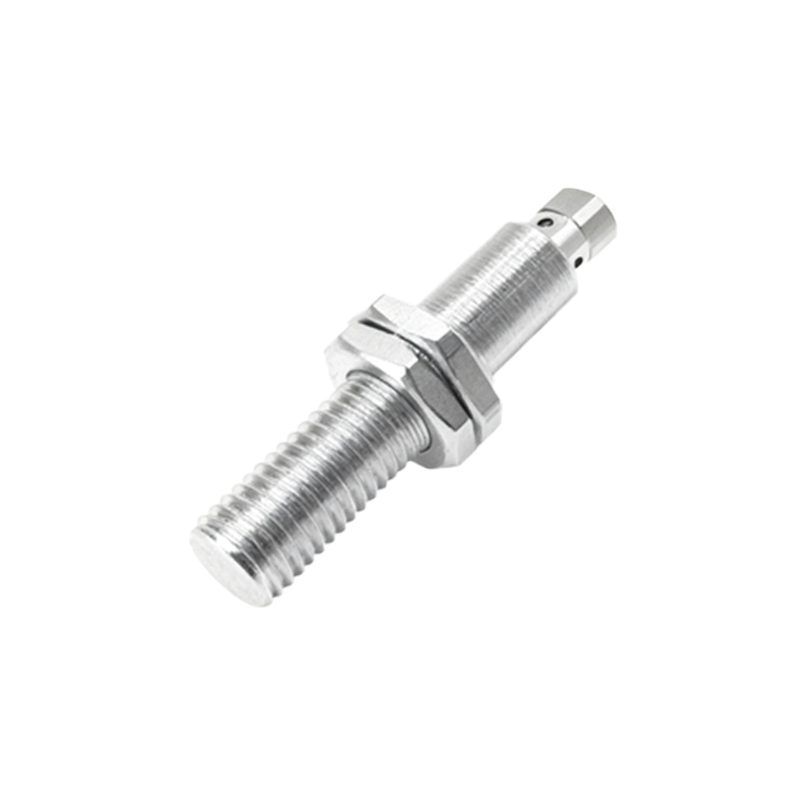
Furthermore, the durability and reliability of inductive proximity sensors make them ideally suited for the harsh conditions of a stamping floor. Sealed in robust housings (often made of nickel-plated brass or stainless steel), they are resistant to oil, coolant, metal chips, and vibration—common byproducts of punch press operation. Their solid-state design, with no moving parts to wear out, translates to a long service life and minimal maintenance, reducing machine downtime and total cost of ownership.
When selecting a proximity sensor for a punch press, several technical specifications demand careful consideration. The sensing distance, or "sn," must be chosen to reliably detect the target without being triggered by unintended objects. The housing style (barrel, rectangular, or ring-shaped) must fit the mounting constraints. The output type (typically NPN or PNP) must be compatible with the press's programmable logic controller (PLC). Environmental factors like temperature range and ingress protection (IP) rating are also critical to ensure reliable performance amidst splashing fluids and airborne contaminants.
Installation and alignment are equally important. A sensor must be mounted securely to prevent movement from vibration. The sensing face must be positioned parallel to the target surface at the correct distance to ensure consistent detection. Regular functional checks should be part of a preventive maintenance routine to verify the sensor's response and output signal integrity.
In conclusion, proximity switch sensors are not mere components; they are enabling technologies that elevate punch press operation from a brute-force process to a refined, intelligent, and safe manufacturing activity. By providing reliable, non-contact detection, they form the essential sensory link between the mechanical power of the press and the electronic intelligence of its control system. Their contribution to safeguarding personnel, ensuring product quality, and maximizing equipment uptime makes them a small investment with an outsized return, proving that in the world of heavy metal forming, precision and safety are indeed measured in millimeters and milliseconds.