Introduction to Micro Photoelectric Sensors
In the ever-evolving landscape of industrial automation, the demand for smaller, smarter, and more efficient components is relentless. Micro photoelectric sensors have emerged as a pivotal technology in this miniaturization trend. These sensors, characterized by their extremely compact housings—often measuring just a few millimeters in width and height—leverage the principles of light emission and reception to detect the presence, absence, or distance of objects with remarkable accuracy. Unlike their larger predecessors, micro sensors are designed to fit into the tightest of spaces on modern high-speed machinery, robotic arms, and intricate assembly lines, enabling new levels of design flexibility and functional density without compromising on performance.
Core Operating Principles and Technologies
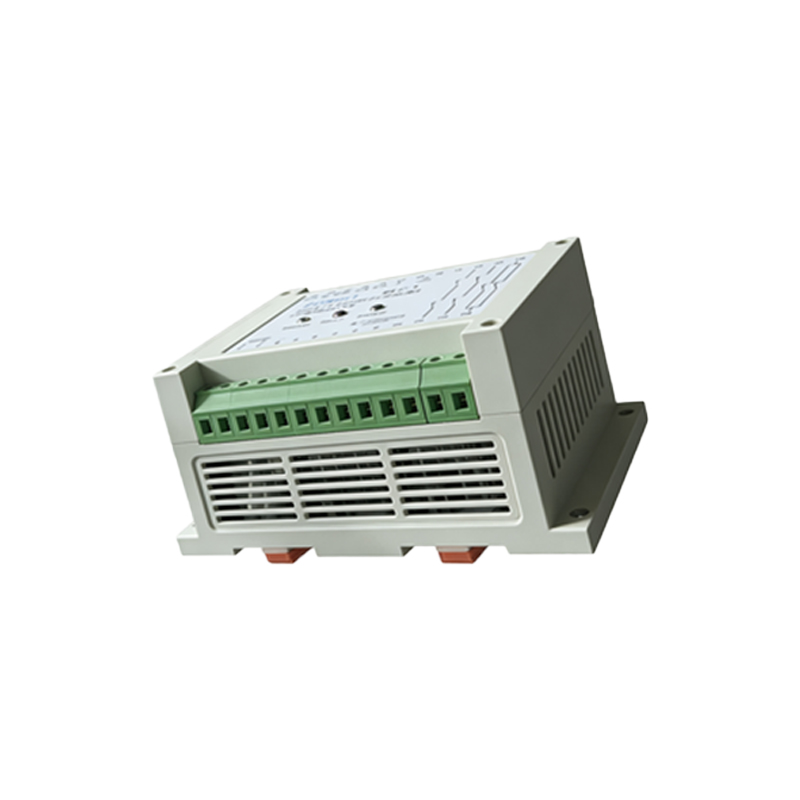
At their heart, micro photoelectric sensors operate on the same fundamental principle as standard photoelectric sensors: a light emitter, typically an LED (often infrared, red, or laser), projects a beam that is either reflected off a target object or interrupted by it. A phototransistor or photodiode receiver then detects changes in the received light intensity. The key technological advancements enabling miniaturization include the use of Surface-Mount Device (SMD) components, advanced ASICs (Application-Specific Integrated Circuits), and highly efficient optical lenses molded directly into the tiny housing. Common sensing modes are ingeniously adapted for micro versions: through-beam (requiring separate emitter and receiver), retro-reflective (using a reflector), and diffuse-reflective (detecting light bounced directly from the object). The diffuse-reflective type is particularly popular in micro formats due to its single-unit simplicity.
Key Advantages in Modern Applications
The primary advantage of micro photoelectric sensors is their unparalleled space-saving design. This allows engineers to integrate detection points directly into moving parts, such as gripper jaws or end-effectors, or to monitor very small components like microchips, medical device parts, or fine connectors. Their low mass also minimizes inertia, making them ideal for high-speed, high-acceleration robotic applications. Furthermore, modern micro sensors boast impressive technical specifications, including high switching frequencies, precise sensing ranges (from a few millimeters to several hundred millimeters even in tiny packages), and excellent resistance to ambient light interference. Many models feature built-in amplifiers and offer both digital (PNP/NPN) and analog output options, providing direct compatibility with PLCs and microcontrollers.
Challenges and Design Considerations
Despite their benefits, designing with micro photoelectric sensors presents unique challenges. Their extremely small sensing area can make precise alignment critical, especially for through-beam types. The minimal size also limits the available power for the LED, which can affect sensing distance compared to larger models, necessitating careful selection based on the specific application's range requirements. Environmental factors like dust, condensation, or splashing oils pose a greater threat due to the proximity of the optical window to potential contaminants. Therefore, selecting models with appropriate IP ratings (e.g., IP67) and robust housing materials like PBT or metal is crucial for reliability in harsh industrial environments. Electrical noise immunity in densely packed control cabinets is another critical design factor.
Industry Applications Driving Adoption
The adoption of micro photoelectric sensors is widespread across precision-driven industries. In electronics manufacturing, they are indispensable for verifying the presence of tiny surface-mount components on PCBs, detecting lead tape on reels, and ensuring proper insertion of connectors. The semiconductor industry relies on them for wafer handling and positioning within fab equipment. In pharmaceutical and medical device assembly, they ensure precise counting and positioning of pills, vials, and surgical instrument components. Packaging machinery utilizes them to detect transparent films, control web tension, and verify labels on small products. Collaborative robots (cobots) extensively use these sensors for safe, close-proximity object detection and gripper feedback.
Future Trends and Innovations
The future of micro photoelectric sensors is aligned with the broader trends of Industry 4.0 and the Industrial Internet of Things (IIoT). Next-generation sensors are incorporating IO-Link communication, a point-to-point serial protocol that enables the transmission of detailed parameter data, process values, and diagnostic information (like lens contamination warnings) beyond a simple on/off signal. This facilitates predictive maintenance and easier device replacement. Further miniaturization continues, pushing the limits of physics. Additionally, the integration of multi-functional sensing—combining photoelectric sensing with distance measurement (using time-of-flight principles) or color recognition in a single micro package—is an active area of development, promising even greater capability per cubic millimeter.
Conclusion: The Integral Role of Miniaturization
Micro photoelectric sensors represent a significant engineering achievement, packing robust sensing capabilities into footprints that were once unimaginable. They are not merely smaller versions of existing technology but enablers of entirely new automation architectures and product designs. By providing reliable, precise detection in confined spaces, they empower manufacturers to build more compact, faster, and more intelligent machines. As automation continues to advance towards greater precision and flexibility, the role of the micro photoelectric sensor will only become more central, solidifying its status as a cornerstone component in the toolkit of modern industrial automation.