Introduction to M18 Inductive Proximity Sensors
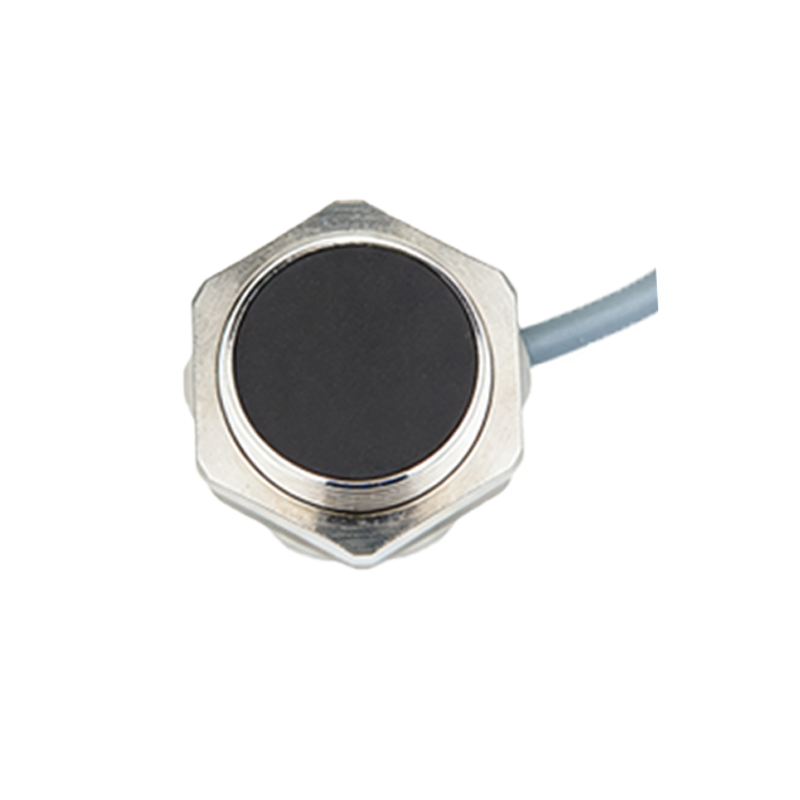
M18 inductive proximity sensors are fundamental components in modern industrial automation, renowned for their reliability and precision in non-contact detection. Characterized by an 18mm diameter cylindrical housing, these sensors are engineered to detect the presence of metallic objects without physical contact. Operating on the principle of electromagnetic induction, they generate an oscillating electromagnetic field from a coil within the sensing face. When a conductive metal target enters this field, eddy currents are induced, causing a change in the oscillation amplitude. This change is detected by the sensor's internal circuitry, which subsequently triggers a solid-state output switch. The M18 form factor offers an optimal balance between sensing range, physical robustness, and installation flexibility, making it a ubiquitous choice across diverse sectors including automotive manufacturing, material handling, packaging, and machine tooling. Their sealed construction, typically to IP67 or higher standards, ensures dependable operation in harsh environments with exposure to dust, coolants, and oils.
Key Technical Specifications and Variants
Understanding the technical parameters is crucial for selecting the correct M18 sensor for an application. The nominal sensing distance, or Sn, is a primary specification. For a standard M18 sensor, this typically ranges from 5mm to 8mm for mild steel targets, though specialized models may offer longer ranges. It is critical to note that the effective sensing distance can vary based on the target material's properties; a correction factor must be applied for metals like stainless steel, aluminum, or copper. Another vital specification is the switching frequency, which denotes how many detection cycles per second the sensor can perform. High-speed models can exceed 2 kHz, enabling reliable detection on fast-moving production lines. Output configurations are predominantly PNP (sourcing) or NPN (sinking) transistor outputs, with both normally-open (NO) and normally-closed (NC) logic options. Furthermore, variants include shielded (flush-mountable) and unshielded (non-flush) designs. Shielded sensors can be embedded in metal without affecting performance, while unshielded types offer a slightly longer sensing range but require clearance from surrounding metal.
Installation and Wiring Best Practices
Proper installation is paramount to achieving optimal performance and longevity. When mounting, ensure the sensor is securely fastened using the appropriate locknut, avoiding over-torquing which can damage the housing. Maintain the recommended lateral and axial clearance from other metal objects, especially for unshielded models, to prevent false triggering. For wiring, always refer to the manufacturer's datasheet. A standard three-wire DC sensor requires connection to a power supply (typically 10-30V DC), a load (such as a PLC input or relay), and ground. Ensure correct polarity for PNP versus NPN types. For noise immunity in electrically noisy environments, use shielded cable and ground the shield at the controller end only. It is also advisable to implement protective measures like surge suppressors when switching inductive loads or in areas prone to voltage spikes. Always perform a functional test with the intended target material after installation to verify the actual sensing window meets the application requirements.
Application Scenarios and Problem-Solving
The versatility of M18 inductive sensors is demonstrated in countless applications. Common uses include detecting the position of a metal piston in a pneumatic cylinder, counting metal parts on a conveyor, verifying the presence of a nut on an assembly, or serving as a limit switch on automated machinery. A frequent challenge is detecting small or thin targets, such as washers or foil. In such cases, selecting a sensor with a higher switching frequency and a reduced Sn can improve sensitivity. Another common issue is sensing different metals. If an application requires detecting both steel and aluminum parts with one sensor, it must be tuned for the less responsive material (aluminum), which will reduce the effective range for steel. For environments with heavy metallic dust or chips, regular cleaning of the sensor face is necessary to prevent accumulation that could cause a false "target present" state. Understanding these nuances allows engineers to deploy these sensors effectively for precise and reliable machine control.
Advancements and Future Trends
The technology behind M18 inductive proximity sensors continues to evolve. Modern iterations incorporate advanced features like IO-Link communication, transforming them from simple binary switches into intelligent data points on the Industrial Internet of Things (IIoT) network. IO-Link enables parameter setting, condition monitoring, and diagnostic data reporting (e.g., operating temperature, signal strength) directly to the control system. This facilitates predictive maintenance, reducing unplanned downtime. Other advancements include the development of weld-field immune models designed to function reliably in the extreme electromagnetic interference generated by resistance welding equipment. Furthermore, manufacturers are continually improving housing materials