Introduction to Photoelectric Sensing Technology
Photoelectric sensors are fundamental components in modern industrial automation, offering non-contact detection of objects based on the presence or absence of light. These devices operate by emitting a beam of light, typically from an LED or laser diode, and detecting changes in the received light intensity caused by the presence, absence, or specific characteristics of a target object. The core principle relies on the interaction between light and matter, providing a versatile and reliable solution for countless applications. Their ability to detect objects regardless of material composition—be it metal, plastic, glass, or liquid—makes them superior to other proximity sensing technologies in many scenarios. From simple presence detection to complex color recognition and distance measurement, photoelectric sensors form the backbone of efficient and precise automated systems.
Core Operating Principles and Sensing Modes
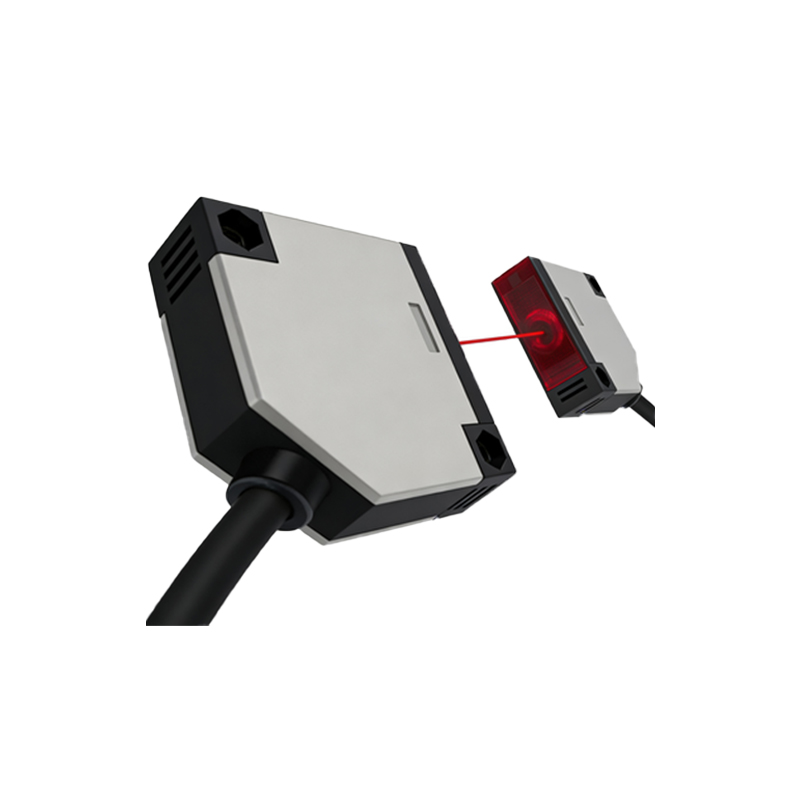
The functionality of a standard photoelectric sensor is defined by its operating mode, which determines how the emitted light interacts with the target. The three primary modes are through-beam, retro-reflective, and diffuse reflective. Through-beam sensors consist of separate emitter and receiver units placed opposite each other. Detection occurs when the target object interrupts the light beam traveling from the emitter to the receiver. This mode offers the longest sensing range and highest reliability, as it is largely immune to target color, texture, or reflectivity. Retro-reflective sensors house both emitter and receiver in a single housing, using a reflector to bounce the light beam back. The object is detected when it breaks this reflected beam. Diffuse reflective sensors, also known as proximity sensors, detect the target when light emitted from the sensor reflects off the object's surface and returns to the receiver. This self-contained design is compact and easy to install but is more sensitive to the target's color and surface properties.
Key Components and Internal Architecture
A typical photoelectric sensor comprises several critical internal components. The light-emitting element is almost always a light-emitting diode (LED), chosen for its long life, low heat generation, and modulation capability. Common wavelengths include visible red, infrared, and laser red for precise applications. The receiver is typically a phototransistor or photodiode that converts the received light intensity into an electrical signal. The sensor's circuitry includes an amplifier to strengthen the weak signal from the receiver and a switching circuit that triggers the output (e.g., NPN/PNP transistor, relay, or analog signal) when the received light crosses a predefined threshold. Modern sensors incorporate microprocessors for advanced functions like background suppression, temperature compensation, and programmable logic, enhancing their adaptability and performance in challenging environments.
Selecting the Right Sensor for the Application
Choosing an appropriate photoelectric sensor requires careful consideration of several application-specific parameters. The sensing distance, or range, must accommodate the physical layout. Environmental factors are paramount; sensors may require specialized housings rated IP67 or higher for dust and water resistance, or built-in heaters for cold storage applications. The target's properties—size, color, material, and surface finish—directly influence the choice of sensing mode and light source. For instance, detecting a clear glass bottle may necessitate a polarized retro-reflective sensor to avoid false triggers from shiny surfaces. Output type must match the control system's input requirements, whether it's a discrete DC signal, an analog current (4-20mA), or a digital communication protocol like IO-Link. Response time is critical for high-speed production lines, where milliseconds determine throughput.
Common Industrial Applications and Use Cases
The utility of photoelectric sensors spans virtually every industry. In packaging and material handling, they count bottles on a conveyor, detect jam conditions, and verify label presence. Automotive assembly lines use them for precise part positioning and robot guidance. In the food and beverage sector, they ensure proper fill levels in transparent containers and detect broken containers. Diffuse sensors with background suppression are ideal for detecting objects on a conveyor regardless of the belt's color or distance. Through-beam sensors provide reliable detection in harsh environments like sawmills or foundries. Advanced versions with fiber optic cables enable sensing in extremely tight spaces or high-temperature zones by separating the amplifier from the sensing head. Their role in ensuring safety, such as in light curtains for machine guarding, is also indispensable.
Installation, Alignment, and Troubleshooting Tips
Proper installation is crucial for reliable sensor operation. Mounting must be secure to prevent vibration-induced misalignment. For through-beam and retro-reflective types, precise optical alignment is necessary, often aided by built-in alignment indicators or visible red LED beams. The sensor should be positioned to avoid optical interference from ambient light, reflective backgrounds, or other sensor beams. Dust, dirt, and condensation on lenses are common causes of failure, necessitating regular cleaning or the use of models with air purge connections. Basic troubleshooting involves checking power supply connections, verifying the output state with an indicator LED, and ensuring the target is within the specified sensing range and correctly interrupting or reflecting the beam. Understanding the sensor's teach-in or sensitivity adjustment procedure is key to fine-tuning performance for specific targets.
Advancements and Future Trends
The evolution of photoelectric sensors continues to drive industrial innovation. Integration of IO-Link communication transforms simple sensors into smart devices, enabling remote parameter configuration, real-time diagnostics, and process data monitoring. Sensors are becoming smaller, more robust, and more energy-efficient. The development of multi-functional sensors that combine photoelectric sensing with measurement capabilities (e.g., distance via time-of-flight) or color recognition in a single unit is expanding their application scope. Furthermore, enhanced resistance to environmental challenges like intense ambient light or heavy contamination ensures reliability in increasingly demanding automation landscapes. As Industry 4.0 and the Industrial Internet of Things (IIoT) mature, the role of the intelligent photoelectric sensor as a critical data point in the connected factory will only grow more significant.