Introduction to Background Suppression Technology
Background suppression (BGS) is a sophisticated sensing principle in photoelectric sensors that allows for precise detection of objects regardless of their color, texture, or reflectivity. Unlike standard diffuse sensors, BGS sensors use triangulation to measure the distance to an object, effectively ignoring any objects beyond a preset sensing range. This capability is crucial in applications where the target object must be distinguished from a potentially reflective or contrasting background. The core optical and electronic components enabling this precise function are highly sensitive and must be protected from environmental and mechanical stresses. This is where the role of the sensor housing becomes paramount, serving as the first line of defense and a critical factor in the sensor's reliability and performance.
Critical Functions of the Sensor Housing
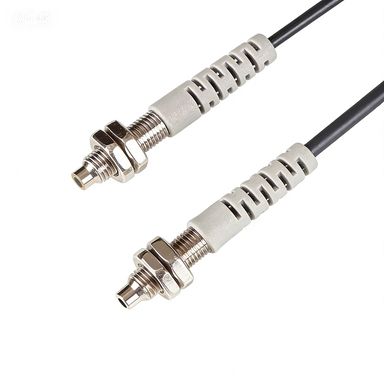
The housing of a background suppression photoelectric sensor is far more than a simple plastic or metal cover. Its primary function is to provide a sealed, robust enclosure that safeguards the delicate internal components, including the emitter lens, receiver lens, and processing circuitry. It must protect against ingress of dust, liquids, and oils, typically meeting standards such as IP67 or IP69K for harsh industrial environments. Furthermore, the housing acts as a mechanical structure for secure mounting, ensuring the sensor maintains its precise alignment. Any misalignment caused by a weak housing can lead to inaccurate background suppression settings and detection failures. The design also manages internal heat dissipation from electronic components and provides electrical shielding against electromagnetic interference (EMI), which could disrupt the sensitive analog signals used for distance measurement.
Material Selection and Engineering Considerations
Material choice is a fundamental engineering decision for BGS sensor housings. Thermoplastics like polybutylene terephthalate (PBT) or polyamide (PA) are common due to their excellent mechanical strength, chemical resistance, and cost-effectiveness for standard applications. For more demanding environments involving high temperatures, extreme impacts, or exposure to cutting fluids, housings made from die-cast zinc or stainless steel (e.g., V2A or V4A grades) are preferred. These metallic housings offer superior rigidity, heat dissipation, and resistance to corrosion. The design must also account for the optical windows. These are often made from scratch-resistant glass or specialized plastics with high optical clarity and specific coatings to minimize lens fogging, repel water, or filter out unwanted ambient light wavelengths, ensuring the integrity of the emitted and received light beams.
Design Features for Optimal Performance
Modern BGS sensor housings incorporate several intelligent design features. A key aspect is the incorporation of precise mounting threads or standardized brackets that allow for easy installation and fine adjustment. Many housings feature integrated mounting holes or grooves for accessory brackets, enabling flexible positioning. To facilitate setup, housings often include clear visual indicators, such as LED status lights visible from multiple angles, and accessible potentiometers or teach-in buttons for setting the suppression range. The shape and size of the housing are also optimized to allow for dense mounting in confined spaces without causing optical crosstalk between adjacent sensors. The cable outlet or connector interface is designed to be strain-relieved and sealed, preventing the cable from becoming an entry point for contaminants.
Application-Specific Housing Variants
The diversity of industrial applications has led to the development of specialized housing variants. Cylindrical housings (e.g., M8, M12, M18, M30 threaded barrels) are ubiquitous for their versatility and ease of installation in drilled holes. Rectangular or block-style housings often provide a larger internal volume for more advanced electronics or longer sensing ranges. For applications in the food and beverage or pharmaceutical industries, sensors feature housings made from FDA-compliant materials like specific polycarbonates or stainless steel, designed with smooth, crevice-free surfaces for easy cleaning and sterilization. Furthermore, housings for safety-related applications are designed to meet stringent mechanical and electronic standards to ensure functional safety (e.g., SIL2/PLd).
Impact of Housing on Sensing Characteristics
The housing design directly influences the sensor's performance specifications. The size and quality of the optical windows affect the effective sensing range and the minimum detectable object size. A well-designed housing ensures the lenses are perfectly parallel and protected, maintaining the calibrated triangulation angle critical for accurate background suppression. The thermal properties of the housing material can impact the long-term stability of the sensing range, as temperature fluctuations can cause slight expansions or contractions. A robust housing with high electromagnetic compatibility (EMC) shielding ensures the sensor operates reliably in electrically noisy environments, such as near variable frequency drives or welding equipment, without false triggering or range drift.
Maintenance and Long-Term Reliability
The durability of the housing directly correlates with the sensor's operational lifespan and maintenance requirements. A housing with a high ingress protection rating significantly reduces the risk of internal contamination, a leading cause of sensor failure. Regular maintenance primarily involves inspecting the housing for physical damage, such as cracks or deep scratches on the lens window, and ensuring the sealing surfaces and cable glands remain intact. Choosing a sensor with a housing appropriate for the specific environmental challenges—be it UV exposure, chemical splash, or high-pressure washdown—is the most effective strategy for maximizing mean time between failures (MTBF) and ensuring consistent, reliable detection performance over many years of service.