Introduction to Photoelectric Sensors
Photoelectric sensors are indispensable components in modern industrial automation, utilizing light beams to detect the presence, absence, or distance of objects. Their operation is based on the principle of emitting a light signal, typically from an LED or laser diode, and analyzing the received signal after it interacts with the target. These sensors offer non-contact detection, high precision, and reliability across diverse environments, from clean rooms to harsh manufacturing floors. Understanding their classification is crucial for engineers to select the optimal sensor for specific applications, ensuring efficiency and system integrity. The core functionality hinges on the modulation of light and its subsequent reception, which can be influenced by factors like target color, material, surface finish, and environmental conditions such as ambient light or contamination.
Classification by Detection Method
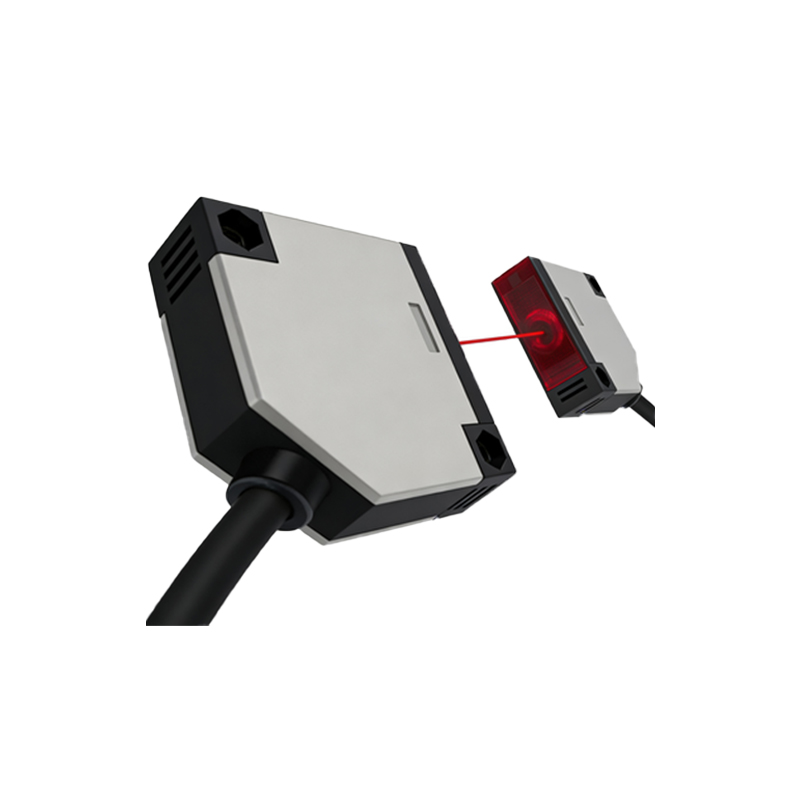
The primary classification of photoelectric sensors is based on their detection methodology, which defines how the emitted light interacts with the target and is received. The three fundamental types are through-beam, retro-reflective, and diffuse reflective sensors. Through-beam sensors consist of separate emitter and receiver units placed opposite each other. Detection occurs when an object interrupts the light beam traveling from the emitter to the receiver. This method offers the longest sensing range and highest reliability, as it is less affected by the object's surface properties or color. It is ideal for precise detection in demanding environments, though installation requires alignment of two separate components.
Retro-reflective sensors house both emitter and receiver in a single housing. They utilize a reflector, typically a corner-cube reflector, to bounce the light beam back to the receiver. An object is detected when it blocks this reflected beam. This type simplifies installation compared to through-beam sensors while still providing a good sensing distance. However, it may be confused by shiny objects that themselves reflect light, potentially causing a false "clear" signal. Special polarized filters are often used in the sensor to mitigate this issue by ensuring only light reflected from the specific retro-reflector is recognized.
Diffuse reflective sensors, also known as proximity sensors, integrate the emitter and receiver. They detect an object when the emitted light reflects off the object's surface back to the receiver. The sensing distance is shorter and highly dependent on the object's size, color, and reflectivity. Light-colored, matte surfaces provide better detection than dark or glossy ones. These sensors are compact and require only a single wiring point, making them suitable for detecting objects at close range where mounting a reflector or separate receiver is impractical.
Classification by Light Source Type
Photoelectric sensors are further categorized by the type of light source employed, which influences their performance, range, and application suitability. The most common light source is the Light Emitting Diode (LED), prized for its long life, low cost, and availability in various wavelengths. Red LEDs are standard for general-purpose sensing. Infrared LEDs are used for applications requiring invisibility or better penetration through certain materials. Green LEDs can enhance contrast for detecting specific colors, while blue LEDs are effective for sensing transparent objects or in environments with high ambient red light.
Laser diodes represent another key light source, producing a highly focused, coherent beam. This allows for extremely precise detection, small spot sizes, and very long sensing ranges. Laser sensors are used in applications like precise positioning, edge detection, or measuring small objects. However, they require careful handling due to laser safety classifications. Finally, some specialized sensors may use modulated white light or specific spectral outputs for advanced color recognition or background suppression tasks, where the sensor ignores objects beyond a set distance.
Classification by Output Type and Function
The output configuration and functional logic of a photoelectric sensor are critical for integration into control systems. The primary output types are digital and analog. Digital outputs provide a simple on/off signal (e.g., NPN, PNP, or relay contacts) when an object is detected or not detected. They are the most common, used for presence detection, counting, or part positioning. The output logic can be light-on or dark-on, defining whether the output activates when the receiver gets light or when it is blocked.
Analog outputs deliver a continuous signal (e.g., 0-10V, 4-20mA) proportional to the received light intensity or the distance to the target. These are used in applications requiring measurement, such as monitoring transparency, controlling tension, or precise distance gauging. Furthermore, sensors are classified by special functions. Background suppression sensors use triangulation to only detect objects within a specific, adjustable range, ignoring more distant surfaces. Contrast sensors detect differences in reflectivity or color marks. Fiber optic sensors separate the amplifier from the sensing head via flexible fibers, allowing access to tight, hot, or hazardous spaces.
Selection Criteria and Application Examples
Selecting the correct photoelectric sensor requires a systematic evaluation of application parameters. Key factors include required sensing distance, target characteristics (size, material, color), required response speed, environmental conditions (dust, moisture, temperature, ambient light), and the necessary output type. For example, a packaging line detecting opaque boxes on a conveyor might use a robust through-beam sensor for maximum reliability. Detecting a transparent bottle would likely require a diffuse sensor with a blue LED light source for better contrast against the background.
In automated storage, retro-reflective sensors with polarization filters are common for detecting the presence of pallets. For precise assembly tasks, such as verifying component height, a laser-based analog sensor with background suppression would be appropriate. In dirty environments like foundries, fiber optic sensors protect the electronics by placing only the rugged sensing tip in the harsh zone. Understanding these classifications empowers engineers to navigate product catalogs effectively, leading to optimized system performance, reduced downtime, and cost-effective automation solutions. Regular consultation of manufacturer datasheets for specific ratings on sensing range, environmental protection (IP rating), and electrical characteristics is always recommended.