Introduction to Oscillating Proximity Sensors
Oscillating proximity sensors are fundamental components in modern industrial automation, utilizing electromagnetic fields to detect the presence or absence of metallic objects without physical contact. These sensors operate by generating a high-frequency oscillating electromagnetic field from a coil within an LC resonant circuit. When a metallic target enters this field, eddy currents are induced on the target's surface, causing a change in the oscillation amplitude or frequency. This change is detected by the sensor's internal circuitry, which then triggers an output signal. The non-contact nature of detection ensures minimal wear and tear, high reliability, and long operational life, making them indispensable in harsh industrial environments involving dust, moisture, or vibration. Their ability to sense ferrous and non-ferrous metals with high precision and speed supports critical applications across manufacturing, packaging, automotive, and material handling sectors.
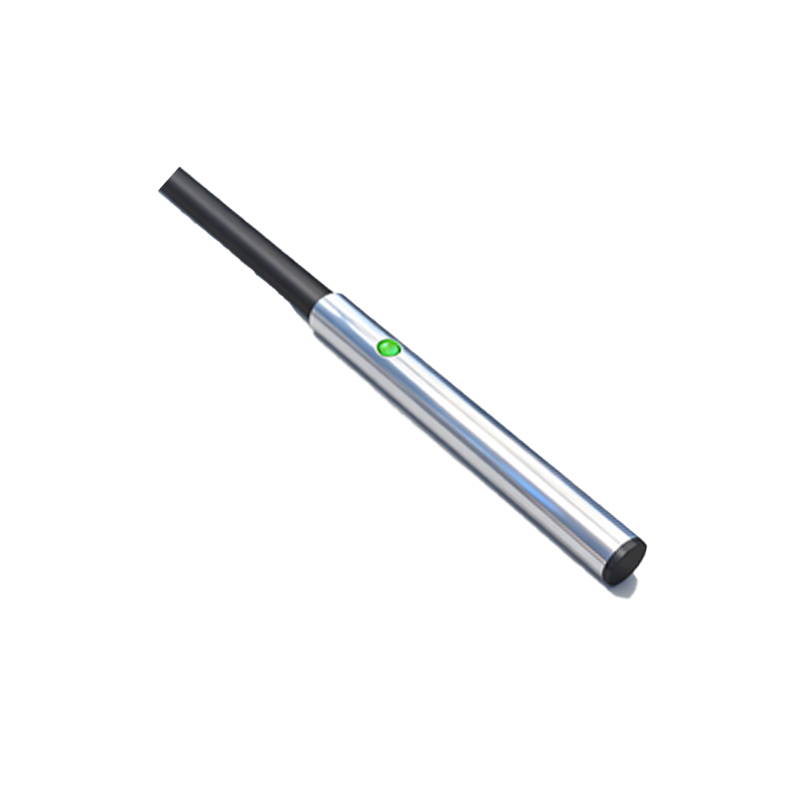
Inductive Proximity Sensors
Inductive proximity sensors represent the most common type of oscillating proximity sensor, specifically designed to detect ferrous metals such as iron and steel. They generate an oscillating electromagnetic field, and when a ferrous target enters the sensing range, it absorbs energy from the field, causing the oscillation to dampen or cease. This damping effect is monitored by the sensor, which switches its output state accordingly. Key characteristics include a relatively short sensing range, typically from a few millimeters up to about 60 millimeters, and high switching frequencies, often exceeding several thousand Hertz. They are predominantly available in two-wire, three-wire, and four-wire DC configurations, with three-wire versions being the industry standard for digital control systems. Common housing materials include nickel-plated brass, stainless steel, or PBT plastic, offering varying degrees of resistance to mechanical stress and chemical exposure. Applications are extensive, including position verification of machine parts, end-of-travel detection in actuators, and counting metal objects on conveyor lines.
Capacitive Proximity Sensors
Capacitive proximity sensors operate on a similar oscillating principle but are capable of detecting a much wider range of materials, including metals, plastics, glass, liquids, and granular substances. The sensor's active face forms one plate of a capacitor, with the target object acting as the other plate. As the target approaches, the capacitance of the oscillating circuit increases until it reaches a threshold that triggers the output. This allows them to sense non-metallic objects through non-metallic container walls, making them ideal for level detection of liquids or powders. Their sensing range is generally comparable to or slightly less than inductive sensors. They often feature sensitivity adjustment potentiometers to fine-tune the detection threshold for different materials and to compensate for environmental factors like humidity or material buildup on the sensor face. Primary applications include fill level control in tanks, presence detection of plastic bottles or wood panels, and touch-sensitive control interfaces.
High-Frequency Oscillation Sensors
A specialized subset, high-frequency oscillating sensors, operates at significantly higher frequencies, often in the MHz range. This enhanced frequency allows for two primary advantages: the detection of very small metallic objects, such as tiny screws or thin foils, and the ability to achieve a more focused sensing field. The focused field provides improved immunity to adjacent metal backgrounds, a common challenge in dense machinery installations. These sensors are crucial in precision assembly and electronics manufacturing, where detecting minute components is essential. Their circuitry is designed for exceptional stability to prevent false triggers from electrical noise, which is more prevalent at higher frequencies. The housing is often shielded and compact to facilitate installation in tight spaces.
Ferrous and Non-Ferrous Metal Selective Sensors
Advanced oscillating proximity sensors incorporate sophisticated circuitry to distinguish between ferrous (iron-based) and non-ferrous metals like aluminum, copper, or brass. Standard inductive sensors typically have a reduced sensing range for non-ferrous metals. Selective sensors overcome this by using multiple coils or advanced signal processing algorithms to analyze the phase shift and quality factor (Q-factor) changes in the oscillation, which differ between material types. This capability is vital in material sorting systems, such as in recycling plants separating aluminum cans from steel cans, or in machining centers to verify the correct workpiece material has been loaded before a cutting operation begins. They help prevent costly errors and equipment damage.
Analog Output and Specialized Variants
Beyond simple on/off switching, many oscillating proximity sensors provide analog output signals, such as 4-20 mA or 0-10 V, proportional to the distance between the sensor and the target. These analog sensors enable continuous position monitoring, gap control, and thickness measurement. Specialized variants also exist, including cylindrical and rectangular form factors, high-temperature models rated for continuous operation above 100