Introduction to Photoelectric Sensor Circuit Controllers
A photoelectric sensor circuit controller is a critical component in modern industrial automation systems. It serves as the interface between the sensing element and the control logic, processing the optical signals detected by the sensor and converting them into actionable electrical commands. These controllers are designed to operate reliably in diverse industrial environments, handling tasks such as object detection, counting, positioning, and quality inspection. The core principle involves using a light emitter, typically an LED or laser diode, and a receiver, such as a phototransistor or photodiode. The controller's circuitry modulates the emitted light and interprets changes in the received signal caused by the presence, absence, or characteristics of a target object. Advanced controllers incorporate microprocessors or programmable logic to enhance functionality, allowing for adjustable sensitivity, time delays, and output configurations to meet specific application requirements.
Core Circuit Design and Components
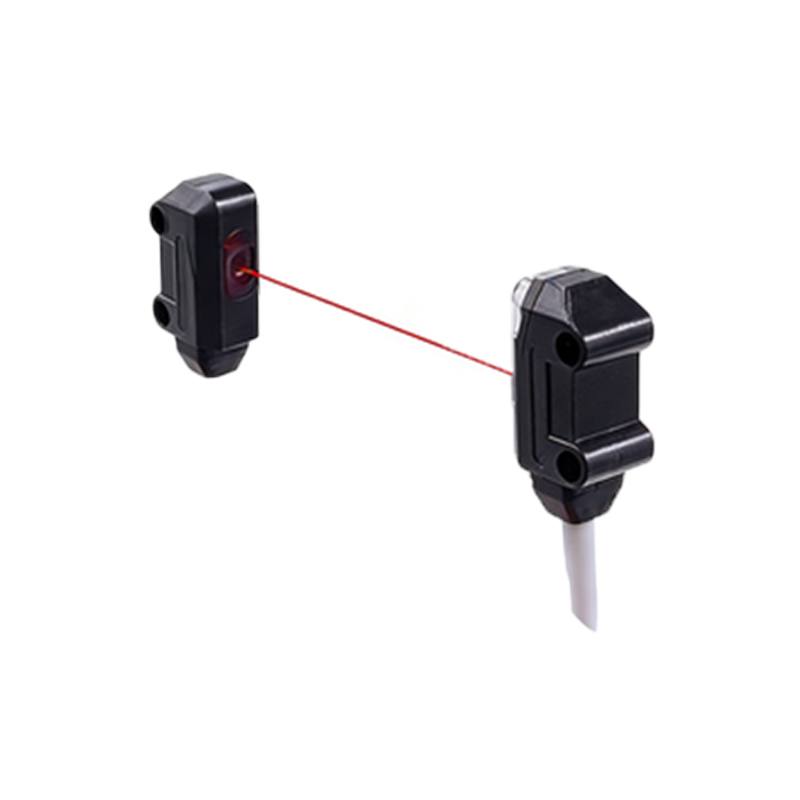
The design of a photoelectric sensor circuit controller revolves around stability, noise immunity, and response speed. The emitter circuit usually consists of a constant current driver to ensure consistent light output, which is crucial for maintaining detection accuracy over time and temperature variations. The receiver circuit is more complex, often featuring a transimpedance amplifier to convert the small photocurrent from the receiver into a usable voltage. This signal then passes through filtering stages to suppress ambient light interference and electrical noise. A comparator circuit is typically employed to generate a clean digital output (HIGH/LOW) by comparing the processed signal against a set threshold. For analog or measuring sensors, the controller may include an analog-to-digital converter (ADC) to provide precise distance or intensity data. Power management units, voltage regulators, and protection circuits against overvoltage and reverse polarity are integral for robust industrial operation.
Key Operational Modes: Through-Beam, Retroreflective, and Diffuse
Photoelectric sensor controllers are configured based on three primary sensing modes, each demanding specific circuit adaptations. In through-beam mode, the emitter and receiver are separate units. The controller monitors for a complete interruption of the light beam, offering the longest sensing range and highest reliability. The circuit design focuses on maximizing the signal-to-noise ratio for the receiver. Retroreflective mode uses a single housing containing both emitter and receiver, with a reflector bouncing the light back. The controller must distinguish the reflected signal from the reflector from any potential reflection off a target object, often using polarization filters or modulated light. Diffuse (proximity) mode relies on light reflecting directly off the target. Here, the controller circuit is most sensitive and includes sophisticated background suppression techniques to ignore distant objects or the background, adjusting the effective sensing range electronically.
Integration with Programmable Logic Controllers (PLCs) and Industrial Networks
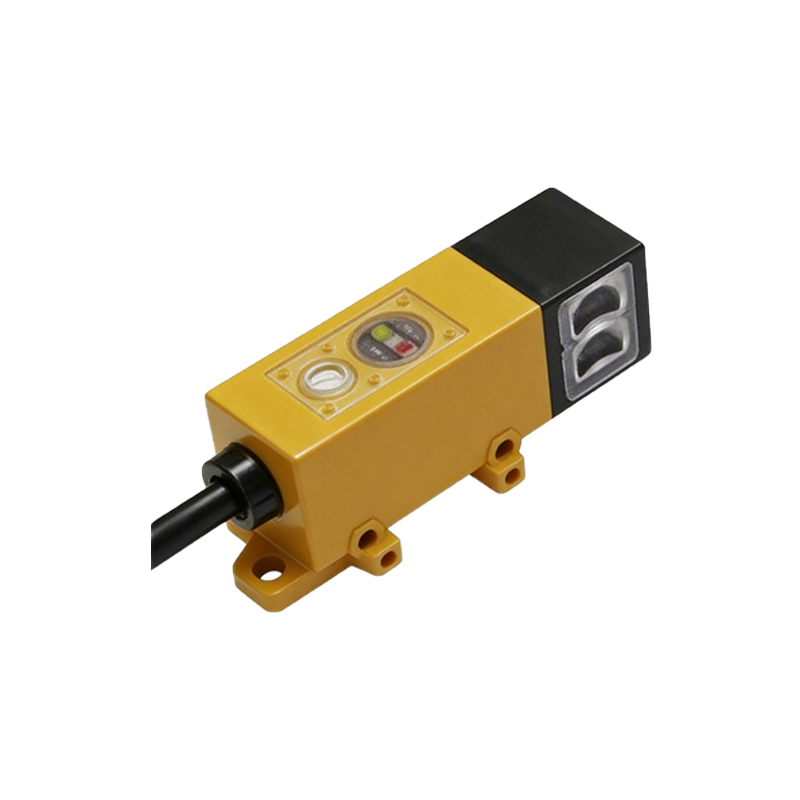
Modern photoelectric sensor controllers are not standalone devices. They are designed for seamless integration into larger control systems. Most controllers provide standard digital outputs (PNP/NPN, relay) or analog outputs (0-10V, 4-20mA) that connect directly to PLC input modules. The circuit includes output stages with sufficient current drive and isolation, often using optocouplers or solid-state relays, to protect the sensitive control logic from high-voltage transients on the factory floor. Furthermore, controllers with integrated IO-Link, PROFINET, or EtherNet/IP communication capabilities are becoming standard. These "smart sensors" feature additional circuitry for the communication protocol, allowing for remote configuration, real-time diagnostics, and parameter setting from the central controller, thereby enabling predictive maintenance and Industry 4.0 applications.
Critical Considerations for Reliable Performance
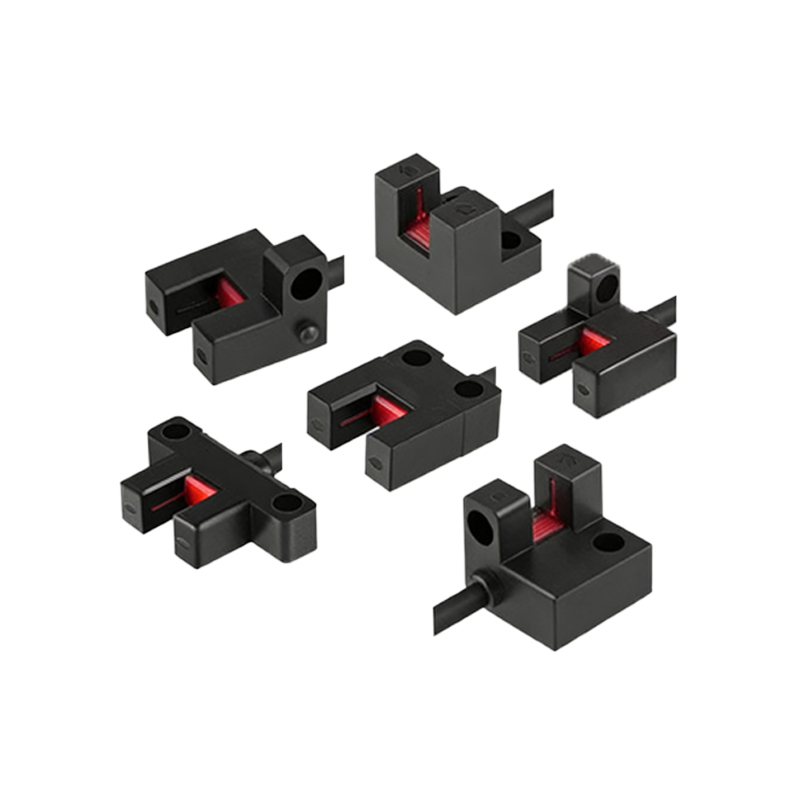
Ensuring long-term reliability requires careful attention to several factors in the controller's design and application. Electrical noise from motors, welders, and variable frequency drives is a major challenge. The controller PCB layout must prioritize grounding, shielding, and the use of filters to mitigate electromagnetic interference (EMI). Environmental factors like dust, fog, or condensation can attenuate the light signal. Controllers may include automatic gain control (AGC) circuits to compensate for gradual lens contamination. For harsh environments, the entire assembly is potted or housed in IP67-rated enclosures. Thermal management is also vital, as component drift with temperature can affect sensitivity. High-quality designs incorporate temperature compensation circuits or use components with low thermal coefficients. Finally, user-friendly features like teach-in buttons, status LEDs, and diagnostic outputs are implemented in the control logic to simplify setup and troubleshooting.
Application Examples in Manufacturing and Packaging
The versatility of photoelectric sensor controllers is demonstrated across numerous industries. In automotive assembly lines, they precisely detect the presence of components on a conveyor, triggering robotic arms for pick-and-place operations. Their high-speed response is essential here. In packaging machinery, controllers are used for label detection, ensuring correct placement, and for counting products entering a carton. Bottle filling lines utilize them to detect bottle presence at the filler head and to monitor fill levels in transparent containers. In material handling, controllers on stacker cranes detect the position of pallets on racks. Advanced color recognition or luminescence sensors, with specialized controller algorithms, inspect pharmaceutical packaging for correct labels or verify the presence of safety seals. In each case, the controller's settings—such as response time, output delay, and switching hysteresis—are fine-tuned to optimize the process.
Future Trends and Advancements
The evolution of photoelectric sensor circuit controllers is driven by the demands for miniaturization, intelligence, and connectivity. Future designs will leverage more advanced application-specific integrated circuits (ASICs) and microcontrollers with lower power consumption, enabling smaller form factors and battery-operated wireless sensors. Integration of artificial intelligence at the edge is an emerging trend, where the controller's processor can perform simple pattern recognition or anomaly detection locally, reducing data load on central systems. Enhanced communication protocols will facilitate tighter integration with cloud platforms for data analytics. Furthermore, the development of new light sources, such as VCSELs (Vertical-Cavity Surface-Emitting Lasers), will require compatible driver and receiver circuits in the controller to exploit their advantages in speed and precision for next-generation LiDAR and high-accuracy positioning applications in smart factories.