Introduction to Proximity Sensing Technology
In the realm of industrial automation, proximity sensors serve as the fundamental eyes of machinery, enabling non-contact detection of objects. These critical components are pivotal for tasks ranging from simple object presence verification to complex positioning and counting operations in high-speed production lines. Among the prominent manufacturers in this field, Sodilong has established a significant reputation for producing reliable and high-performance proximity switches. Their product line caters to a diverse range of industrial environments, offering solutions that enhance operational efficiency, safety, and system reliability. The core principle behind their operation involves generating an electromagnetic field or a beam of light and detecting changes caused by a target object entering this field.
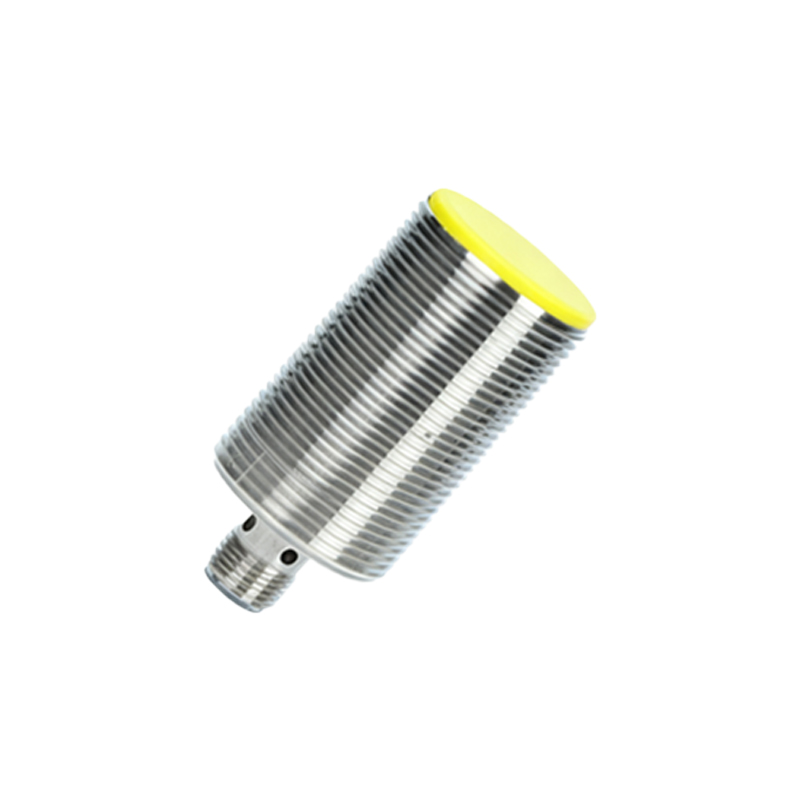
Core Working Principles of Inductive and Capacitive Types
Sodilong proximity sensors primarily utilize two key technologies: inductive and capacitive sensing. Inductive proximity switches are the most common type for metal detection. They contain an oscillator circuit that generates a high-frequency electromagnetic field at the sensing face. When a metallic object enters this field, eddy currents are induced on the object's surface. This causes a load on the oscillator, leading to a change in the oscillation amplitude. This change is detected by the sensor's circuitry, which subsequently triggers a solid-state output switch. Capacitive proximity sensors, on the other hand, can detect both metallic and non-metallic materials like liquids, plastics, or wood. They function by generating an electrostatic field. The presence of any material with a dielectric constant different from air alters the capacitance of the circuit, which is then measured to trigger an output.
Key Features and Technical Specifications
Sodilong proximity switches are engineered with several defining features that ensure robust performance. They typically offer a high switching frequency, allowing for rapid detection in fast-paced assembly lines. The sensing distance, a critical parameter, is precisely defined for each model, with options available for short-range precision or longer-range detection. Built with durable housings often made of nickel-plated brass, stainless steel, or PBT plastic, these sensors are designed to withstand harsh industrial conditions, including exposure to oils, coolants, and mechanical vibrations. Many models feature LED status indicators for easy diagnostics and are available in various form factors such as cylindrical, rectangular, or ring-shaped to suit different mounting requirements.
Wiring Configurations and Output Types
Understanding the electrical interface is crucial for integration. Sodilong sensors are commonly available in two-wire, three-wire, and four-wire configurations. Two-wire sensors are simple to connect, acting as a switch in series with the load, but they may have a slight residual current when off. Three-wire sensors are the industry standard, providing separate wires for power supply, ground, and the switched output (typically NPN or PNP transistor outputs). This design offers better performance and isolation. Four-wire sensors often combine both a normally open (NO) and a normally closed (NC) output in one device. The output can be a digital switch (DC or AC) or an analog signal (4-20mA or 0-10V) proportional to the distance, providing greater flexibility for control systems.
Selecting the Right Sensor for Your Application
Choosing the appropriate Sodilong proximity switch requires careful consideration of several application-specific factors. First, identify the target material: inductive sensors for metals, capacitive for a broader range. Next, determine the required sensing distance, ensuring a margin of safety to account for mechanical tolerances. The operating environment is paramount; consider the need for models with enhanced protection ratings (e.g., IP67, IP69K) for washdown or dusty areas. The electrical requirements, including supply voltage (10-30V DC, 90-250V AC) and output type (NPN/PNP), must match the control system. Finally, the physical size and mounting style (flush, non-flush, threaded) must be compatible with the machine design.
Common Applications Across Industries
The versatility of Sodilong proximity sensors makes them indispensable across numerous sectors. In automotive manufacturing, they are used for part positioning, robot guidance, and end-of-arm tooling detection. In packaging machinery, they count bottles, detect fill levels, and control conveyor belt sequences. In material handling, they provide position feedback for actuators, detect pallets on conveyors, and serve as safety interlocks on doors. The food and beverage industry relies on stainless-steel housed capacitive sensors for liquid level control and inductive sensors for detecting metal caps or cans. Their reliability ensures minimal downtime and consistent quality control in these critical processes.
Installation Best Practices and Troubleshooting
Proper installation is key to optimal sensor performance. Ensure the sensor is mounted securely to