Introduction to the GF711S Proximity Sensor
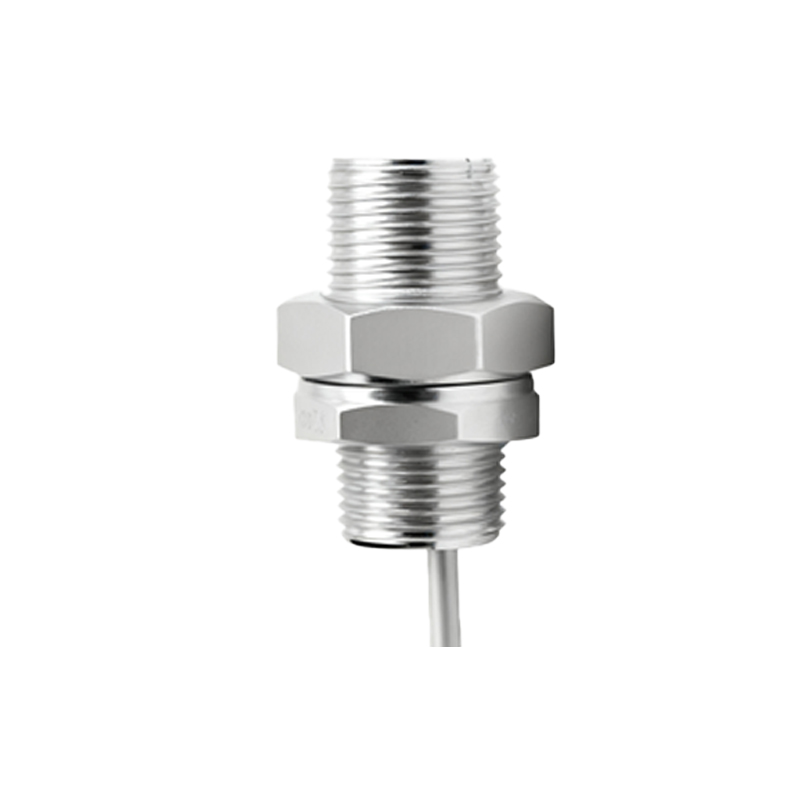
The GF711S represents a significant advancement in inductive proximity sensing technology, designed specifically for demanding industrial environments. This sensor operates on the principle of electromagnetic induction, where an oscillator generates a high-frequency electromagnetic field from its sensing face. When a metallic target enters this field, eddy currents are induced within the target, causing a change in the oscillation amplitude. The GF711S's internal circuitry detects this change and triggers a solid-state output switch. Its robust construction, typically featuring a stainless-steel housing, ensures exceptional resistance to mechanical stress, cutting fluids, oils, and coolants commonly found in manufacturing settings. The device is engineered for non-contact detection, eliminating physical wear and tear, which translates to higher reliability and a longer operational lifespan compared to mechanical limit switches.
Key Technical Specifications and Performance
Understanding the technical parameters of the GF711S is crucial for proper integration. This sensor typically offers a standard sensing range, for instance, up to 15mm for steel targets, though this varies with target material and size. It operates on a wide DC voltage range, such as 10-30V DC, ensuring compatibility with various industrial power supplies. The output configuration is often a 3-wire system with a PNP normally open (NO) or normally closed (NC) transistor output, capable of driving loads like PLC inputs, relays, or indicators directly. Key performance metrics include a high switching frequency, allowing for the detection of rapidly moving objects, and minimal hysteresis, which ensures precise and repeatable switching points. Its temperature stability across a broad operating range, from -25°C to +70°C, guarantees consistent performance in fluctuating environmental conditions.
Installation and Wiring Best Practices
Correct installation is paramount for optimal sensor performance. The GF711S should be mounted securely, ensuring the sensing face is parallel to the target's approach path and free from obstructions. It is critical to maintain the specified nominal sensing distance (Sn) and account for any reduction factors when detecting metals other than mild steel. For wiring, always adhere to the manufacturer's datasheet. Generally, the brown wire connects to the positive DC supply, the blue wire to the negative, and the black wire is the switched output. Implementing proper shielding and routing sensor cables away from high-voltage power lines is essential to prevent electrical noise interference. Additionally, leaving a sufficient margin between multiple sensors prevents mutual interference, a phenomenon where adjacent sensors can affect each other's electromagnetic fields.
Application Scenarios in Automation
The GF711S finds extensive use across diverse automation sectors due to its versatility and durability. In automotive assembly lines, it is employed for precise part presence verification, such as detecting engine blocks on conveyors or confirming the position of robotic arms. Within packaging machinery, it counts products, monitors fill levels, or controls the positioning of sealing heads. In metalworking and CNC machining centers, these sensors provide critical end-of-travel detection for tool changers, spindle positioning, and pallet shuttle systems. Their robust design makes them ideal for harsh environments like foundries or welding cells, where they can detect metallic components despite the presence of dust, sparks, or contaminants.
Troubleshooting Common Operational Issues
Even with a reliable sensor like the GF711S, occasional issues may arise. A frequent problem is failure to detect the target. This can stem from incorrect mounting distance, an unsuitable target material (e.g., non-ferrous metals at reduced range), or a target size smaller than the sensor's sensing face. Another common issue is erratic switching or false triggers, often caused by electrical noise from motors or welders, grounding problems, or mutual interference from nearby sensors. If the sensor output remains constantly on or off, checking the power supply voltage, load compatibility, and for potential wiring faults or short circuits is the first step. Regularly consulting the sensor's LED indicator status, which shows power and output state, provides immediate diagnostic clues.
Advantages Over Alternative Sensing Technologies
The GF711S offers distinct benefits when compared to other sensing methods. Unlike photoelectric sensors, it is virtually immune to ambient light interference, dust, fog, or dirty environments that can obstruct light beams. Compared to capacitive sensors, it is specifically tuned for metals, avoiding false triggers from non-metallic materials like plastics or liquids. Its solid-state design provides a significant advantage over mechanical switches, offering millions of maintenance-free operations without contact bounce or mechanical fatigue. The all-metal housing and sealed construction (often rated IP67 or higher) provide superior environmental protection, making it a more resilient choice for wash-down areas or outdoor installations than many plastic-housed alternatives.