Introduction to Inductive Proximity Sensing
Inductive proximity sensors are fundamental components in modern industrial automation, providing non-contact detection of metallic objects. The LJ30-15N1 model represents a robust and reliable solution within this category. Operating on the principle of electromagnetic induction, these sensors generate an oscillating electromagnetic field from a coil. When a metallic target enters this field, eddy currents are induced on the target's surface, causing a change in the oscillation amplitude. The sensor's internal circuit detects this change and triggers a solid-state output switch. This mechanism allows for precise, wear-free detection, making it ideal for harsh environments where mechanical limit switches would fail prematurely.
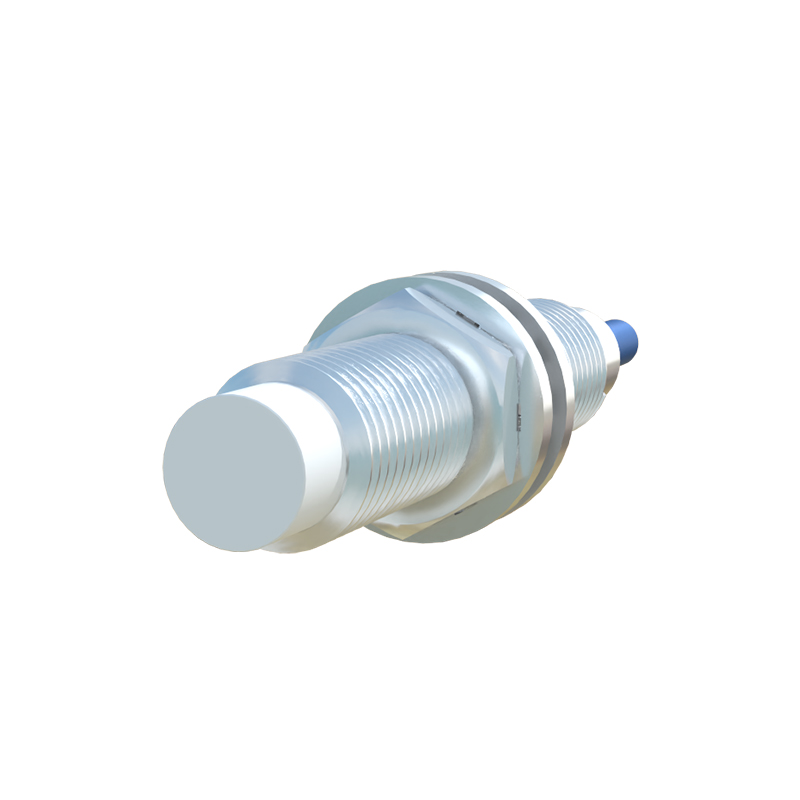
Key Specifications of the LJ30-15N1
The LJ30-15N1 is characterized by its 30mm diameter cylindrical housing, typically constructed from nickel-plated brass or stainless steel, offering excellent resistance to industrial chemicals and physical impacts. Its nominal sensing distance is 15mm, adhering to the standard defined by EN 60947-5-2. This sensor is designed to detect all types of ferrous metals (like steel and iron) at the full rated distance, while for non-ferrous metals such as aluminum or copper, the effective sensing range is reduced, typically by 30-50%. It commonly operates on a wide range DC voltage, from 10-30V DC, and provides a PNP normally open (NO) or normally closed (NC) output configuration. The switching frequency is sufficiently high for most high-speed counting or positioning tasks on production lines.
Electrical Characteristics and Wiring
Wiring the LJ30-15N1 is straightforward due to its standard three-wire configuration. The wires are typically color-coded: brown for positive supply (V+), blue for negative supply (0V), and black for the load output. The sensor incorporates reverse polarity protection and short-circuit protection, safeguarding both the sensor and the connected controller (e.g., a PLC) from accidental wiring errors. The output is a solid-state switch, capable of driving loads such as PLC inputs, relays, or small contactors directly. Its low leakage current ensures minimal energy waste and prevents false triggering when in the "off" state.
Installation Considerations and Mounting
Proper installation is critical for optimal performance. The LJ30-15N1 can be mounted by its threaded barrel (M30 x 1.5) into a matching nut or housing. It is essential to maintain the recommended lateral and axial clearance from surrounding metal structures, as specified in the datasheet, to prevent false actuation. Flush-mountable designs allow installation in metal brackets without loss of sensing range. The sensor's housing rating, typically IP67, signifies complete protection against dust ingress and protection against temporary immersion in water, making it suitable for washdown areas in food processing or outdoor applications.
Application Scenarios in Automation
The versatility of the LJ30-15N1 makes it a workhorse across numerous industries. Common applications include position verification of machine parts, such as checking if a cylinder is fully extended or retracted. It is extensively used for object detection on conveyor systems, counting metallic products, or ensuring proper part presence before a machining operation. In material handling, it can detect the presence of metal pallets or containers. Its robustness also allows use in metal stamping presses for end-of-stroke detection or in automotive assembly lines for robot guidance and part verification.
Troubleshooting and Maintenance
Despite their durability, inductive sensors may encounter issues. Common problems include failure to detect a target, which could stem from incorrect mounting (insufficient clearance), using a non-metallic or incorrect metal target, or the target being outside the effective sensing range. Continuous output activation might indicate sensor damage or metallic debris stuck near the sensing face. Regular maintenance involves cleaning the sensing face from oil, dust, or metal chips accumulation. Using an LED indicator, which is standard on most models, provides immediate visual feedback on the sensor's switching status, greatly aiding in diagnostics.
Advantages Over Other Sensor Types
Compared to capacitive or photoelectric sensors, the LJ30-15N1 offers distinct advantages for metal detection. It is immune to common environmental factors that plague other sensors, such as dust, smoke, oil, and ambient light. Its operation is not affected by the color, transparency, or surface finish of the target—only its metallic composition and distance matter. This results in exceptionally high reliability and repeatability. Furthermore, the solid-state design ensures a long operational life with hundreds of millions of switching cycles, far exceeding electromechanical switches and reducing total cost of ownership.