What is a Proximity Sensor?
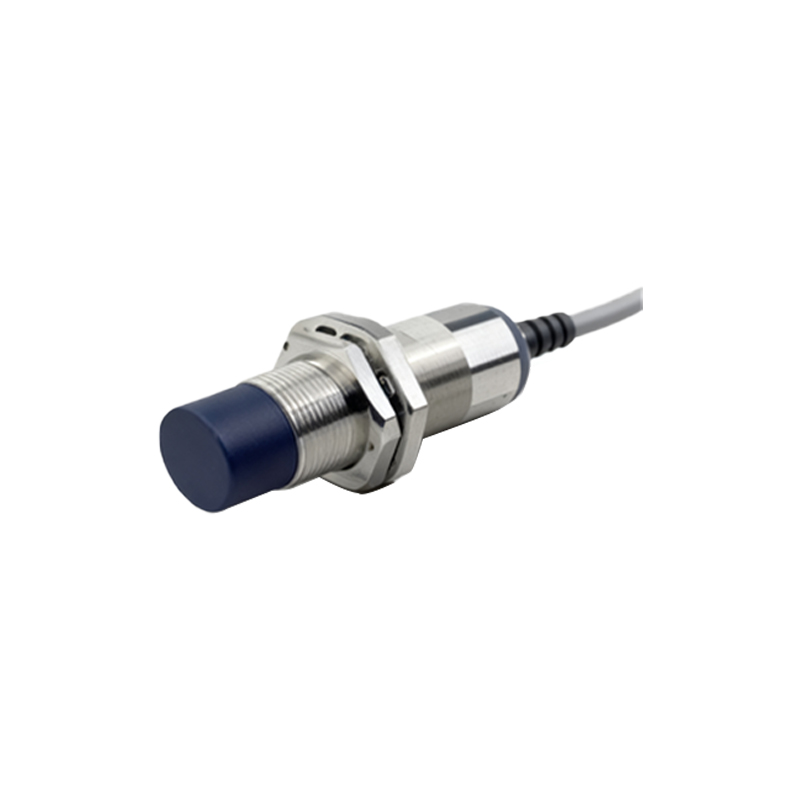
A proximity sensor is a non-contact electronic device designed to detect the presence or absence of an object within its sensing field without any physical contact. It operates by emitting an electromagnetic field, beam, or acoustic waves and looks for changes in the field or return signal. The primary function is to convert information about the presence of a target into an electrical signal. These sensors are fundamental in industrial automation, providing critical input for control systems in machinery, robotics, and safety applications. Their non-contact nature ensures high reliability, long operational life, and minimal maintenance, making them superior to mechanical limit switches in many demanding environments.
Key Operating Principles
Proximity switches function based on several physical principles. The most common types are inductive, capacitive, and photoelectric. Inductive sensors generate an oscillating electromagnetic field and detect the eddy current losses caused when a metallic target enters this field. Capacitive sensors can detect both metallic and non-metallic objects by measuring changes in capacitance between the sensor and the target. Photoelectric sensors use a light transmitter and receiver to detect interruptions or reflections of a light beam. Understanding these principles is crucial for selecting the correct sensor type for a specific application, material, and environmental condition.
Critical Terminology and Specifications
Several key terms define a proximity sensor's performance and application suitability. Sensing Distance (Sn): This is the nominal operating distance at which the sensor reliably detects a standard target under specified conditions. It is not the maximum possible distance. Hysteresis: The difference between the switch-on point (when the target approaches) and the switch-off point (when the target recedes). Hysteresis prevents output chatter when a target is at the sensing edge. Repeatability: The ability of the sensor to consistently detect a target at the same point under identical conditions, typically a very small fraction of the sensing distance. Response Frequency: The maximum number of detection operations per second, critical for high-speed applications.
Output Types and Wiring Configurations
Proximity sensors provide discrete on/off signals. The two primary electronic output types are NPN (sinking) and PNP (sourcing). An NPN output switches the negative (0V) line to the load, common in Asian and some European designs. A PNP output switches the positive voltage line to the load, prevalent in North America and Europe. Additionally, sensors are classified as Normally Open (NO) or Normally Closed (NC). A NO contact closes (conducts) when a target is detected, while an NC contact opens (stops conducting) upon detection. Choosing the correct output type and configuration is essential for compatibility with Programmable Logic Controllers (PLCs) and other control devices.
Environmental and Mounting Considerations
The operational environment significantly impacts sensor selection and performance. Key ratings include IP (Ingress Protection) Code (e.g., IP67), which defines protection against dust and water immersion. For harsh environments, sensors with robust housing materials like stainless steel or PBT plastic are used. Temperature Range specifies the ambient operating limits. Mounting is another critical factor; non-flush (unshielded) sensors offer a longer sensing range but are susceptible to interference from adjacent metal. Flush (shielded) sensors can be embedded in metal without affecting performance, allowing for compact, protected installation.
Application-Specific Selection Criteria
Selecting the optimal proximity switch requires a systematic analysis. First, identify the target material (ferrous metal, non-ferrous metal, plastic, liquid). For metals, an inductive sensor is standard; for other materials, capacitive or photoelectric may be needed. Next, determine the required sensing distance, considering installation constraints. Evaluate the required switching speed (response frequency) and output type (NPN/PNP, NO/NC) for controller compatibility. Finally, assess environmental factors like temperature, presence of chemicals, washdown requirements, and potential electrical noise. A failure to consider any of these criteria can lead to unreliable operation or premature sensor failure.
Advanced Features and Specialized Types
Modern proximity sensors incorporate advanced features for complex applications. Analog Output sensors provide a continuous voltage or current signal proportional to the distance to the target, useful for positioning or dimension checking. IO-Link enabled sensors offer digital communication for parameter setting, diagnostics, and process data exchange, supporting Industry 4.0 initiatives. High-Temperature variants are designed for foundries or welding lines. Factor 1 cylindrical sensors are standardized in dimensions for interchangeability. Understanding these specialized types allows engineers to solve niche problems and optimize system intelligence and diagnostics.