Introduction to Proximity Sensing Technology
Proximity sensors are fundamental components in modern industrial automation and control systems. These non-contact devices detect the presence or absence of an object within a specified range without any physical contact. Their primary function is to provide a reliable switching signal when a target object enters the sensor's detection field. This capability is crucial across numerous sectors, including automotive manufacturing, packaging, material handling, and machine tooling. By eliminating mechanical contact, proximity sensors offer significant advantages such as extended service life, high operational speed, and resilience in harsh environments contaminated with oil, dust, or coolant. The core value lies in their ability to enable precise, repeatable, and maintenance-free object detection, forming the backbone of automated processes, safety interlocks, and position verification systems.
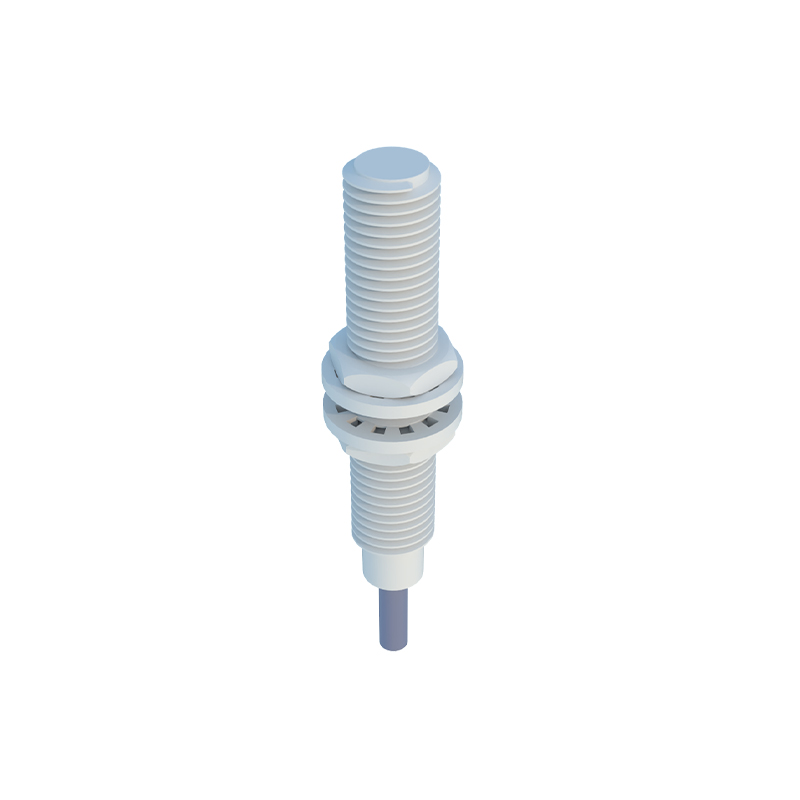
Core Functions and Industrial Roles
The functions of proximity sensors extend far beyond simple detection. In industrial settings, they are pivotal for object counting on high-speed production lines, ensuring accurate tallies of bottles, cans, or components. They serve as end-of-travel limit switches in robotic arms and linear actuators, providing precise positional feedback. Another critical role is in rotational speed monitoring, where sensors detect gear teeth or encoder marks to calculate RPM. They are also extensively used for part verification—confirming the presence of a cap, label, or specific part before the next stage of assembly. In automated warehousing, they control the positioning of pallets and guide automated guided vehicles (AGVs). Furthermore, their non-contact nature makes them ideal for applications involving delicate materials or where cleanliness is paramount, such as in food, pharmaceutical, and semiconductor manufacturing.
Operating Principle: Inductive Proximity Sensors
Inductive proximity sensors are the most common type, used specifically for detecting metallic objects. Their operating principle is based on electromagnetic induction. The sensor's active face contains a coil that is part of an oscillator circuit, generating a high-frequency electromagnetic field. When a ferrous or non-ferrous metal target enters this field, eddy currents are induced on the surface of the metal. These eddy currents draw energy from the oscillator, causing a reduction in its oscillation amplitude. An integrated evaluation circuit monitors this amplitude change. Once the amplitude drop reaches a predefined threshold, the circuit triggers a solid-state switch, changing the sensor's output state. The sensing range, or "switching distance," is standardized and depends on the sensor's size and design. These sensors are insensitive to non-metallic materials like plastic, wood, or liquids, making them highly selective in metallic environments.
Operating Principle: Capacitive Proximity Sensors
Capacitive proximity sensors can detect a much wider range of materials, including metals, plastics, glass, wood, and liquids. Their principle relies on changes in capacitance. The sensor face acts as one plate of a capacitor, with the target object acting as the other plate, and the air gap as the dielectric. An internal oscillator circuit measures the capacitance of this system. When any material with a different dielectric constant than air approaches the sensing face, it alters the capacitance of the system. This change increases the amplitude of the oscillator's oscillations. The sensor's circuitry detects this increase and, upon exceeding a set level, switches the output. A sensitivity adjustment is often provided to tune the sensor for specific materials or to ignore background interference, such as a container wall. This makes them versatile for tasks like liquid level detection, bulk material monitoring, and non-metallic part presence sensing.
Operating Principle: Ultrasonic and Photoelectric Sensors
While often categorized separately, ultrasonic and photoelectric sensors perform proximity sensing functions. Ultrasonic sensors operate by emitting high-frequency sound pulses and measuring the time for the echo to return from a target. The time-of-flight calculation determines the object's distance. They are excellent for detecting objects of varying color or transparency and are used in level sensing and distance measurement. Photoelectric sensors use a light beam (usually infrared LED or laser). In the diffuse reflective mode for proximity detection, the emitter and receiver are housed together. The sensor detects light reflected off the target object. The output switches when the received light intensity surpasses a threshold. These are ideal for detecting small objects, transparent materials, or over longer ranges, but can be affected by ambient light and surface color.
Key Selection Criteria and Output Types
Selecting the correct proximity sensor requires analyzing several parameters. The first is the sensing distance, noting that the effective range can vary with target material and size. The target material itself dictates whether an inductive, capacitive, or photoelectric sensor is needed. Environmental factors like temperature, pressure, and exposure to chemicals or washdowns determine the required housing material (often nickel-plated brass or stainless steel) and ingress protection (IP