In recent years, laser dust sensors have become a critical component in air quality monitoring systems for residential, commercial, and industrial applications. Their ability to detect and measure particulate matter (PM) concentrations with high accuracy has driven widespread adoption. A common question among buyers, engineers, and project managers is: What factors influence the price of a laser dust sensor, and what is the current market trend? This article provides a detailed analysis without promotional bias.
The core technology behind most laser dust sensors is laser scattering. A laser diode emits a light beam; when particles pass through it, light scatters. A photodetector then measures this scattered light, and algorithms calculate particle concentration, often providing PM1.0, PM2.5, and PM10 readings. The precision of this measurement is a primary cost driver. Sensors with higher accuracy, lower detection limits, and better resolution typically command a premium. For instance, a sensor capable of reliably detecting particles as small as 0.3 microns will be more expensive than one with a 1.0-micron threshold.

Another significant factor is the inclusion of advanced features. Basic models may offer simple serial data output (e.g., UART or I2C). Mid-range sensors often include on-board temperature and humidity compensation, which improves data accuracy in varying environmental conditions. High-end models might feature self-diagnostic functions, fan-assisted airflow, or even particle counting in specific size bins. Each added feature increases manufacturing complexity and cost.
Brand reputation and reliability also heavily influence pricing. Established manufacturers with a proven track record in environmental sensing, such as those supplying components for reputable air purifier brands or government monitoring stations, often price their sensors higher. This premium reflects rigorous quality control, extensive calibration, long-term stability, and reliable technical support. Newer or lesser-known brands may offer lower prices to enter the market, but potential buyers should scrutinize product specifications and third-party verification reports.
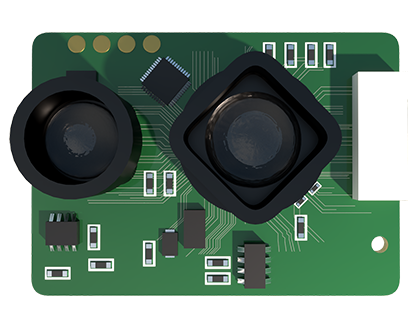
Order volume is a universal rule in electronics. Unit prices drop substantially for bulk purchases. A single sensor purchased for a prototype might cost significantly more per unit than an order of 1,000 pieces for mass production. Many manufacturers provide tiered pricing on their official websites or through direct sales inquiries.
The current market shows a trend toward gradual price reduction due to technological maturation and increased competition. However, this is balanced by a demand for even higher performance and miniaturization. The rise of smart home devices and IoT-based air quality networks has created a massive market for cost-effective, yet reliable, sensors. Consequently, many manufacturers are optimizing designs to offer good performance at a competitive price point, making the technology accessible for consumer-grade products.

When evaluating price, it's crucial to consider the total cost of ownership, not just the initial purchase. A slightly more expensive sensor from a reliable vendor may offer better long-term accuracy and durability, reducing maintenance and recalibration needs. Checking datasheets for key parameters like measurement range, error margin, response time, and expected lifespan is essential.
In summary, the price of a laser dust sensor is not a single figure but a spectrum influenced by performance, features, brand, and quantity. As the technology evolves and production scales, prices are becoming more competitive, enabling broader integration into various applications from consumer electronics to public health tools. Prospective buyers should clearly define their accuracy requirements, environmental conditions, and integration needs before comparing offerings from multiple suppliers to find the optimal balance between cost and capability.