In the vast landscape of industrial automation and electronic control, sensing technology forms the critical link between the physical world and digital systems. Among the diverse array of sensors available, resistive proximity sensors stand out for their simplicity, reliability, and cost-effectiveness. These devices detect the presence or absence of an object without physical contact, operating on a fundamental electrical principle: the change in electrical resistance.
The core operating principle of a resistive proximity sensor is elegantly straightforward. It typically consists of a pair of electrodes. When no target object is present, the resistance between these electrodes is very high, often in the megaohm range, representing an open circuit. As a conductive or semi-conductive target object enters the sensor's detection field, it effectively bridges the gap between the electrodes. This creates a new current path, significantly lowering the electrical resistance measured between the terminals. An internal circuit monitors this resistance change. When the resistance drops below a predetermined threshold, the sensor's output state switches, signaling the detection of an object. This analog change in resistance is converted into a clear digital on/off signal for the control system.

It is crucial to distinguish resistive sensors from their more common counterpart, the inductive proximity sensor. Inductive sensors generate an electromagnetic field and detect changes caused by metallic objects. Resistive sensors, however, require the target itself to be at least somewhat conductive to complete the electrical circuit. This key difference defines their application scope. Common target materials include metals, carbon-filled plastics, conductive inks, and even liquids with sufficient ion content like water or certain chemicals.
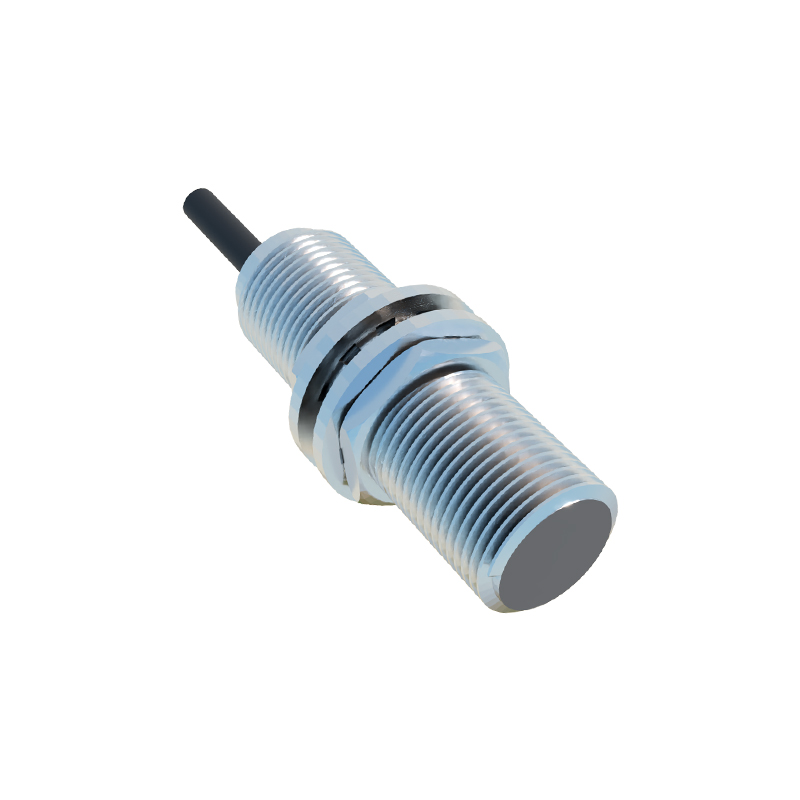
The design and construction of these sensors prioritize durability for industrial environments. The sensing face, containing the electrodes, is often made from corrosion-resistant materials like stainless steel or coated with a rugged polymer. The electrodes are arranged in various patterns—such as interdigitated fingers—to optimize sensitivity and detection consistency. The sensor housing protects the internal oscillator and signal conditioning electronics from dust, moisture, and mechanical impact, with many models boasting IP67 or higher ingress protection ratings.
The advantages of resistive proximity sensors are numerous. Their primary benefit is exceptional reliability in detecting conductive objects, unaffected by color, transparency, or surface finish, which can challenge optical sensors. They are generally immune to ambient light interference and can function effectively in dirty, dusty, or oily environments where optical sensors might fail. Their design is typically simpler than capacitive or ultrasonic sensors, often translating to a lower unit cost. Furthermore, they can sometimes detect objects through certain non-conductive barriers, like thin plastic walls or glass, if the target behind it is conductive.
However, understanding their limitations is vital for proper application. The most significant constraint is the requirement for a conductive target. They cannot detect standard plastics, dry wood, ceramics, or glass. Detection range is typically shorter than that of inductive or ultrasonic sensors, usually limited to a few millimeters. The sensor's performance can also be influenced by the target's conductivity; highly resistive targets may not trigger detection reliably. In some configurations, accumulation of conductive debris or moisture on the sensor face could cause false triggering.
The applications for resistive proximity sensors are specialized yet critical. A prominent use is in liquid level detection, where they sense the presence of conductive liquids like water, coolants, or chemicals in tanks. In the packaging industry, they verify the presence of aluminum foil seals or metallic lids on containers. They are employed in automotive assembly to confirm the placement of metal components. Electronic device manufacturers use them to detect the presence of circuit boards or shielding cans. Another innovative application is in touch-sensitive controls, where a finger's conductivity can activate a switch through a non-conductive panel.
Selecting the right resistive proximity sensor requires careful consideration of several parameters. First, the required sensing distance must be matched to the sensor's specified range, always considering a safety margin. The conductivity of the target material must be sufficient; datasheets often provide guidelines or minimum conductivity thresholds. The sensor's output type (e.g., NPN, PNP, analog) must be compatible with the PLC or controller input. Environmental factors like temperature extremes, potential chemical exposure, and required ingress protection (IP rating) are crucial. Finally, physical characteristics such as housing size, thread type (e.g., M8, M12, M18), and connection method (cable or connector) must fit the mechanical design.
Installation and maintenance are straightforward but demand attention. Sensors should be mounted securely to prevent vibration from altering the critical gap between the sensor face and the target's normal position. It is essential to ensure the target approaches the sensing face squarely for consistent operation. Regular cleaning of the sensing face is recommended to prevent buildup of conductive contaminants that could lead to false readings. When wiring, proper shielding and separation from high-voltage power lines minimize electrical noise interference.
In summary, resistive proximity sensors offer a robust and economical solution for detecting conductive objects in challenging environments. Their operation, rooted in