Introduction to Photoelectric Speed Measurement
Photoelectric sensors have become a cornerstone in modern industrial automation and motion control systems for speed measurement. Their operation is based on the principle of detecting interruptions or reflections of a light beam, typically infrared or laser, to generate electrical pulses corresponding to the movement of a target. The non-contact nature of this technology offers significant advantages, including high precision, minimal wear, and the ability to function in harsh environments where physical contact is impractical. These sensors are integral to applications ranging from conveyor belt monitoring in logistics to rotational speed detection in automotive and aerospace engineering. The core of their functionality lies in converting optical signals into quantifiable data, enabling real-time analysis and control of mechanical speed. This article delves into three primary methodologies employed with photoelectric sensors for this purpose, each suited to specific operational contexts and accuracy requirements.
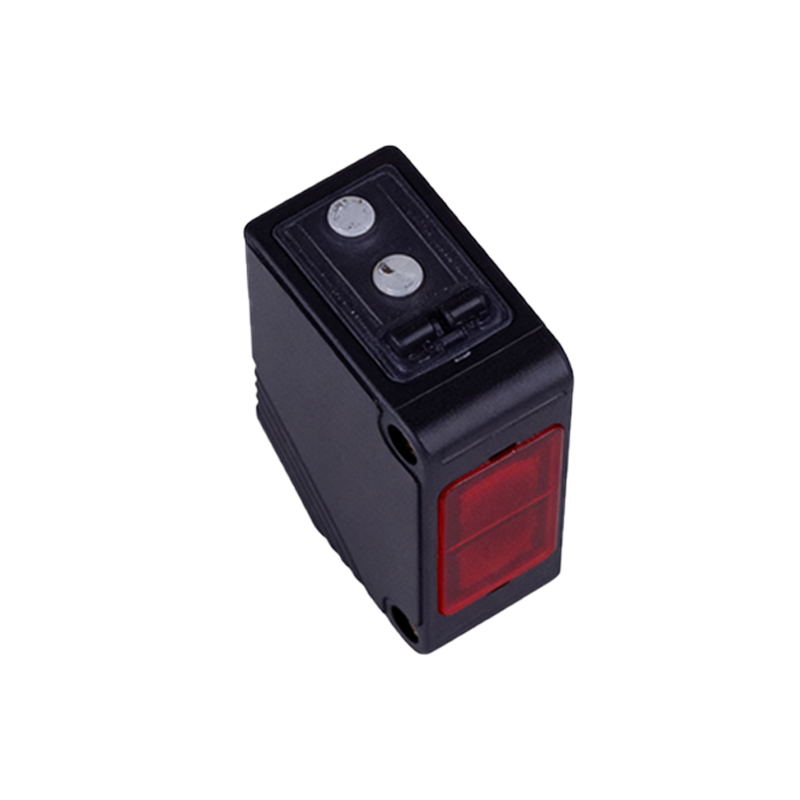
Method 1: The Interruptive (or Through-Beam) Method
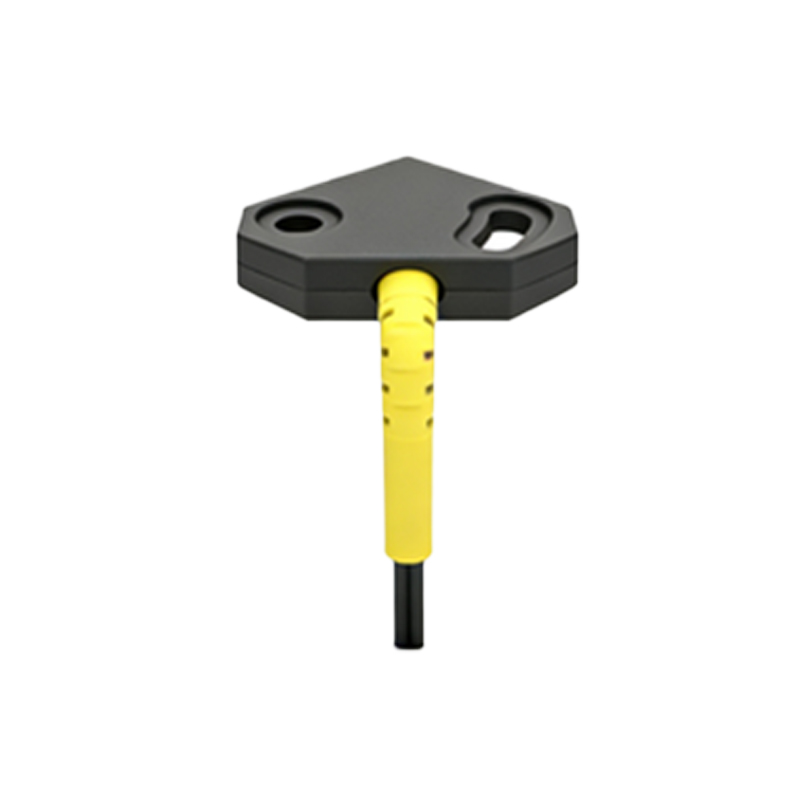
The interruptive, or through-beam, method is one of the most straightforward and reliable techniques for speed measurement. This configuration involves two separate components: a light emitter and a photoelectric receiver, positioned directly opposite each other. The target object, often a rotating shaft equipped with a slotted disk or a simple flag, passes between these two units. As each slot or object interrupts the light beam, the receiver's output transitions, generating a discrete pulse. The speed is then calculated by measuring the frequency of these pulses. For instance, if a disk has 60 slots and generates 600 pulses per second, the rotational speed is (600 pulses/second) / (60 slots/revolution) = 10 revolutions per second. This method is highly favored for its excellent signal-to-noise ratio and long sensing distances, making it ideal for heavy-duty industrial machinery, printing presses, and textile manufacturing equipment where consistent, high-accuracy readings are paramount.
Method 2: The Reflective (or Retro-Reflective) Method
In the reflective method, both the light source and the receiver are housed within a single sensor unit. The sensor emits a light beam towards a reflective target surface or a specially designed reflector. When the beam strikes the surface, it is reflected back to the receiver. For speed measurement, the target is modified with non-reflective markings or patterns. As the target moves, the alternating reflective and non-reflective areas cause the beam to be intermittently reflected, creating a pulse train at the receiver. The speed is derived from the pulse frequency, similar to the interruptive method. This approach simplifies installation and alignment compared to the through-beam setup, as it only requires mounting a single device. It is extensively used in applications where space is constrained or where mounting components on both sides of the target is not feasible, such as in packaging lines, paper processing, and monitoring the speed of moving vehicles or conveyors.
Method 3: The Diffuse (or Proximity) Method
The diffuse method operates on a similar single-unit principle as the reflective method but does not require a dedicated reflector. Instead, the sensor relies on the diffuse reflection of light from the surface of the target object itself. The sensor emits light, and the receiver detects the portion scattered back from the object's surface. For speed measurement, the target must have sufficient contrast in its surface reflectivity—such as a printed pattern, a color variation, or a physical irregularity—to create detectable changes in the reflected signal as it moves past the sensor. This method offers the greatest installation flexibility, as it can detect virtually any object without additional hardware. However, it is generally effective over shorter ranges and can be more sensitive to the target's color, texture, and environmental conditions. Common applications include counting and speed monitoring on assembly lines, detecting label positions on bottles, and controlling robotic arms where non-invasive sensing is critical.
Comparative Analysis and Selection Criteria
Choosing the appropriate photoelectric speed measurement method depends on a thorough analysis of the application's specific demands. The interruptive method provides the highest accuracy and reliability for long-distance, high-speed applications but requires precise alignment of two separate units. The reflective method offers a good balance of performance and ease of installation, suitable for medium-range applications with reflective targets. The diffuse method delivers maximum versatility for close-range detection of varied surfaces but may require careful tuning to avoid false triggers. Key selection factors include required sensing distance, target characteristics (size, material, reflectivity), environmental conditions (ambient light, dust, vibration), desired accuracy, and budget constraints. Engineers must also consider output signal compatibility (e.g., NPN/PNP, analog, or digital protocols) with the broader control system for seamless integration.
Conclusion and Industry Outlook
Photoelectric sensors remain indispensable tools for precise speed measurement across diverse industries. The three core methods—interruptive, reflective, and diffuse—each provide unique solutions tailored to different operational challenges. As Industry 4.0 and the Industrial Internet of Things (IIoT) continue to evolve, these sensors are becoming smarter and more integrated. Future trends point towards miniaturization, enhanced connectivity via IO-Link and Ethernet, and advanced embedded diagnostics for predictive maintenance. Furthermore, the integration of machine learning algorithms with sensor data promises to enable not just speed measurement, but also anomaly detection and process optimization. Understanding the fundamental principles and applications of these photoelectric techniques is crucial for engineers to design efficient, reliable, and future-proof automated systems that drive productivity and innovation in the global industrial landscape.