In the realm of precision measurement and industrial automation, laser linear displacement sensors have become indispensable tools. These devices offer non-contact, high-accuracy measurement of position, distance, thickness, and vibration across a vast array of materials and surfaces. Their operation is fundamentally based on the principle of optical triangulation or time-of-flight measurement, providing micron-level or even sub-micron resolution where required.
At the core of a triangulation-based sensor is a focused laser diode that projects a visible or infrared spot onto the target surface. The reflected light is captured by a receiving lens at a specific angle and focused onto a position-sensitive detector, typically a CCD or CMOS array. Any change in the target's distance causes the reflected spot to shift its position on this detector. The sensor's internal processor calculates this shift with extreme precision, converting it into a highly accurate distance or displacement value. This method is exceptionally effective for precise measurements at relatively short ranges. For longer distances, time-of-flight sensors, which measure the round-trip time of a laser pulse, are often employed, though sometimes with a trade-off in ultimate resolution.
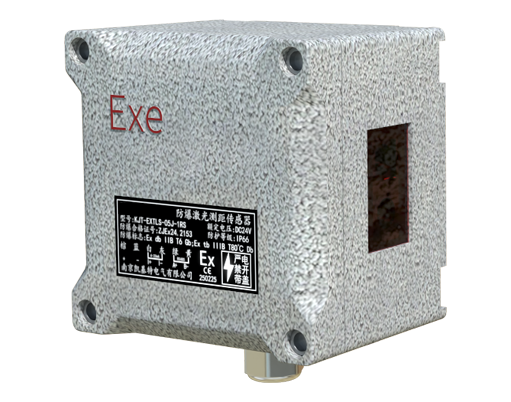
The advantages of using laser displacement sensors are numerous. Their non-contact nature eliminates mechanical wear and prevents damage to delicate surfaces. They provide exceptionally fast response times, enabling real-time monitoring and control in dynamic processes. Furthermore, they are capable of measuring objects regardless of material—be it metal, plastic, glass, rubber, or even liquid surfaces—though surface reflectivity and color can influence performance and may require sensor parameter adjustment.
Applications for these sensors span virtually every industry. In automotive manufacturing, they are used to measure panel gaps, inspect brake disc thickness, and control robot positioning. In electronics, they verify component coplanarity and solder paste height. In the metalworking sector, they monitor sheet thickness, vibration on rolling mills, and part dimensions. They are also crucial in research and development for material testing, wafer inspection, and micro-assembly alignment tasks.
Selecting the right laser displacement sensor requires careful consideration of several key parameters. The measuring range defines the minimum and maximum distances over which the sensor can operate accurately. Resolution indicates the smallest detectable change in distance, while linearity specifies the maximum deviation from a perfect straight-line output across the entire range. The spot size is critical, as a smaller spot allows for measurement on edges or small features. Response speed, or sampling rate, must be matched to the target's movement speed. Environmental factors like ambient light, temperature fluctuations, dust, and fumes must also be considered, as they can impact performance; many industrial sensors feature robust housings and protective filters to mitigate these effects.
Integration into automated systems is typically straightforward, with most sensors offering analog outputs (e.g., 0-10V, 4-20mA) and digital interfaces (RS-232, Ethernet, EtherCAT) for seamless communication with PLCs, data acquisition systems, and industrial computers. Proper installation is paramount: ensuring stability, minimizing vibration, and aligning the sensor perpendicular to the target surface are essential for achieving specified accuracy.
In conclusion, laser linear displacement sensors provide a versatile and powerful solution for demanding measurement challenges. By understanding their operating principles, key specifications, and application requirements, engineers and technicians can leverage their capabilities to enhance quality control, improve process efficiency, and enable advanced automation. As technology advances, these sensors continue to evolve, offering even greater precision, faster speeds, and enhanced connectivity for the smart factories of tomorrow.