Understanding the Core Functionality
Photoelectric sensors are indispensable components in modern industrial automation, and Jiexi sensors have carved a significant niche in this competitive market. At their core, these devices operate on a simple yet robust principle: they emit a beam of light (visible, infrared, or laser) and detect changes in the received light signal. This change is triggered by the presence, absence, or specific characteristics of a target object. The primary function is to convert this optical event into a stable, usable electrical signal—typically a switched output—to interface with controllers like PLCs. The reliability and precision of a Jiexi sensor in performing this fundamental task are governed by a detailed set of technical parameters. Understanding these specifications is not merely an academic exercise; it is critical for selecting the right sensor for an application, ensuring system reliability, preventing false triggers, and optimizing the performance of the entire automated process. This guide delves into the key parameters that define Jiexi photoelectric sensors, providing engineers with the necessary framework for informed decision-making.
Sensing Distance and Range
One of the first and most critical parameters to consider is the sensing distance. This is not a single value but encompasses several defined ranges. The *rated operating distance* is the nominal range at which the sensor is guaranteed to operate under standard conditions. For diffuse-reflective sensors, this distance is measured to a standard white target (like Kodak 90% white paper). For through-beam and retro-reflective types, it is the maximum reliable distance between emitter and receiver. More important, however, is the *assured operating distance*. This is a conservative value, typically 70-80% of the rated distance, which accounts for real-world variables such as target color, texture, temperature fluctuations, and voltage supply tolerances. Designing with the assured distance ensures a safety margin. Additionally, the *minimum sensing distance* is crucial, especially for diffuse sensors, as objects placed too close may not be detected due to the geometry of the light beam and receiver field of view.
Light Source and Beam Characteristics
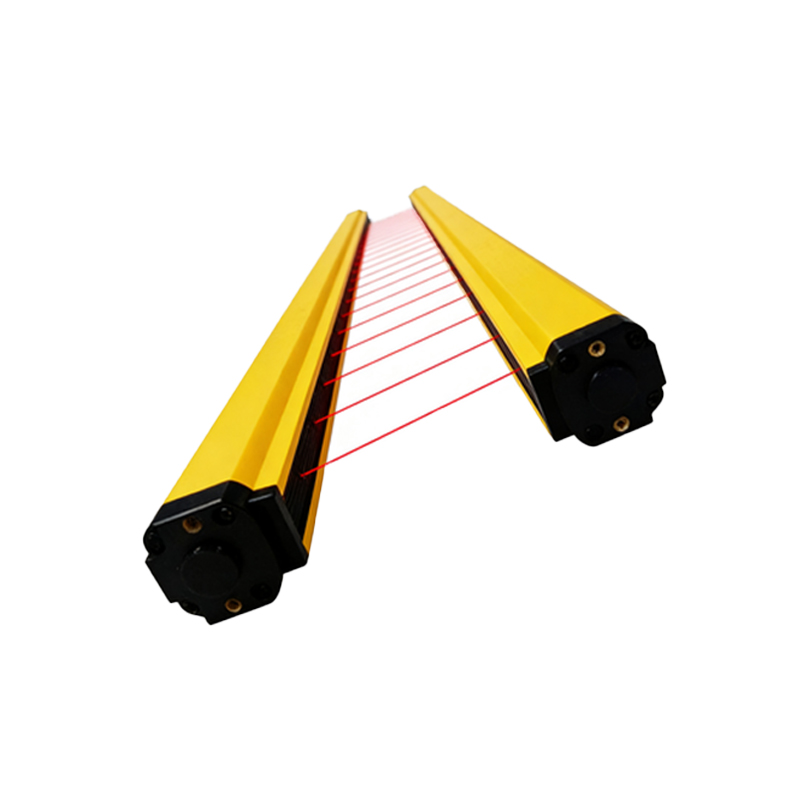
The type of light source directly impacts the sensor's capabilities. Jiexi sensors commonly employ red LED, infrared LED, or laser diode sources. Red LED beams are visible, aiding in setup and alignment, and are suitable for general-purpose detection. Infrared LEDs are invisible and often used in environments where visible light is undesirable or for detecting specific materials. Laser diodes provide a highly collimated, precise beam, enabling the detection of very small objects or precise positioning at longer ranges. The *beam spot size* is a key characteristic derived from the light source. A smaller spot allows for higher resolution, distinguishing between closely spaced objects or detecting minute features. Engineers must match the beam spot size and wavelength to the target's size, material, and environmental conditions to ensure optimal performance.
Response Time and Switching Frequency
In high-speed automation, the temporal performance of a sensor is paramount. The *response time* is the delay between the optical signal change and the corresponding change in the output signal. It is usually specified as the time to turn on (*t_ON*) and the time to turn off (*t_OFF*), typically in milliseconds or microseconds. A faster response time allows the sensor to keep pace with rapidly moving objects on a conveyor, for example. Closely related is the *switching frequency* or repeatability, expressed in Hertz (Hz). This parameter defines the maximum number of detection cycles (on/off pulses) the sensor can perform per second. Selecting a sensor with a switching frequency that exceeds the maximum expected object passage rate is essential to avoid missing counts or events in dynamic applications.
Output Configuration and Electrical Specifications
The output stage is the interface to the control system. Jiexi sensors offer various configurations: NPN (sinking) or PNP (sourcing) transistor outputs, analog current/voltage outputs (4-20mA, 0-10V), and relay outputs. The choice depends on the input compatibility of the connected controller (e.g., PLC). Key electrical parameters include the *operating voltage range* (e.g., 10-30V DC), which defines the power supply flexibility, and the *maximum load current* the output can switch, which must be respected to prevent damage. *Short-circuit and reverse polarity protection* are highly desirable features that enhance durability in harsh electrical environments. Furthermore, the *output status indicator* (LED) is a vital diagnostic tool for commissioning and troubleshooting.
Environmental Robustness and Housing
Industrial environments are challenging. Parameters related to environmental durability are non-negotiable. The *Ingress Protection (IP) rating* (e.g., IP67, IP69K) indicates the level of protection against dust and water. An IP67-rated Jiexi sensor can withstand temporary immersion, while IP69K denotes resistance to high-pressure, high-temperature washdowns. The *operating temperature range* specifies the ambient conditions within which the sensor will function within its stated tolerances. For applications involving vibration or mechanical shock, the relevant robustness specifications should be reviewed. The housing material, typically made from robust plastics like PBT or stainless steel, contributes to chemical resistance and mechanical strength, ensuring long-term reliability in demanding settings such as food processing, packaging, or automotive assembly lines.
Additional Features and Adjustability
Modern Jiexi photoelectric sensors often incorporate advanced features that enhance functionality. *Sensitivity adjustment* (via potentiometer or teach-in button) allows fine-tuning of the sensing threshold to accommodate varying target reflectivity or to ignore background objects. *Timer functions* (ON-delay, OFF-delay, one-shot) provide simple logic capabilities within the sensor itself. *Synchronization* or *anti-interference* features are critical when multiple sensors are used in close proximity to prevent crosstalk between their beams. Some models offer *IO-Link* communication, enabling digital parameter setting, real-time diagnostics, and process data monitoring, aligning with Industry 4.0 smart factory concepts. Evaluating these features against application needs can significantly simplify system design and add valuable intelligence at the edge of the network.