Introduction to Photoelectric Sensor Stabilization
In the demanding environment of industrial automation, the reliability and accuracy of sensor data are paramount. Photoelectric sensors, which detect the presence, absence, or distance of an object using a light transmitter and receiver, are fundamental components. However, their performance can be severely compromised by environmental interference such as ambient light fluctuations, dust, vibration, and temperature variations. A photoelectric sensor stabilizer is not a single physical component but rather a comprehensive system of electronic and algorithmic techniques designed to mitigate these disturbances. The core principle is to ensure that the sensor's output signal accurately reflects the target condition, not the noise. This involves sophisticated signal conditioning, filtering, and intelligent processing to maintain a stable baseline and provide a clean, decisive switching or analog output. Without effective stabilization, false triggers, missed detections, and unreliable measurements become frequent, leading to production errors and downtime.
Core Principles of Signal Conditioning
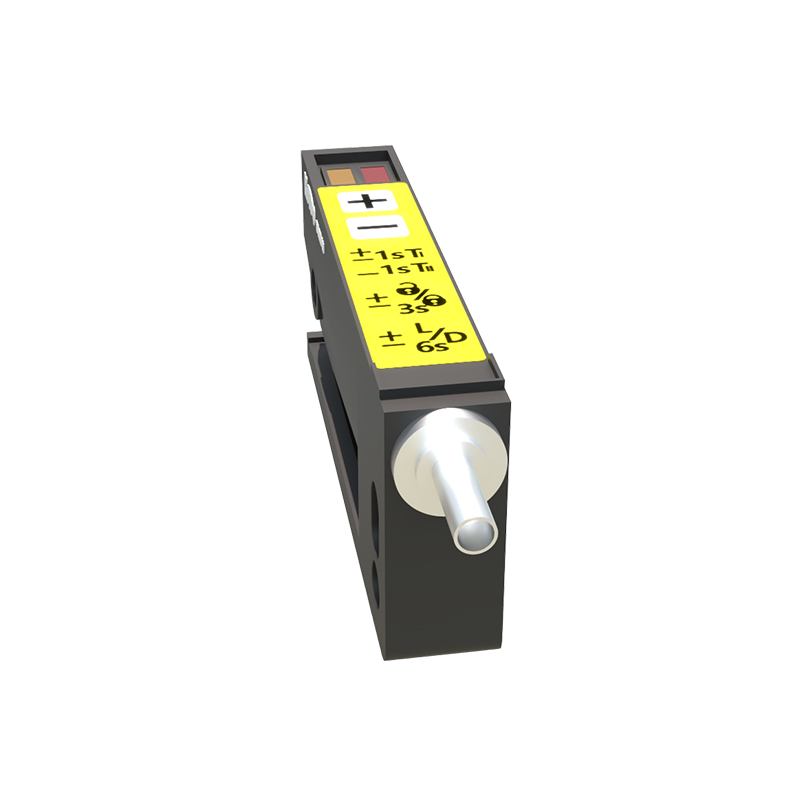
The first line of defense in stabilization occurs at the signal conditioning stage. The photodetector, typically a phototransistor or photodiode, converts the received light intensity into a small electrical current. This raw signal is extremely vulnerable. A transimpedance amplifier is employed to convert this weak current into a more robust voltage signal. Following this, various filtering techniques are applied. A low-pass filter is crucial for attenuating high-frequency noise originating from electrical sources like motors or variable frequency drives. For sensors susceptible to specific ambient light frequencies, such as 50/60 Hz from mains lighting, notch filters can be implemented to remove these precise interference bands. Additionally, automatic gain control circuits can dynamically adjust the amplifier's sensitivity based on the overall received light level, preventing saturation from sudden bright ambient light and maintaining sensitivity in low-light conditions.
Advanced Modulation and Demodulation Techniques
To achieve high immunity against constant ambient light, modern photoelectric sensors utilize modulated light sources. Instead of emitting a continuous beam, the transmitter's LED is pulsed at a specific high frequency (e.g., several kHz). The receiver circuit is then tuned to detect only signals oscillating at this exact modulation frequency. This synchronous demodulation process effectively ignores all DC components and low-frequency noise, including steady ambient light. Only the light that is "coded" with the correct frequency is recognized as the valid signal. This principle is especially powerful for background suppression sensors and long-range applications. The stabilizer's role here is to generate a precise, stable modulation frequency and to maintain the integrity of the synchronous detection circuit, ensuring maximum signal-to-noise ratio.
Digital Processing and Adaptive Algorithms
Microcontroller units have revolutionized sensor stabilization by enabling digital signal processing. After analog conditioning, the signal is digitized by an analog-to-digital converter. Software algorithms then perform advanced filtering, such as moving average filters or digital low-pass filters, to smooth out transient spikes. More sophisticated stabilizers employ adaptive thresholding. Instead of a fixed trigger point, the system continuously monitors the signal's background level and dynamically adjusts the detection threshold. This compensates for gradual contamination buildup on the lens or slow changes in ambient conditions. Some sensors incorporate teach-in functions, where the stabilizer learns the signal levels for "object present" and "object absent" states during setup, automatically calculating an optimal, stable switching point.
Environmental Compensation Mechanisms
Temperature is a critical factor affecting both the LED's output intensity and the photodetector's sensitivity. High-quality stabilizers include temperature compensation circuits. These may use a temperature sensor to monitor the internal environment and adjust the drive current to the LED or the gain of the receiver amplifier accordingly, maintaining consistent performance across the specified operating temperature range. For sensors in vibrating environments, mechanical design works in tandem with electronic stabilization. Secure mounting, robust housings, and sometimes internal damping minimize mechanical shock. Electronically, the stabilizer's filtering parameters can be tuned to reject the characteristic frequencies of the vibration, ensuring the optical alignment and signal integrity are preserved.
Application-Specific Stabilization Strategies
Different sensor modes require tailored stabilization approaches. In a retro-reflective sensor with a reflector, the stabilizer must distinguish the strong, modulated return signal from the reflector from any weaker, potentially modulated reflections off shiny background objects. It employs stricter criteria for signal strength and pulse recognition. For diffuse sensors detecting a wide variety of surfaces, the stabilizer often has a broader dynamic range and more aggressive AGC to handle vastly different reflectivities. In contrast, precise distance measurement using analog triangulation or time-of-flight principles demands exceptionally stable reference voltages and clock signals within the stabilizer circuit to ensure measurement precision is not drifted by electrical noise.
Conclusion and Industry Impact
The principles behind photoelectric sensor stabilization encompass a multi-layered approach combining analog electronics, modulation schemes, digital processing, and environmental hardening. This integrated system transforms a simple light detection device into a robust, reliable industrial component. Effective stabilization directly translates to increased machine uptime, higher product quality through consistent detection, and reduced maintenance costs by minimizing false alarms. As Industry 4.0 demands more data and higher precision, the role of the stabilizer becomes even more critical, enabling photoelectric sensors to perform reliably in increasingly complex and challenging automated systems, forming the stable sensory foundation of modern smart factories.