Fundamental Operating Principle
Inductive proximity sensors are non-contact electronic devices designed to detect the presence or absence of metallic objects. Their core operation relies on the principle of electromagnetic induction. The sensor's active face contains a coil that is part of an oscillator circuit, generating a high-frequency electromagnetic field. When a conductive metal target enters this field, eddy currents are induced on the target's surface. These eddy currents draw energy from the oscillator, causing a reduction in its oscillation amplitude. An integrated evaluation circuit monitors this amplitude change. Once the amplitude drop exceeds a predefined threshold, the sensor's output state switches, signaling the detection of an object. This principle allows for reliable detection without any physical contact, making them ideal for harsh industrial environments where wear and tear from mechanical contact is a concern.
Key Performance Characteristics and Specifications
Understanding the key specifications is crucial for proper sensor selection. The sensing distance, or nominal range (Sn), is a primary parameter, typically ranging from 1 to 40 mm for standard cylindrical sensors. It's important to note that this is defined for a standard mild steel target. Correction factors must be applied for other metals; for instance, stainless steel may reduce the effective range, while copper or aluminum reduces it further. Another critical specification is the repeat accuracy, which defines how consistently the sensor can detect an object at the same point. The operating frequency, or switching frequency, indicates how many on/off cycles per second the sensor can handle, which is vital for high-speed counting applications. Environmental ratings like IP67 or IP69K define the sensor's resistance to dust and water ingress, ensuring reliability in washdown or outdoor settings.
Common Output Configurations and Wiring
Inductive sensors are available in several output types to interface with different control systems. The two main categories are DC (3-wire) and AC (2-wire) versions. DC sensors are most common, offering PNP (sourcing) or NPN (sinking) transistor outputs. A PNP sensor switches the positive voltage to the load, while an NPN switches the negative or ground side. The choice depends on the input configuration of the connected programmable logic controller (PLC) or relay. Analog output versions (4-20 mA or 0-10 V) provide a continuous signal proportional to the distance to the target, useful for positioning or monitoring applications. For wiring, attention must be paid to the supply voltage range (e.g., 10-30 V DC) and the load current capacity to avoid damaging the output transistor. Short-circuit and reverse polarity protection are standard features in modern designs.
Major Application Areas in Industrial Automation
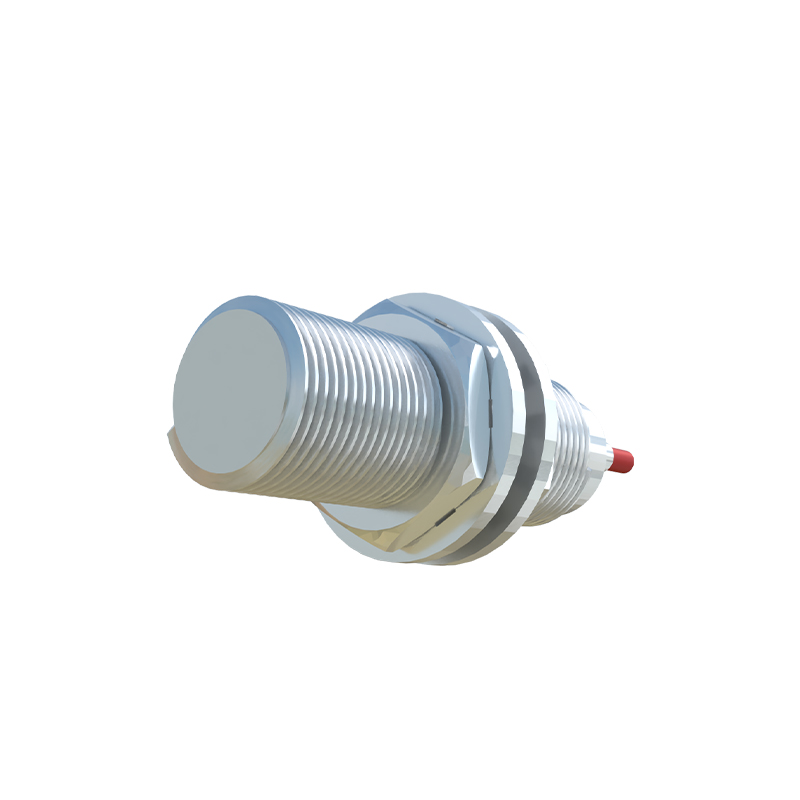
The robustness and reliability of inductive proximity sensors make them ubiquitous in factory automation. A primary use is in position sensing on production lines and machinery, such as verifying the presence of a metal part in a fixture, detecting the end-of-travel of a cylinder, or confirming the closure of a safety guard. They are extensively used for counting metallic objects on conveyor belts. In metalworking, they monitor tool presence or breakage in CNC machines. Their sealed housings allow use in material handling for level detection in bins or silos containing metal parts. Because they are unaffected by dirt, oil, and non-metallic debris (like wood chips or plastic flakes), they outperform optical sensors in many dirty environments, ensuring stable operation with minimal maintenance.
Selection Criteria and Installation Best Practices
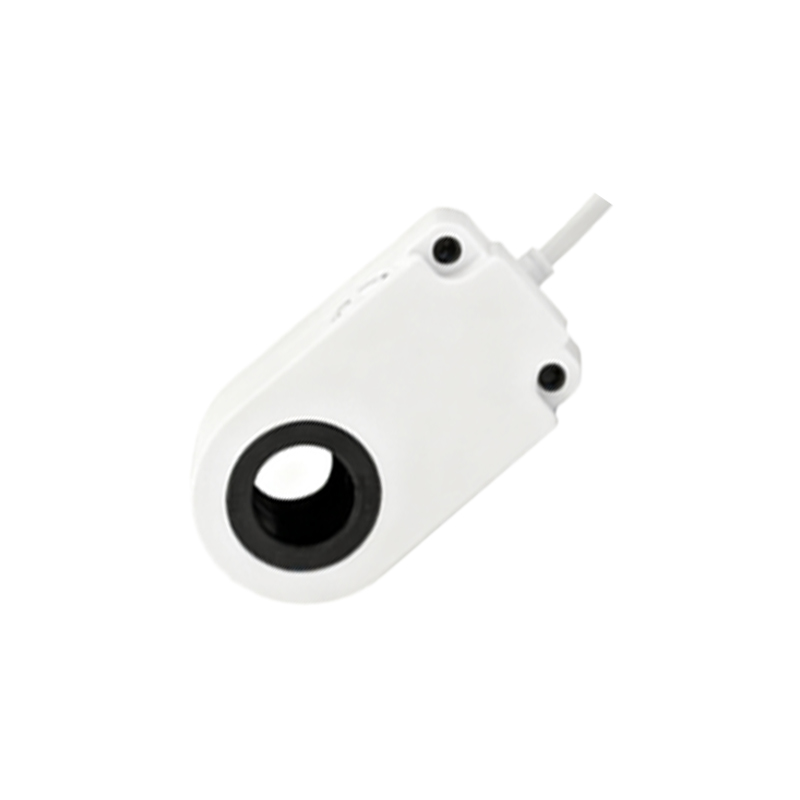
Selecting the right sensor involves more than just the sensing distance. First, identify the target material and size; smaller targets may require a sensor with a reduced sensing face or a factor-1 rated range. The housing material and shape (cylindrical, rectangular, ring-shaped) must suit the mechanical mounting constraints. Consider the required electrical output (PNP/NPN/ Analog) and connection method (cable or quick-disconnect). For installation, maintain the specified mounting clearances from surrounding metal to prevent false triggering from the sensor's lateral magnetic field. Ensure the target approaches the sensor's active face perpendicularly for maximum range and accuracy. In applications with multiple sensors mounted closely, select models with anti-interference designs or alternate their operating frequencies to prevent crosstalk. Regular functional checks should be part of preventive maintenance routines.
Advantages Over Other Sensor Technologies
Compared to other non-contact sensing methods, inductive proximity sensors offer distinct benefits. Unlike capacitive sensors, they react only to metals, providing high immunity to environmental changes like humidity or material buildup on the sensing face. They are more robust and resistant to shock/vibration than mechanical limit switches. Compared to ultrasonic sensors, they offer much faster response times and higher switching frequencies, are less affected by air turbulence or temperature gradients, and are typically more cost-effective for simple