Understanding Through-Beam Sensor Fundamentals
Through-beam photoelectric sensors, often considered the most robust and reliable type, operate on a simple yet powerful principle. The system consists of two separate units: a transmitter and a receiver. The transmitter emits a continuous beam of light, typically from an LED source—infrared, red, or laser. The receiver, positioned directly opposite, is dedicated to detecting this specific light signal. Detection occurs when an object physically interrupts this beam, causing the receiver's output state to change. This physical separation of emitter and receiver provides the highest possible sensing energy, resulting in exceptional sensing distances and immunity to environmental factors like target color, reflectivity, or surface finish. The core performance metric for detecting very small objects is the effective beam diameter and the receiver's sensitivity.
The Critical Role of Beam Diameter and Alignment
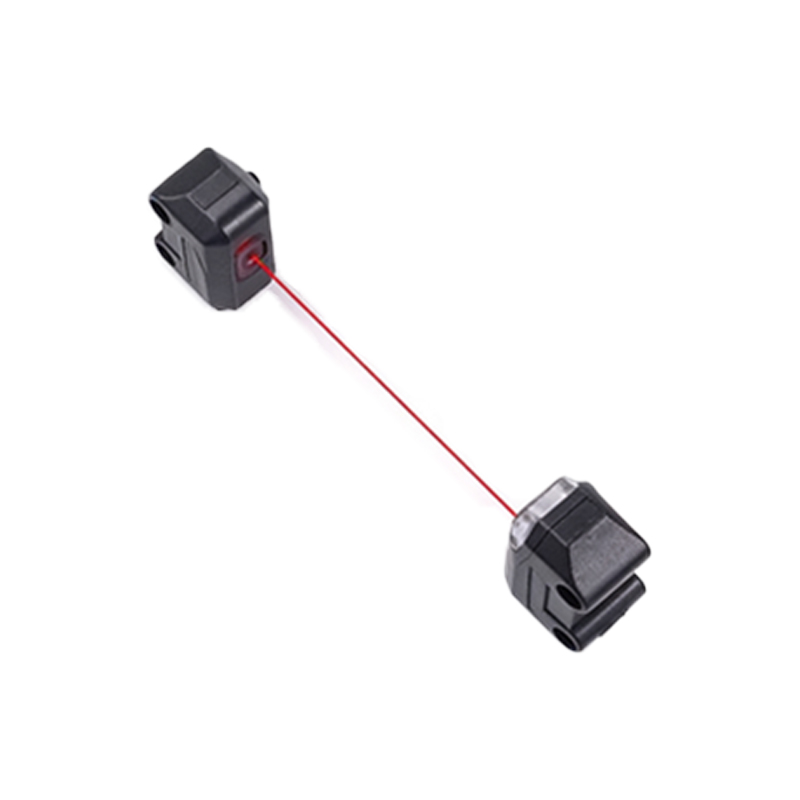
The ability to detect a 1mm object is fundamentally constrained by the sensor's beam diameter. A standard through-beam sensor might have a beam that spreads to several millimeters or even centimeters over distance. An object smaller than the beam width may only partially obstruct the light, potentially allowing enough signal to reach the receiver to prevent a reliable detection state. Therefore, detecting a 1mm target requires a focused beam with a diameter at the sensing point that is equal to or, ideally, smaller than the target itself. This is where laser through-beam sensors become essential. They provide a highly collimated, precise beam—often less than 1mm in diameter even at significant ranges—creating a sharp "knife-edge" for detection. Precise mechanical alignment of the transmitter and receiver is equally critical; even a slight misalignment can cause the tiny object to miss the narrow beam entirely.
Laser Diode Technology: Enabling Precision Detection
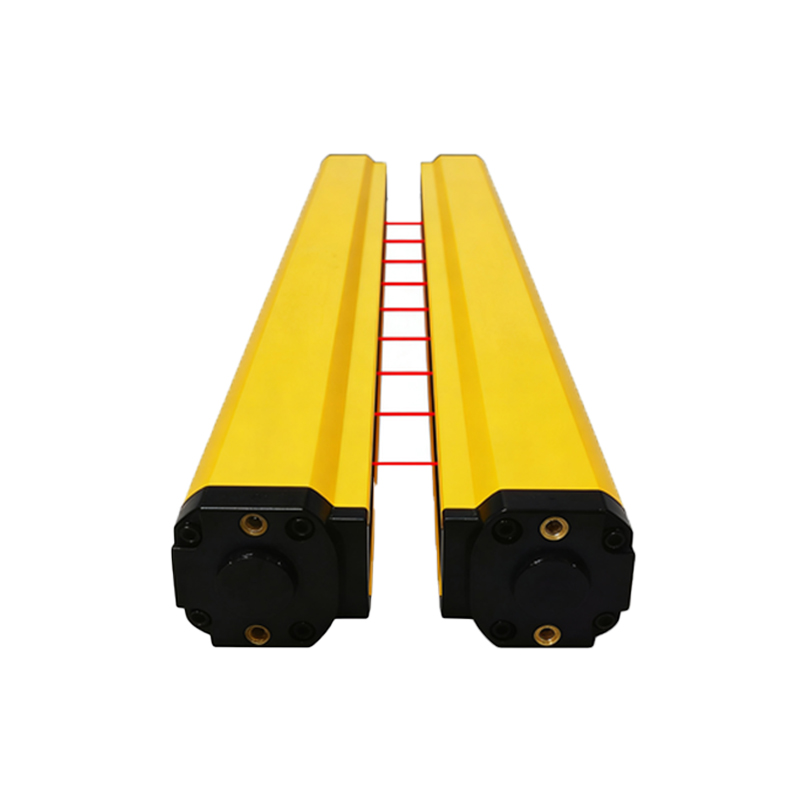
For the specific task of detecting 1mm objects, laser through-beam sensors are the unequivocal choice. They utilize a visible red or Class 1/Class 2 laser diode to generate an extremely narrow, coherent beam of light. This focused beam minimizes dispersion, maintaining a small spot size over long sensing distances, sometimes up to several meters. The receiver is tuned to this specific wavelength and modulation frequency, providing high immunity to ambient light interference. The combination of a sub-1mm beam and a high-response-speed receiver allows these sensors to reliably detect the presence or absence of minute objects such as thin wires, small component leads, or precise edges in high-speed automation and electronics assembly applications.
Overcoming Practical Application Challenges
Specifying a sensor capable of a 1mm beam is only the first step. Real-world installation presents challenges. Vibration can disrupt the critical alignment. Thermal drift may cause slight expansion or contraction of mounting hardware, leading to misalignment over time. Contamination like dust or oil mist on the lenses can attenuate the signal. To combat these issues, practitioners use stable, rigid mounting brackets, sensors with built-in alignment indicators (often LED signals on the receiver showing signal strength), and models with robust housings and high ingress protection (IP) ratings. Regular maintenance checks for lens cleanliness and alignment verification are standard procedure in precision applications.
Key Specifications for Evaluating Suitability
When selecting a through-beam sensor for detecting 1mm objects, engineers must scrutinize several key specifications beyond just the detection capability. First is the *Beam Spot Size* at the intended sensing distance, which must be ≤1mm. *Repeatability* is crucial, indicating how consistently the sensor can detect the edge of the tiny object. *Response Time* must be fast enough for the application's cycle speed; detecting a 1mm object on a fast-moving conveyor requires microsecond-level response. *Environmental Ratings* (IP67/IP69K) ensure reliability against washdowns or dust. Finally, *Output Type* (PNP/NPN, analog, or IO-Link) must integrate seamlessly with the control system, potentially providing diagnostic data for predictive maintenance.
Conclusion: A Achievable Feat with the Right Technology
In conclusion, detecting a 1mm object with a through-beam photoelectric sensor is not only possible but is a routine application in precision industries. The task, however, mandates the use of focused laser diode-based sensors, not standard diffuse or retro-reflective types. Success hinges on the precise specification of a sensor with a sufficiently narrow beam diameter, careful installation and alignment, and consideration of the operational environment. When correctly applied, these sensors offer unmatched reliability for presence detection of ultra-small objects, ensuring quality control and process efficiency in demanding manufacturing environments. The limitation is not the principle, but the practical execution guided by precise engineering.