Understanding the Core Technology of Proximity Sensors
Proximity sensors are indispensable components in industrial automation, primarily used for non-contact detection of objects. The most common types are inductive, capacitive, ultrasonic, and photoelectric sensors. Each operates on a distinct physical principle, which directly influences its ability to detect different materials. Inductive proximity sensors, for instance, generate an electromagnetic field. They detect the presence of metallic objects by sensing eddy currents induced in the target material. This fundamental operating principle is the key to understanding their interaction with specific metals like aluminum.
The Inductive Sensor and Non-Ferrous Metals Challenge
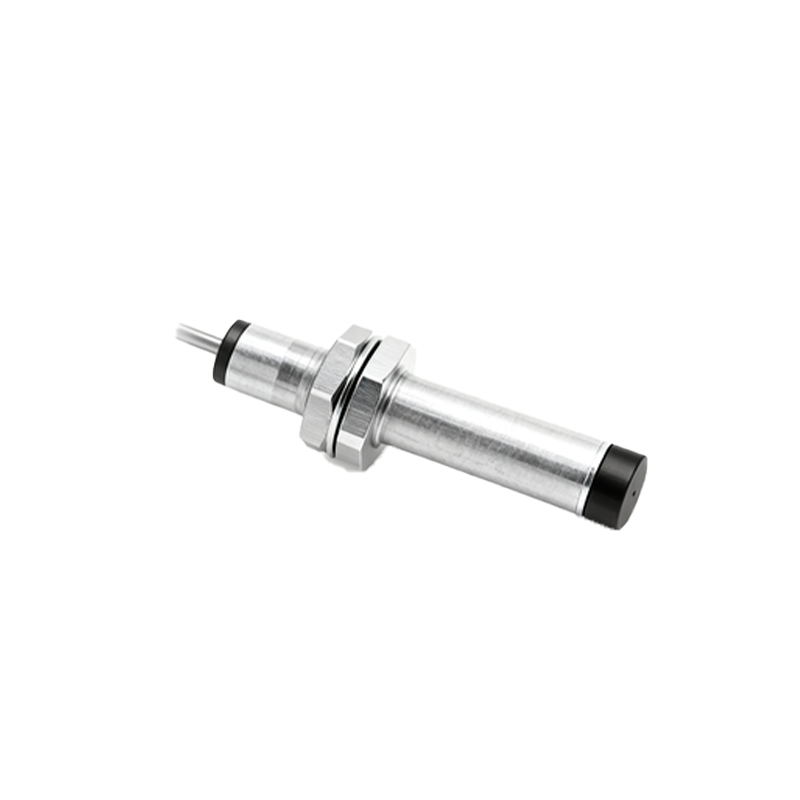
The central question—can proximity sensors detect aluminum—requires a nuanced answer. Standard inductive proximity sensors are optimized for detecting ferrous metals, primarily iron and steel. These materials have high magnetic permeability, which significantly distorts the sensor's electromagnetic field, triggering a detection signal. Aluminum, however, is a non-ferrous metal with low magnetic permeability. It does not distort the magnetic field in the same pronounced way. Instead, aluminum is an excellent electrical conductor. When an aluminum object enters the sensing field, eddy currents are induced on its surface. These eddy currents create their own opposing magnetic field, which the sensor can detect. Therefore, yes, standard inductive sensors can detect aluminum, but with a critical caveat: the sensing distance is substantially reduced.
Factors Affecting Detection Range for Aluminum
The reduced effective sensing range is the primary consideration when detecting aluminum with inductive sensors. Manufacturers specify a nominal sensing distance (Sn) for mild steel, typically a 1mm thick square plate. For aluminum, this effective sensing distance is often only 30% to 40% of the Sn value. For example, a sensor with an Sn of 10mm for steel may only detect a similar aluminum object at 3-4mm. This reduction factor, known as the "correction factor," varies based on the aluminum alloy's specific conductivity and the sensor's operating frequency. The size, thickness, and shape of the aluminum target also play crucial roles. A larger, thicker plate will be detected at a greater distance than a thin wire or small screw.
Specialized Sensors for Enhanced Aluminum Detection
To overcome the limitation of reduced range, specialized inductive proximity sensors are available. These are often labeled as "non-ferrous metal" sensors or "all-metal" sensors. They typically operate at higher frequencies, which increases the eddy current losses in conductive materials like aluminum, copper, and brass. Consequently, these sensors offer a much better, and sometimes nearly equal, sensing range for aluminum compared to steel. For critical applications requiring reliable and consistent detection of aluminum parts, investing in these purpose-built sensors is highly recommended to ensure system robustness and avoid false triggers.
Alternative Sensing Technologies for Aluminum
When detection distances need to be longer or when detecting non-metallic materials coated with aluminum, other proximity sensor technologies become relevant. Capacitive proximity sensors can detect aluminum regardless of its magnetic properties by sensing changes in capacitance. They are suitable for detecting aluminum foil, thin sheets, or containers. Ultrasonic sensors use sound waves and are completely material-agnostic, making them excellent for detecting aluminum objects at greater distances. Photoelectric sensors (through-beam or retro-reflective) are also highly effective, as they detect the interruption or reflection of a light beam, making the object's material composition largely irrelevant unless it is transparent.
Practical Application and Calibration Guidelines
For engineers integrating sensors in a production line handling aluminum components, careful selection and calibration are paramount. First, identify the required sensing distance and choose a sensor with a nominal range that, when multiplied by the aluminum correction factor (often 0.3-0.4), meets your mechanical gap requirement. Always refer to the sensor datasheet for the specific correction factor. During installation, perform real-world testing with the actual aluminum part. Factors like surface oxidation, alloy grade, and temperature can slightly affect performance. Ensure the sensor is not mounted on or near an aluminum machine frame, as this can cause background interference and reduce sensitivity or cause instability.