Introduction to Photoelectric Sensing in Fluid Control
Photoelectric sensors are pivotal components in modern industrial automation, particularly for detecting the presence or absence of liquids like water in various systems. Their operation in inductive water applications—a term often used to describe systems where sensor detection indirectly infers water flow or level through its properties—relies on the fundamental principles of light emission and reception. Unlike purely inductive proximity sensors that detect metallic objects, photoelectric sensors for fluids use light beams. They are engineered to overcome challenges like turbidity, foam, and condensation, making them versatile for water management in manufacturing, wastewater treatment, and building automation. The core advantage lies in their non-contact detection, which prevents contamination and reduces maintenance, ensuring long-term reliability in demanding environments where water is a key medium.
Core Operating Principle: The Interruption Method
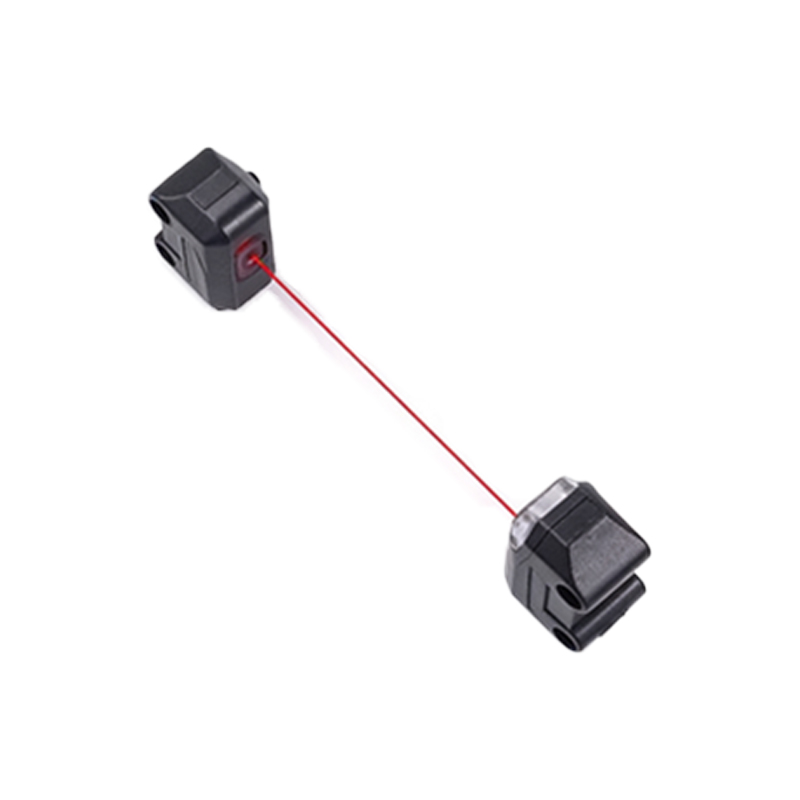
The most common principle for detecting water or other clear liquids is the through-beam interruption method. This system consists of two separate units: a light emitter and a receiver, positioned opposite each other across the fluid path. The emitter continuously projects a focused beam of light—often infrared, red, or laser light—toward the receiver. When no water is present in the sensing gap, the light beam reaches the receiver unimpeded, maintaining the circuit in a "normal" state. The critical moment occurs when water flows through or fills the gap. Even clear water absorbs and refracts a portion of the light beam. This interruption or attenuation of the light signal causes a detectable change in the receiver's output. The receiver's phototransistor or photodiode converts this diminished light intensity into an electrical signal change, which the sensor's amplifier processes to switch its output state, signaling the presence of water.
Advanced Techniques: Diffuse Reflection and Retro-reflective Sensing
For applications where mounting opposite sides is impractical, diffuse reflection (proximity) mode is employed. Here, the emitter and receiver are housed in a single unit. The sensor emits light onto the target surface—which could be the water surface itself or a float mechanism. When water is present at the correct level, the light beam strikes its surface. Due to water's reflective properties, a portion of the light is scattered back towards the receiver. The sensor is finely tuned to detect this specific reflected signal. A significant challenge with clear liquids is their poor reflectivity. Therefore, sensors often use specialized algorithms and high-intensity beams to distinguish the weak signal from background noise. Retro-reflective mode uses a reflector opposite the sensor unit, but a polarizing filter is typically required to ignore reflections from shiny liquid surfaces, ensuring detection is based on beam breakage by the water stream or object.
Key Components: Light Source, Receiver, and Housing
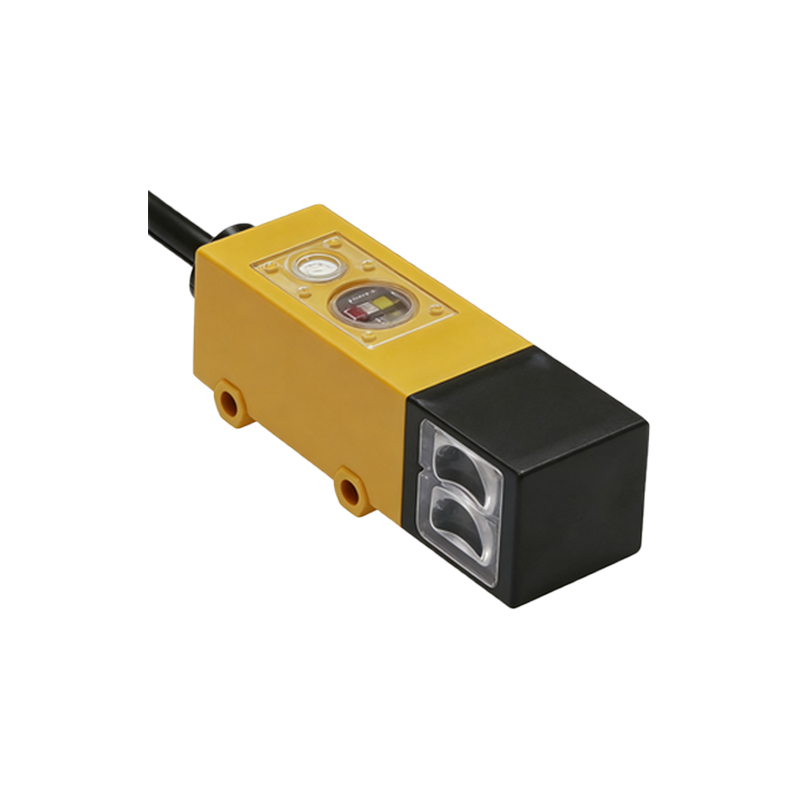
The reliability of a photoelectric sensor in wet environments hinges on its components. The light source is typically a Light Emitting Diode (LED) due to its long life, low heat, and precise wavelength. Infrared LEDs (880 nm) are prevalent as they penetrate slight contamination better and are less affected by ambient light. For detecting ultra-clear water, sensors may use shorter wavelength blue or green light, which is more readily absorbed. The receiver is a semiconductor device like a phototransistor, sensitive to the specific emitted wavelength. The most critical aspect is the housing and lens design. Sensors for inductive water applications feature housings rated IP67, IP68, or IP69K, providing complete protection against dust and prolonged immersion. The lens is made from materials resistant to chemicals and scratching, and is often configured to create a precise, narrow beam for accurate detection, even in the presence of spray or condensation.
Overcoming Environmental Challenges in Water Detection
Industrial settings present numerous interferences. Ambient light from sunlight or factory lamps can saturate the receiver. To counter this, sensors use modulated light pulses. The emitter sends a high-frequency pulsed beam, and the receiver's circuitry is synchronized to only recognize light pulsing at that exact frequency, effectively filtering out constant ambient light. Turbidity, bubbles, and foam can cause false triggers. Advanced sensors incorporate time-delay functions and threshold adjustments to differentiate between a steady water stream and transient bubbles. Condensation on the lens is mitigated by hydrophobic coatings and heating elements in some high-end models. For applications involving varying water colors or contaminants, sensors with teach-in functionality allow on-site calibration to set the detection threshold for the specific medium.
Typical Applications in Inductive Water Systems
These sensors are integral across industries. In coolant and lubrication systems on CNC machines, they monitor flow in pipes to prevent dry running and equipment damage. In bottling and beverage plants, they verify fill levels in transparent containers. Within building management, they are used in water fountain controls, leak detection systems in basements, and tank level monitoring. A prime example of "inductive" application is in pump control, where the sensor does not measure flow directly but detects the presence of water in a sump or pipe, thereby inductively signaling the pump to start or stop. Their speed and accuracy also enable them to count water droplets or monitor very low flow rates in laboratory and pharmaceutical equipment.
Selection Criteria and Installation Best Practices
Selecting the correct sensor requires analyzing the medium, container, and environment. Key parameters include sensing distance, response time, light source type, output type (PNP/NPN analog, or IO-Link), and housing material (stainless steel or PBT plastic). For clear water in a clear pipe, a through-beam sensor is ideal. For level control in an opaque tank, a diffuse sensor targeting a float or the liquid surface itself is suitable. Installation must ensure the lens remains clean and correctly aligned. Mounting brackets should minimize vibration. Electrical connections must be properly sealed, and cables routed away from high-power lines to prevent electromagnetic interference. Regular maintenance involves visual inspection for mineral deposits or biofilm on the lens, which can be cleaned with appropriate solvents without damaging the coating.
The Future: Integration with IIoT and Smart Systems
The evolution of photoelectric sensors for water detection is moving towards greater intelligence and connectivity. Modern sensors with IO-Link communication provide not just a simple on/off signal, but diagnostic data such as signal strength, operating temperature, and lens contamination warnings. This facilitates predictive maintenance. Integration into Industrial Internet of Things (IIoT) platforms allows for centralized monitoring of water usage, leak trends, and system efficiency across an entire facility. Furthermore, advancements in laser technology and spectral analysis are enabling sensors to not only detect the presence of water but also infer certain qualities, such as clarity or the presence of specific solutes, by analyzing the light absorption spectrum, opening new frontiers in process control and environmental monitoring.