In the realm of precision measurement and sensing technology, two advanced solutions often dominate discussions: fiber optic sensors and laser sensors. While both serve the critical function of detecting and measuring physical parameters with high accuracy, their underlying principles, architectures, and ideal use cases differ significantly. Understanding these differences is essential for engineers and system designers to select the optimal technology for their specific application.
Fiber optic sensors operate based on the principle of modulating light properties as it travels through an optical fiber. The core component is the optical fiber, typically made of glass or plastic, which acts as both the sensing element and the signal transmission medium. Changes in the environment—such as strain, temperature, pressure, or vibration—alter the characteristics of the light (intensity, phase, wavelength, or polarization) propagating within the fiber. These alterations are then detected and interpreted at the receiver end. A major advantage of this technology is its immunity to electromagnetic interference (EMI), making it exceptionally reliable in electrically noisy environments like power plants or near heavy machinery. Furthermore, fiber optic sensors can be multiplexed, allowing multiple sensing points along a single fiber strand, which is highly beneficial for distributed sensing applications over long distances, such as in structural health monitoring of bridges, pipelines, or railways.
In contrast, laser sensors are typically point sensors that utilize a focused beam of coherent laser light to measure parameters like distance, displacement, thickness, or vibration of a target object. They often work on principles such as triangulation, time-of-flight, or interferometry. For instance, a laser displacement sensor projects a laser spot onto a target; the reflected light is captured by a receiver, and the change in the spot's position is used to calculate distance variations with micron-level precision. Laser sensors excel in applications requiring non-contact, high-speed, and high-resolution measurements of defined surfaces. They are ubiquitous in industrial automation for tasks like part inspection, alignment, and profile measurement on production lines. However, their performance can be affected by environmental factors like ambient light, dust, or the surface properties (color, reflectivity) of the target.
The choice between these two sensing technologies hinges on specific application demands. Fiber optic sensors shine in scenarios demanding distributed or quasi-distributed sensing, operation in harsh environments (corrosive, high-voltage, or high-temperature), and where intrinsic safety (no electrical sparks) is paramount. Examples include monitoring temperature gradients in high-voltage transformers, detecting leaks along oil and gas pipelines, and sensing strain in composite materials for aerospace. Their small size and flexibility also allow for embedding into structures.
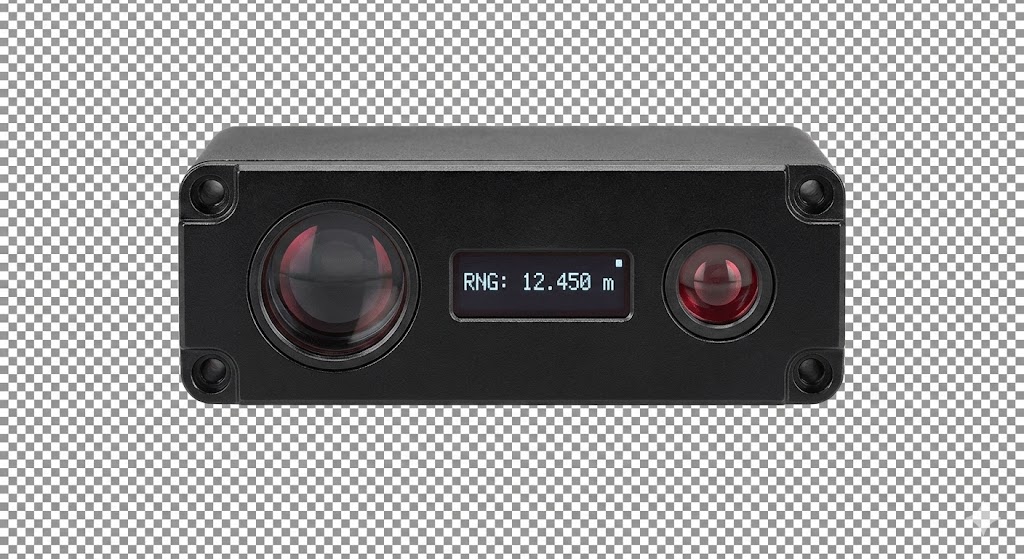
Laser sensors, with their exceptional precision and fast response times, are the go-to solution for dynamic, non-contact measurement of discrete points. They are fundamental in precision manufacturing, robotics (for object detection and positioning), and laboratory metrology. A limitation is their line-of-sight requirement; the path between the sensor and target must be clear.
In conclusion, fiber optic sensors and laser sensors are complementary rather than competing technologies. Fiber optics offer robust, distributed sensing capabilities immune to EMI, ideal for infrastructure and harsh environments. Laser sensors provide unparalleled point measurement accuracy and speed for industrial automation and quality control. The decision ultimately rests on the specific parameters to be measured, the environmental conditions, required resolution, and system constraints. As both technologies continue to evolve, their integration into smarter industrial IoT systems promises even greater advancements in sensing and control.