Understanding Capacitive Sensing Technology
Capacitive proximity sensors operate on a fundamental principle of physics: the ability to store an electrical charge. Unlike their inductive counterparts which detect only metals, capacitive sensors can detect a vast array of materials, including liquids, powders, granules, and both metallic and non-metallic solids. At the core of the sensor is an electrode, which forms one plate of a capacitor. The target object acts as the second plate. An oscillator circuit generates an electrostatic field emanating from the sensing face. When a target enters this field, it causes a measurable change in the capacitance of the system. This change triggers the sensor's internal circuitry to switch its output state, signaling the presence of the object. The sensitivity is often adjustable, allowing the sensor to be fine-tuned for specific materials or to ignore interfering substances like container walls.
Key Components and Internal Operation
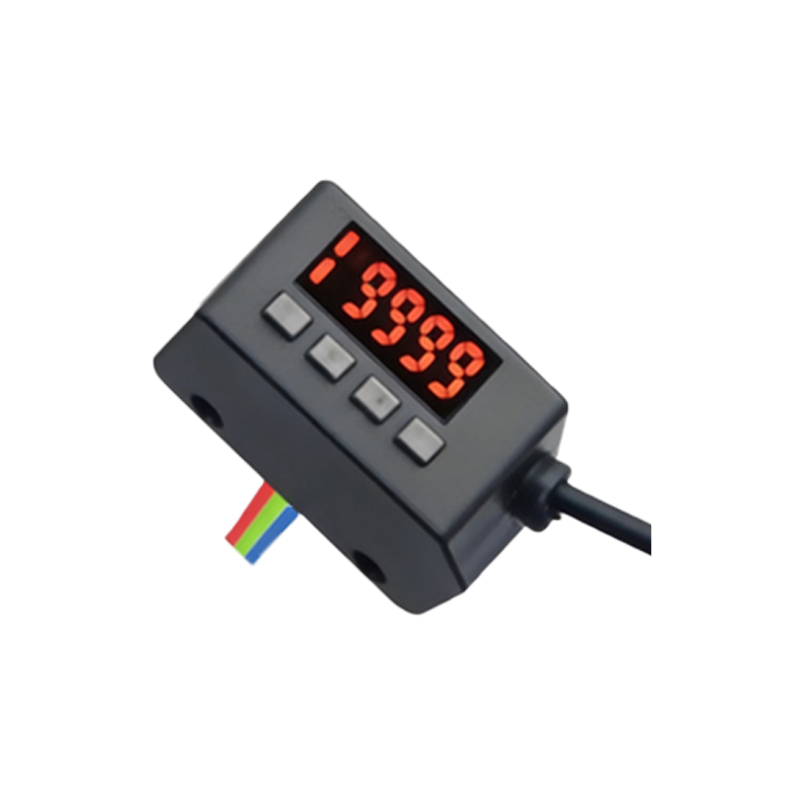
The internal architecture of a capacitive sensor is engineered for reliability and precision. The primary component is the sensing electrode, connected to an oscillator. A demodulator converts the oscillator's signal into a direct current (DC) level. This DC level is then compared to a pre-set threshold by a trigger circuit. Once the threshold is exceeded—indicating sufficient capacitance change due to a target's presence—the output stage activates. Modern sensors often incorporate microprocessors for advanced functions like diagnostics, temperature compensation, and output configuration. The housing is typically made from materials like PBT or stainless steel to withstand harsh industrial environments, including exposure to chemicals, moisture, and physical impact.
Primary Industrial Applications and Use Cases
The versatility of capacitive sensors makes them indispensable across numerous industries. In packaging, they reliably detect the presence of liquid in bottles or the level of powder in cartons, regardless of the material's color or transparency. In the food and beverage sector, they monitor levels of liquids, grains, or viscous materials inside non-metallic tanks, ensuring process continuity. Woodworking and plastics industries use them to detect boards, composite materials, or glue beads. A critical application is liquid level detection, where sensors can be mounted externally on glass or plastic tanks to detect the presence or absence of liquid without direct contact, preventing contamination. They are also used for part presence verification in assembly lines and controlling fill levels in hoppers and silos.
Advantages Over Other Sensor Types
Capacitive sensors offer distinct benefits that dictate their selection for specific tasks. Their most significant advantage is material versatility; they can detect almost any solid or liquid. They are capable of sensing through non-metallic walls, enabling non-invasive level control. They generally exhibit good resistance to dust, moisture, and many industrial contaminants when properly selected and installed. Furthermore, they are not affected by the color or surface reflectivity of a target, a common challenge with photoelectric sensors. For detecting non-metals or materials inside insulating containers, capacitive sensors are often the only viable non-contact solution.
Limitations and Important Considerations
Despite their versatility, capacitive sensors have limitations that engineers must account for. They can be influenced by environmental factors such as humidity and temperature, which may affect dielectric constants. Sticky materials can adhere to the sensing face, causing a false permanent detection. The sensing range is typically shorter than that of ultrasonic or some photoelectric sensors. A major consideration is susceptibility to unintended activation by conductive contaminants like water droplets or build-up on the sensor face. Therefore, regular maintenance and correct installation—ensuring a stable mounting and a clean sensing surface—are crucial for reliable operation. Sensitivity adjustment is key to tuning out the container wall while still detecting the material inside.
Guidelines for Selection and Installation
Selecting the right capacitive sensor requires a systematic approach. First, identify the target material and its dielectric constant; materials with higher constants (like water) are easier to detect than those with low constants (like plastics). Determine the required sensing distance, applying a safety factor, as the rated sensing distance is typically defined for a metal target. Consider the housing material and form factor (cylindrical, rectangular, etc.) based on the mounting constraints and environmental conditions (IP rating, chemical resistance). Choose the output type (PNP/NPN, NO/NC, analog) compatible with the control system. During installation, ensure the sensor is mounted securely and that there is adequate clearance around the sensing area to prevent interference from surrounding metal or other objects. Always follow the manufacturer's guidelines for flush or non-flush mounting.
Future Trends and Technological Developments
The evolution of capacitive sensing technology continues to enhance its capabilities. Integration with Industrial Internet of Things (IIoT) platforms is a growing trend, with sensors providing digital diagnostics and predictive maintenance data directly to networked control systems. Miniaturization allows for their use in increasingly compact machinery. Advances in materials and circuitry are improving immunity to environmental interference and enabling more stable detection of low-dielectric materials. Furthermore, the development of hybrid sensors that combine capacitive, inductive, and photoelectric principles in a single housing is beginning to emerge, offering unparalleled flexibility for complex automation challenges. These innovations promise to solidify the role of capacitive proximity sensors as a cornerstone of industrial automation.