Introduction to Optical Proximity Sensors
Optical proximity sensors are widely used in industrial automation for detecting the presence, absence, or distance of objects without physical contact. These sensors operate by emitting a beam of light—typically infrared, visible, or laser—and measuring changes in the reflected light to determine object proximity. They offer advantages such as high precision, fast response times, and reliability in harsh environments. Common applications include assembly line monitoring, robotic guidance, packaging systems, and safety barriers. Understanding the different types of optical proximity sensors is essential for selecting the right technology for specific industrial needs.
Through-Beam Sensors
Through-beam sensors, also known as opposed-mode sensors, consist of separate emitter and receiver units placed opposite each other. The emitter projects a continuous light beam to the receiver. When an object interrupts this beam, the sensor triggers a detection signal. This design provides long sensing ranges, often exceeding 100 meters, and high immunity to environmental interference like dust or ambient light. Through-beam sensors are ideal for applications requiring reliable detection over large distances, such as conveyor belt systems, material handling, and security systems. However, installation can be more complex due to the need for alignment between two separate components.
Retro-Reflective Sensors
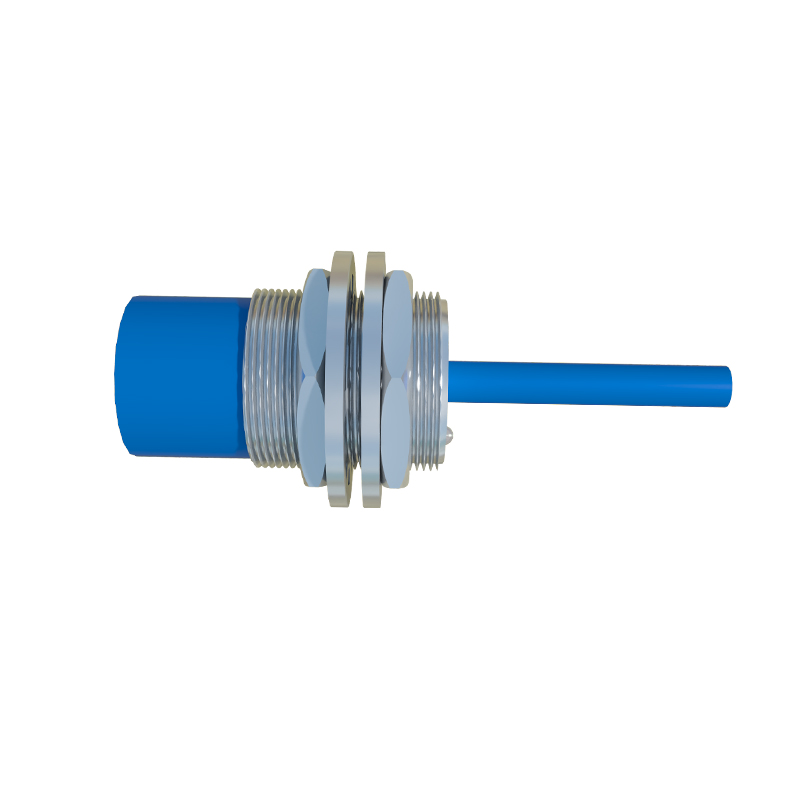
Retro-reflective sensors integrate both emitter and receiver into a single housing, using a reflector to bounce the light beam back. The sensor detects objects when they block the reflected beam. These sensors offer easier installation compared to through-beam types, with sensing ranges typically up to 20 meters. They are suitable for applications where space is limited or where mounting separate units is impractical. Common uses include pallet detection, door control, and automated storage systems. A potential drawback is that highly reflective objects might cause false triggers, though modern sensors often include polarization filters to mitigate this issue.
Diffuse Reflective Sensors
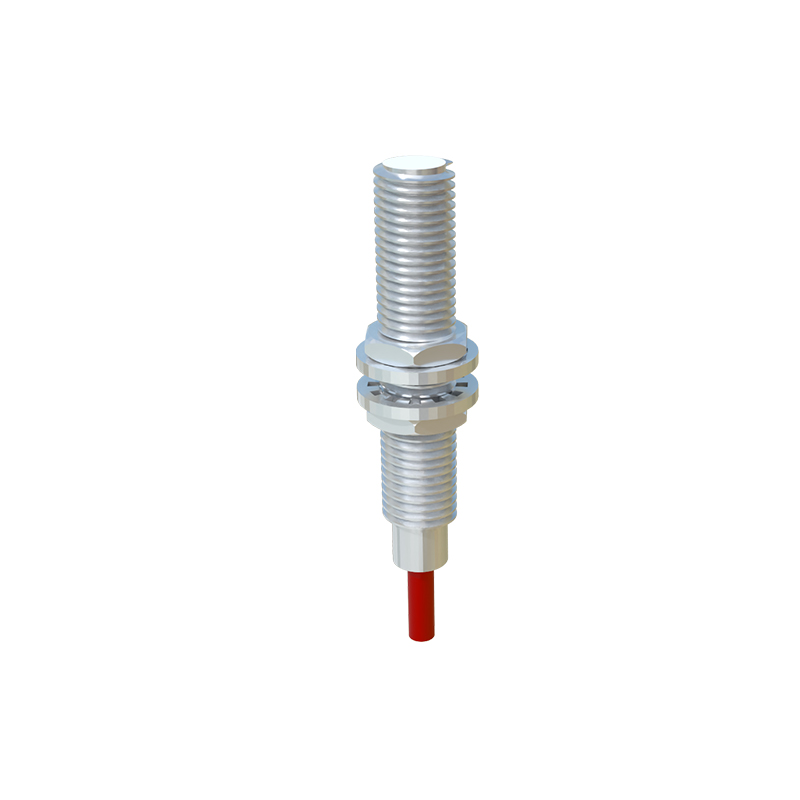
Diffuse reflective sensors, or proximity-mode sensors, have the emitter and receiver in one unit and detect objects by measuring light reflected directly from the target surface. The sensing range is shorter, usually up to 2 meters, depending on the object's reflectivity and color. These sensors are compact and easy to install, making them popular for close-range tasks like object counting, level detection, and robotic pick-and-place operations. However, performance can vary with surface properties; dark or matte objects may reduce detection reliability. Advanced models incorporate background suppression technology to ignore distant objects and improve accuracy.
Laser-Based Proximity Sensors
Laser-based proximity sensors use a focused laser beam for high-precision detection and measurement. They operate on principles similar to diffuse or through-beam sensors but offer superior resolution and longer ranges, often up to several hundred meters. These sensors are capable of detecting minute objects or measuring exact distances with sub-millimeter accuracy. Industries such as electronics manufacturing, automotive, and aerospace utilize laser sensors for tasks like alignment, thickness gauging, and quality inspection. While more expensive than standard optical sensors, their precision justifies the cost in critical applications.
Fiber-Optic Proximity Sensors
Fiber-optic proximity sensors employ optical fibers to transmit light between the sensor unit and the sensing point. The emitter and receiver are housed in a remote amplifier, while the fiber tips are placed in the detection area. This design allows operation in extreme conditions—such as high temperatures, corrosive environments, or tight spaces—where traditional sensors might fail. Sensing ranges are limited, typically under 1 meter, but these sensors excel in applications like semiconductor processing, medical devices, and hazardous area monitoring. They are also immune to electromagnetic interference, enhancing reliability in electrically noisy settings.
Color Mark Sensors
Color mark sensors are a specialized type of optical proximity sensor designed to detect specific colors or contrasts on objects. They emit light and analyze the reflected wavelength to identify color differences, often used in printing, labeling, and packaging industries. For example, they can sense registration marks on moving webs or sort items by color. These sensors typically have short ranges but high sensitivity, with adjustable settings to accommodate various materials and lighting conditions. Their ability to distinguish subtle color variations makes them invaluable for quality control and automation processes requiring color-based decisions.
Ultrasonic and Optical Hybrid Sensors
Hybrid sensors combine optical technology with ultrasonic sensing to overcome limitations of individual methods. Optical components provide fast, precise detection, while ultrasonic elements handle challenging surfaces like transparent or uneven objects that might not reflect light well. These sensors are versatile, suitable for applications ranging from liquid level sensing to complex object recognition in logistics. By integrating multiple technologies, they offer enhanced reliability and adaptability in dynamic industrial environments, though they may be