Introduction to Photovoltaic Photoelectric Sensors
Photovoltaic photoelectric sensors represent a critical technology at the intersection of optoelectronics and industrial automation. These devices operate on the fundamental principle of the photovoltaic effect, where light energy is directly converted into electrical energy. Unlike photoconductive sensors that require an external bias, photovoltaic sensors generate their own voltage when exposed to light, making them self-powered for certain low-energy applications. The core component is typically a semiconductor PN junction, often made from silicon, gallium arsenide, or other compound semiconductors. When photons with sufficient energy strike the junction, they excite electrons, creating electron-hole pairs and generating a measurable voltage or current. This inherent simplicity and lack of need for an external power source for basic detection make them uniquely advantageous in specific sensing scenarios, particularly where energy harvesting or ultra-reliable, fail-safe operation is paramount.
Core Operating Principles and Key Components

The operational efficacy of a photovoltaic sensor hinges on several key factors. The spectral response is paramount; it defines the range of light wavelengths to which the sensor is most sensitive. Silicon-based sensors peak in the near-infrared region, making them suitable for a broad range of ambient and dedicated light source applications. The responsivity, measured in amperes per watt (A/W), indicates how effectively incoming light is converted to electrical current. Another critical parameter is the response time, which determines how quickly the sensor can react to changes in light intensity. This is governed by the capacitance of the depletion region and the load resistance. For industrial use, the sensor package is equally crucial. It includes a lens to focus light onto the active area, optical filters to select specific wavelengths (reducing ambient light interference), and a robust housing to protect the delicate semiconductor from environmental hazards like dust, moisture, and mechanical shock.
Primary Configurations: Reflective, Through-Beam, and Diffuse
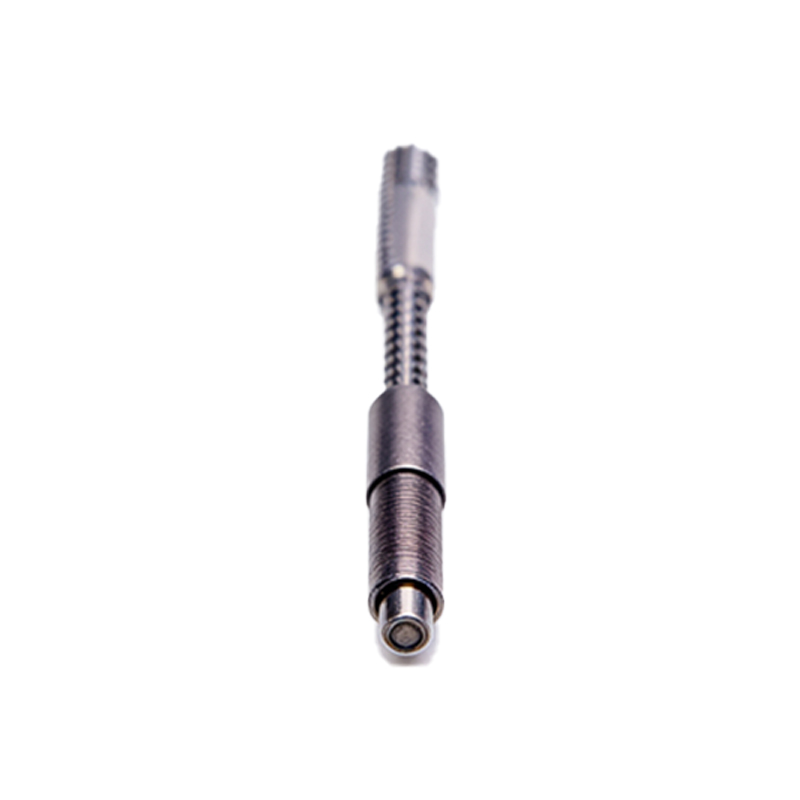
In industrial settings, photovoltaic sensors are deployed in three main configurations, each suited to different tasks. Through-beam sensors, also known as opposed-mode sensors, consist of separate transmitter and receiver units. The transmitter emits a continuous or modulated light beam to the receiver. An object is detected when it interrupts this beam. This configuration offers the longest sensing range and highest reliability, as it is largely immune to object color or reflectivity. Reflective sensors house both emitter and receiver in a single unit, bouncing light off a dedicated reflector. Detection occurs when the beam is broken. This setup simplifies alignment compared to through-beam but has a moderate range. Diffuse sensors, or proximity-mode sensors, also combine emitter and receiver. They detect objects by measuring the light reflected directly from the object's surface. While most flexible in installation, their performance is highly dependent on the object's color, texture, and distance, requiring careful calibration.
Advantages in Industrial Automation Applications
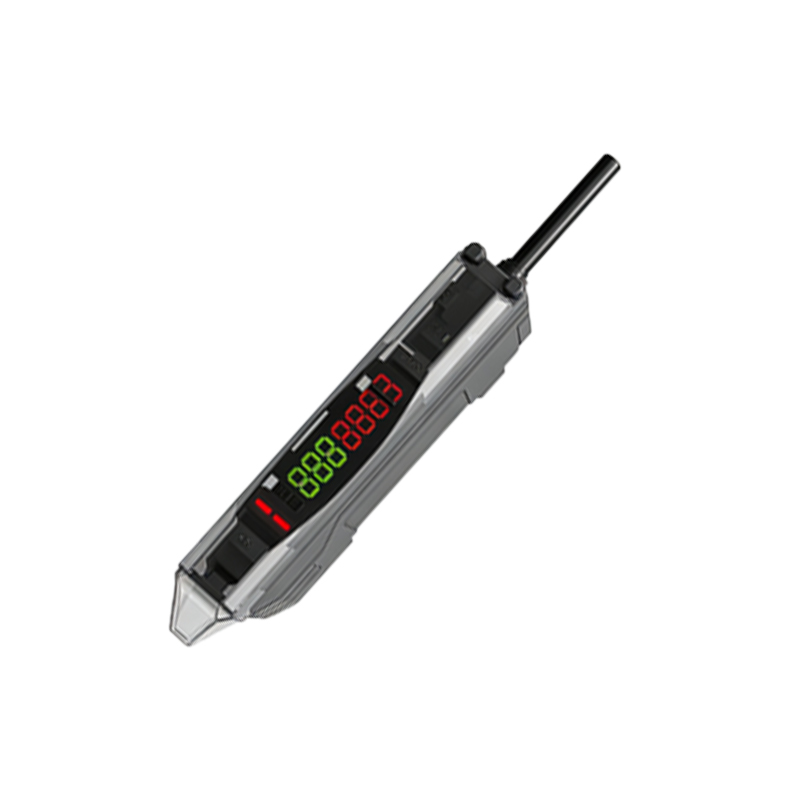
The integration of photovoltaic sensors into automation systems brings distinct benefits. Their self-generating nature for signal detection eliminates the need for sensor power in simple presence/absence detection circuits, enhancing reliability in safety-critical applications like machine guarding or emergency stop triggers. They exhibit excellent long-term stability with minimal drift, ensuring consistent performance over years of operation. Furthermore, their non-contact sensing principle prevents wear and tear, allowing for the detection of fragile, hot, or fast-moving objects without physical interaction. This makes them ideal for high-speed counting on production lines, precise positioning in assembly robots, edge detection in web processing, and level sensing in transparent or opaque containers. Their immunity to magnetic fields and ability to sense a wide variety of materials, from metals to plastics and glass, adds to their versatility.
Critical Considerations for System Integration
Successful deployment requires careful attention to several engineering considerations. Ambient light interference is a primary challenge. Sunlight or strong factory lighting can saturate the sensor or create false signals. Mitigation strategies include using modulated light sources (where the sensor detects only a specific frequency), spectral filtering (e.g., using infrared LEDs with matching filters), and physical shielding. Lens contamination by dust, oil, or debris can attenuate the light signal, leading to failure. Sensors with built-in contamination monitoring or high-power reserve factors can compensate for gradual lens fouling. Electrical interfacing is another key aspect. The low-voltage signal generated often requires amplification and conditioning before being fed into a Programmable Logic Controller (PLC). Ensuring proper cable selection, grounding, and protection against electromagnetic interference (EMI) is essential for signal integrity in noisy industrial environments.
Future Trends and Technological Advancements
The future of photovoltaic photoelectric sensors is being shaped by several converging trends. Miniaturization continues, enabling their integration into smaller machines and IoT devices. The development of sensors with enhanced spectral selectivity, such as those tuned for specific laser lines or UV wavelengths, is expanding their application into specialized fields like semiconductor manufacturing and chemical analysis. Smart sensors with embedded microprocessors are becoming standard, offering features like automatic calibration, teach-in functionality (where the sensor learns the background condition), and digital communication via IO-Link or Ethernet/IP. This allows for remote diagnostics, predictive maintenance, and seamless data integration into Industry 4.0 frameworks. Furthermore, research into new photovoltaic materials, such as perovskites or organic compounds, promises potential improvements in sensitivity, flexibility, and cost-effectiveness for next-generation sensing solutions.