Defining the Core Concepts
In the realm of industrial automation and electrical engineering, the terms "sensor" and "proximity switch" are frequently used, sometimes interchangeably, leading to confusion. It is crucial to clarify that while all proximity switches are sensors, not all sensors are proximity switches. A sensor is a broad, umbrella term for any device that detects and responds to a specific type of input from the physical environment. This input could be light, heat, motion, moisture, pressure, or the presence or absence of an object. The output is generally a signal that is converted into a human-readable display or transmitted for further processing.
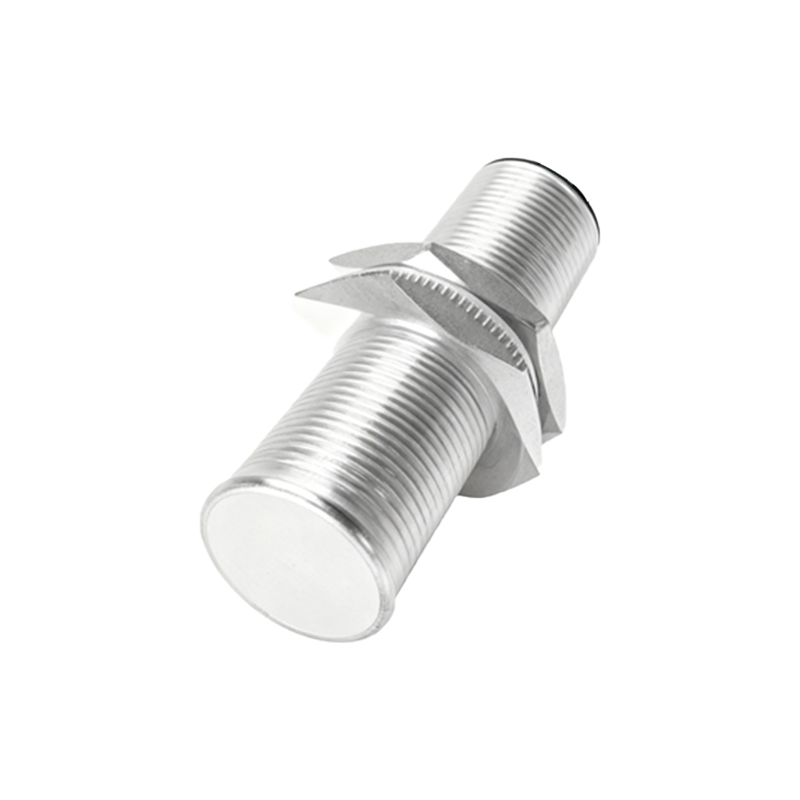
The Specifics of a Proximity Switch
A proximity switch, also known as a proximity sensor, is a specific type of non-contact sensor. Its primary function is to detect the presence or absence of a target object within a predefined sensing range without any physical contact. It does this by emitting an electromagnetic field, a beam of electromagnetic radiation (like infrared light), or an ultrasonic sound wave, and then looking for changes in the field or return signal. The key operational principle is the absence of mechanical contact, which leads to high reliability, long operational life, and fast response times. Common types include inductive (for metals), capacitive (for both metals and non-metals), and photoelectric sensors.
Key Functional Differences
The fundamental difference lies in scope and function. A sensor is a general detector of a physical property. For instance, a temperature sensor measures heat, a pressure sensor measures force per unit area, and a vision sensor captures images. A proximity switch, however, has a very defined role: to act as a binary switch based on the presence of an object. Its output is typically a simple ON/OFF signal, often used to count objects, confirm positioning, or act as a safety limit switch. It is inherently a switch with a sensing capability, designed for discrete control applications.
Output Signal Variations
This distinction is further evident in their output signals. Many sensors provide analog outputs, such as a 4-20mA current loop or a 0-10V voltage signal, representing a continuous range of measurement (e.g., temperature from 0 to 100 degrees). Proximity switches, in contrast, almost exclusively provide discrete digital outputs. They are either "on" (object detected, often 24V DC output) or "off" (no object detected, 0V). This digital nature is what makes them "switches," ideal for direct input to Programmable Logic Controllers (PLCs) for logic-based control.
Typical Industrial Applications
Understanding their applications highlights their unique roles. A standard sensor might be used to monitor the temperature of a motor bearing, providing continuous data to a control system for predictive maintenance. A proximity switch, however, would be deployed on a conveyor line to detect when a product passes a specific point, triggering the next action like sorting or packaging. It is commonly found in material handling, machine tools, and automotive assembly lines for position verification, end-of-travel detection, and object counting.
Selecting the Right Device
Choosing between a general sensor and a proximity switch depends entirely on the application's requirements. Ask these questions: Is the goal to measure a continuous variable or simply to detect presence/absence? Is physical contact with the target acceptable or detrimental? What type of output signal does the control system require—analog or digital? For simple object detection tasks where durability and speed are paramount, a proximity switch is the optimal choice. For tasks requiring quantitative measurement of an environmental condition, a specialized sensor is necessary.
Conclusion: A Subset Relationship
In summary, the relationship is hierarchical. A proximity switch is a specialized subset of sensors. It is a sensor designed with a singular, switch-like purpose: non-contact detection of an object's presence within a short range. While the term "proximity sensor" is technically accurate and widely used, "proximity switch" more precisely denotes its function as a binary control device. For engineers and technicians, using the terms with this clarity ensures precise communication, correct component selection, and efficient system design in any automated electrical system.