In the realm of industrial automation, consumer electronics, and IoT devices, proximity sensors are indispensable components. Their ability to detect the presence or absence of an object without physical contact makes them crucial for applications ranging from smartphone screen blanking to complex assembly line safety systems. However, one critical parameter often scrutinized by design engineers is power consumption. Optimizing this aspect is paramount for battery-operated devices, energy-efficient systems, and overall operational cost reduction. This article delves into the factors influencing proximity sensor power draw, strategies for minimization, and the inherent trade-offs involved.
At its core, the power consumption of a proximity sensor is not a single, fixed value. It is a dynamic characteristic influenced by the sensor technology, operational mode, and environmental conditions. The most common technologies include Inductive, Capacitive, Ultrasonic, and Optical (Infrared) sensors. Each has distinct power profiles. For instance, inductive sensors, ideal for metal detection, typically have a relatively stable current draw. In contrast, ultrasonic sensors, which emit sound pulses, often exhibit higher peak currents during transmission bursts. Infrared optical sensors, common in consumer devices, require power for both an IR LED emitter and a photodiode or phototransistor receiver. Their consumption is heavily tied to the emitter's pulse intensity and duration.
The operational mode is perhaps the most significant lever for controlling power usage. Many modern proximity sensors offer multiple modes:
Continuous Sensing Mode: The sensor is always active, constantly emitting and monitoring for targets. This mode offers the fastest response time but results in the highest average power consumption. It's suitable for mains-powered equipment or safety-critical applications where latency is unacceptable.
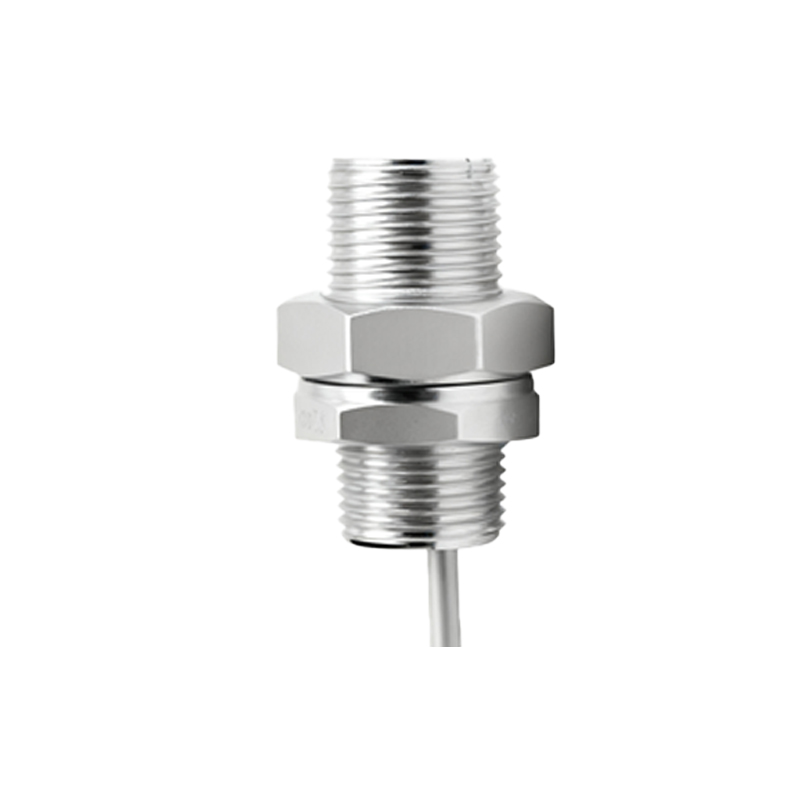
Pulsed or Intermittent Operation: Here, the sensor is cycled on and off at a defined duty cycle. The emitter is powered only for short, periodic bursts. This dramatically reduces the average current draw, often into the microampere range, at the cost of a potentially slower response time and the possibility of missing a fast-moving object.
Wake-on-Approach or Sleep Modes: Advanced sensors integrate logic to enter ultra-low-power sleep states. They might use a secondary, very low-power circuit to detect a gross change in the environment (like a preliminary capacitive shift) before "waking up" the primary, more accurate sensing circuit. This architecture is highly effective for devices like smart doorbells or wearables that must last months or years on a battery.
Several key factors directly impact the power drawn. The sensing range is a primary driver; achieving a longer range usually requires a more powerful emitter output, leading to higher consumption. The required response time is inversely related to power savings; faster detection necessitates more frequent sampling or continuous operation. Output type also plays a role. A simple digital output (PNP/NPN) may consume less than an analog output or a sensor with a digital bus interface (like I2C), though the latter can enable more sophisticated power management via the host controller. Furthermore, environmental factors such as ambient light (for optical sensors) or background acoustic noise (for ultrasonic sensors) can force the sensor to increase its signal strength to maintain reliability, thereby increasing power use.
Designing for low power requires a holistic approach. Selecting the appropriate sensor technology for the specific target material and environment is the first step. Next, carefully determine the minimum acceptable sensing distance and response time for the application; over-specifying these will lead to unnecessary power drain. Leveraging the sensor's built-in power-saving modes is crucial. For pulsed operation, optimizing the duty cycle—finding the longest interval between pulses that still meets response requirements—is key. In circuit design, ensure the power supply is clean and stable, as voltage regulators themselves have quiescent currents that contribute to overall system drain. For wireless IoT nodes, consider transmitting detection events in batches rather than immediately, allowing the radio to stay in sleep mode longer.
It is vital to acknowledge the trade-offs. Lower power consumption frequently comes at the expense of reduced sensing range, slower response speed, or potentially lower noise immunity. A sensor in deep sleep may take several milliseconds to provide a valid reading, which is unacceptable for high-speed machinery. Similarly, aggressive duty cycling might cause a sensor to miss a fleeting event. The design challenge lies in striking the perfect balance between energy efficiency and system performance.
In conclusion, proximity sensor power consumption is a multifaceted design consideration. By understanding the underlying technologies, actively utilizing operational modes, and carefully balancing application requirements, engineers can significantly optimize the energy footprint of their systems. As the demand for smarter, more connected, and battery-independent devices grows, mastering these low-power design principles becomes not just an advantage, but a necessity for creating competitive and sustainable products.