In the realm of industrial automation and machine control, the ability to detect the presence or absence of an object without physical contact is paramount. Among the various technologies that enable this, inductive proximity sensors stand out as a robust, reliable, and widely adopted solution. These non-contact sensors are engineered to detect metallic objects, playing a critical role in countless applications from assembly lines to robotic systems.
At its core, an inductive proximity sensor operates on the principle of electromagnetic induction. The key component is a coil wound around a ferrite core, which is part of an oscillator circuit. When an alternating current flows through this coil, it generates a high-frequency oscillating electromagnetic field at the active face of the sensor. This field radiates outward from the sensing surface. In the absence of a metallic target, the oscillator maintains a constant amplitude.
The detection process begins when a conductive metal object enters this electromagnetic field. The field induces small circulating currents, known as eddy currents, on the surface of the target object. These eddy currents draw energy from the sensor's oscillating circuit, causing a measurable drop in the amplitude of the oscillation. The sensor's internal electronics, typically a trigger circuit or a microcontroller, continuously monitor this amplitude. Once the amplitude reduction exceeds a predefined threshold—corresponding to the object being within the specified sensing range—the sensor's output state changes. This output is usually a solid-state switch (PNP or NNP transistor) that can control a relay, PLC input, or other load.
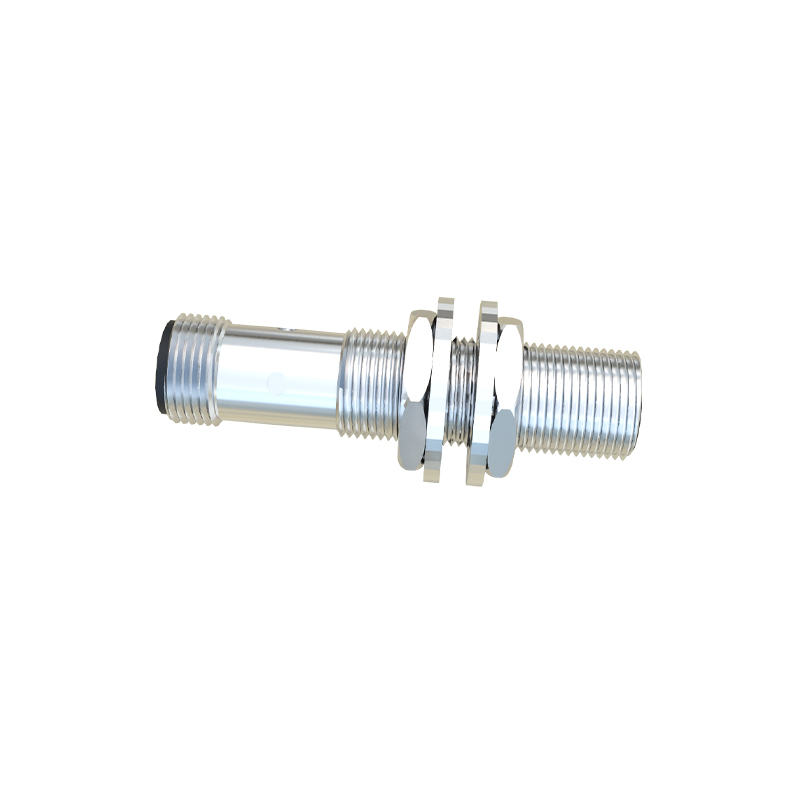
Several key characteristics define the performance of an inductive sensor. The sensing distance, or nominal range (Sn), is a primary specification. This is the standard operating distance for which the sensor is calibrated, typically for a mild steel target of a standard size. It's crucial to note that the actual sensing distance can be affected by the target material. A reduction factor applies to different metals; for instance, stainless steel may be detected at 0.7 to 0.9 times Sn, while copper or aluminum might be detected at 0.3 to 0.5 times Sn. The sensor's housing material is another critical factor. Shielded (flush-mountable) sensors have a metal ring surrounding the coil, focusing the field forward and allowing them to be mounted flush in metal without interference. Unshielded (non-flush) sensors have a wider, more extended field but require a non-metallic surrounding area for proper operation.
The advantages of inductive proximity sensors are numerous. Their non-contact nature ensures no wear and tear on the sensor or the target, leading to exceptionally long service life. They are highly resistant to environmental challenges such as dirt, dust, oil, and moisture, with many models offering IP67 or higher ingress protection ratings. They provide fast switching frequencies, capable of detecting objects thousands of times per minute, making them ideal for high-speed counting or positioning tasks. Furthermore, they are immune to ambient light and, unlike photoelectric sensors, unaffected by the color or surface finish of the target object, as long as it is conductive.
These sensors are deployed across a vast spectrum of industries. In manufacturing, they are used for part presence verification on conveyor belts, end-of-travel detection on cylinders, and checking for correct part orientation. In the automotive sector, they monitor robot arm positions and confirm the placement of metal components. Packaging machinery uses them to detect metal lids or cans. They also serve as safety devices, confirming the closed position of metal guards or doors.
When selecting an inductive proximity sensor, engineers must consider the target material, required sensing distance, environmental conditions (temperature, chemicals), electrical requirements (voltage, output type - PNP/NPN/NO/NC), housing size and shape (cylindrical, rectangular), and connection type (pre-wired cable or quick-disconnect). Proper installation is also vital, ensuring adequate clearance from other metal objects to prevent false triggering.
In conclusion, inductive proximity sensors are a fundamental pillar of modern industrial sensing. Their simple yet effective operating principle, combined with rugged construction and versatile performance, makes them an indispensable tool for automating processes, enhancing safety, and ensuring quality control in metal-detection applications. As technology advances, these sensors continue to evolve with improved precision, miniaturization, and integrated smart features like IO-Link communication, further solidifying their role in the connected factories of Industry 4.0.