Proximity sensors are a cornerstone of modern automation, silently enabling countless functions in industrial, consumer, and automotive applications. Unlike traditional mechanical switches, these non-contact devices detect the presence or absence of an object within a defined range without physical touch. Their operation hinges on the principle of converting information about the presence, distance, or absence of an object into an electrical signal. This exploration delves into the core principles behind the most prevalent types: inductive, capacitive, and photoelectric sensors.
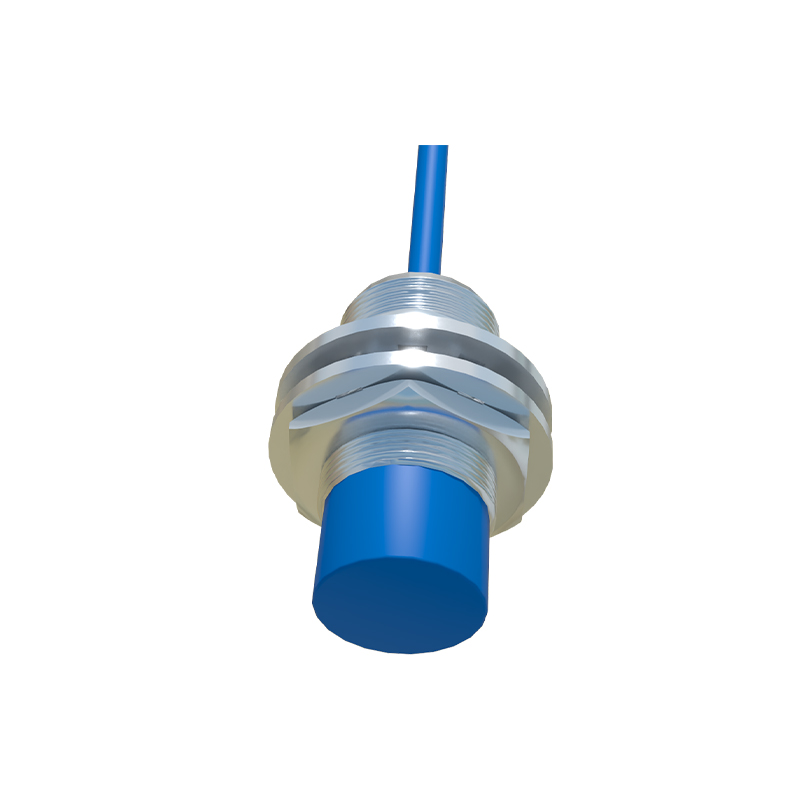
The working principle of an inductive proximity sensor is based on electromagnetic induction. The core component is a coil wound around a ferrite core, which forms part of an oscillator circuit. When an alternating current flows through this coil, it generates a high-frequency electromagnetic field at the active face of the sensor. When a metallic object (the "target") enters this oscillating field, eddy currents are induced on the surface of the metal. These eddy currents draw energy from the oscillator, causing a reduction in its oscillation amplitude. An evaluation circuit monitors this amplitude change. Once the amplitude drop exceeds a predefined threshold—corresponding to the sensor's sensing distance—the circuit triggers a solid-state switch, changing the output state. Key characteristics include detection limited to conductive metals, with factors like target material (ferrous metals like iron are detected at longer ranges than non-ferrous metals like aluminum), size, and shape influencing performance. They are highly robust, resistant to dust, dirt, and moisture, making them ideal for harsh industrial environments like machine tools or robotic arms.
Capacitive proximity sensors operate on the principle of capacitance change. The sensor's active face acts as one plate of a capacitor, with the target object (or the mounting surface) acting as the other plate. The internal electronics generate an electrostatic field. When any material with a dielectric constant different from air (including metals, plastics, wood, liquids, or granules) approaches the sensor, it alters the dielectric properties of the space between the "plates." This change increases the capacitance of the system. The sensor's circuit is tuned to oscillate only when this capacitance reaches a specific level. As the target nears, the rising capacitance increases oscillation amplitude, which is then detected, processed, and converted into an output signal switch. This ability to detect nearly any material makes capacitive sensors versatile for applications such as liquid level detection in tanks, monitoring non-metallic material presence on conveyor belts, or touch-sensitive interfaces.
Photoelectric sensors rely on light, typically infrared, visible red, or laser. They consist of an emitter (light source) and a receiver (phototransistor or photodiode). The fundamental principle involves detecting changes in the received light beam. There are three primary operating modes. The through-beam (or opposed) mode uses separate emitter and receiver units facing each other. An object is detected when it interrupts the light beam. This mode offers the longest sensing range and highest reliability. The retro-reflective mode employs a single unit housing both emitter and receiver, using a reflector to bounce the light beam back. Detection occurs when the beam is blocked. The diffuse (or proximity) mode, the most common for true proximity sensing, has the emitter and receiver in one housing. It detects an object by receiving light reflected directly off the target's surface. The strength of the reflected signal depends on the target's distance, color, and surface texture. Advanced versions use background suppression or time-of-flight principles to measure precise distance, not just presence.
Ultrasonic sensors form another significant category, emitting high-frequency sound pulses and measuring the time for the echo to return, calculating distance based on the speed of sound. They are effective for detecting objects of various materials and under challenging conditions like fog or dust.
The selection of a proximity sensor depends on multiple factors: target material, required sensing distance, environmental conditions (presence of dust, moisture, or electrical noise), response speed, and output type (PNP/NPN, analog, IO-Link). Understanding the underlying physical principles—electromagnetic induction, capacitance variation, and light modulation—is crucial for optimal integration. From ensuring smartphone screens turn off during a call to safeguarding automated production lines and enabling autonomous vehicle parking systems, the precise and reliable operation of proximity sensors continues to drive innovation and efficiency across all sectors of technology.