Introduction to Proximity Sensors in Hydraulic Systems
Proximity sensors are critical components in modern hydraulic presses, enabling precise control and safety by detecting the presence or absence of objects without physical contact. These sensors operate based on electromagnetic principles, responding to metallic targets within a specified range. In hydraulic presses, they are commonly used to monitor piston position, detect tooling alignment, and ensure operator safety by triggering emergency stops when intrusions occur. Their non-contact nature reduces wear and tear, enhancing reliability in high-pressure industrial environments where mechanical switches might fail. By integrating with programmable logic controllers (PLCs), proximity sensors contribute to automated workflows, improving efficiency and repeatability in metal forming, molding, and stamping operations.
Core Working Principles of Inductive Proximity Sensors
Inductive proximity sensors are the most prevalent type in hydraulic presses due to their ability to detect ferrous metals like steel or iron. They consist of an oscillator circuit that generates a high-frequency electromagnetic field from a coil. When a metallic target enters this field, eddy currents are induced on the target's surface, causing a change in the oscillator's amplitude. This change is detected by a threshold circuit, which then switches the sensor's output state—typically from off to on. The sensing range depends on factors such as target material, size, and sensor design, with typical ranges from a few millimeters to several centimeters. These sensors are ideal for monitoring hydraulic cylinder rods or press platens, providing real-time feedback for position control without direct contact that could cause friction or contamination.
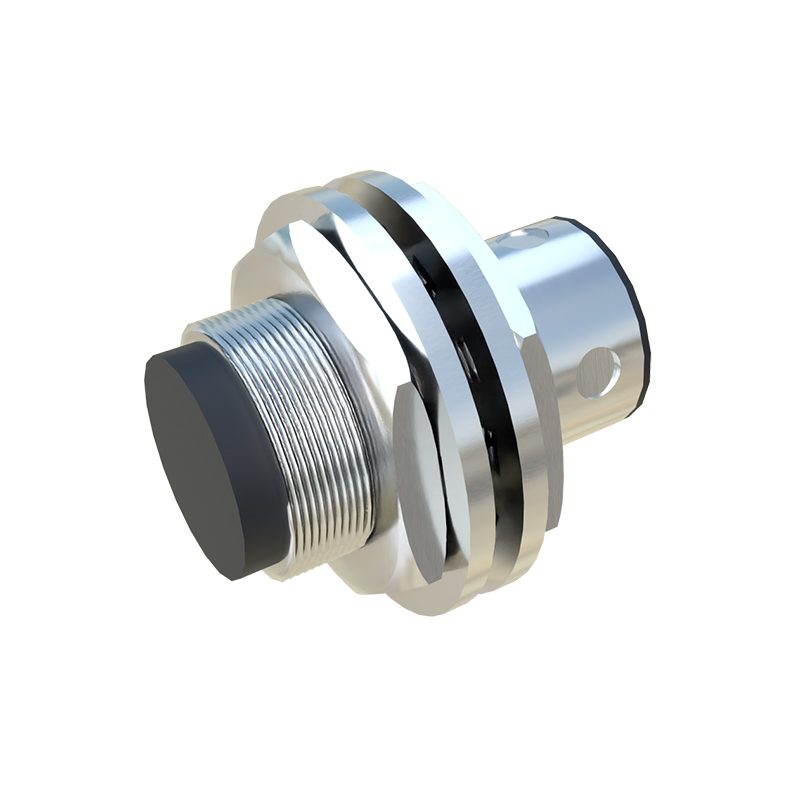
Capacitive Proximity Sensors for Non-Metallic Detection
While inductive sensors excel with metals, capacitive proximity sensors offer versatility by detecting both metallic and non-metallic materials, such as plastics, fluids, or wood. They operate by generating an electrostatic field between two electrodes. When an object enters this field, it alters the capacitance, triggering a change in the sensor's internal oscillator frequency. This frequency shift is processed to activate an output signal. In hydraulic presses, capacitive sensors are used for applications like fluid level monitoring in hydraulic reservoirs or detecting non-metallic tooling components. Their sensitivity can be adjusted to ignore background materials, making them suitable for complex environments where multiple material types are present.
Integration and Signal Processing in Press Control
Proximity sensors interface with hydraulic press control systems through analog or digital outputs. Digital outputs, such as NPN or PNP transistor switches, provide simple on/off signals for tasks like limit switching or safety interlocks. Analog outputs, like 4-20 mA or 0-10 V signals, offer continuous data on distance or position, enabling precise control of piston stroke or press speed. These signals are transmitted to PLCs, which process the data to adjust hydraulic valves, pumps, or actuators. For instance, a sensor detecting the upper limit of a press ram can signal the PLC to reverse the hydraulic flow, preventing overtravel and damage. Advanced systems may use multiple sensors in tandem for redundancy, ensuring fail-safe operation in high-stakes manufacturing processes.
Applications for Safety and Precision in Hydraulic Presses
Safety is paramount in hydraulic press operations, and proximity sensors play a key role in safeguarding personnel and equipment. Light curtains or area scanners often incorporate proximity sensors to detect human intrusion into hazardous zones, immediately halting press motion. Additionally, sensors monitor die alignment and part ejection, reducing the risk of jams or misfeeds that could lead to costly downtime. For precision tasks, such as deep drawing or coining, sensors provide feedback on tool positioning, ensuring consistent product quality. By enabling closed-loop control, they help maintain tight tolerances, even under varying loads or temperatures, which is essential for industries like automotive or aerospace manufacturing.
Maintenance and Troubleshooting Tips
To ensure longevity and accuracy, proximity sensors in hydraulic presses require regular maintenance. Keep sensor faces clean from oil, grease, or metal debris that could interfere with detection. Check mounting stability, as vibrations from press cycles may loosen connections over time. Verify electrical connections for corrosion or wear, especially in humid or dusty environments. If a sensor fails, common issues include incorrect target material, insufficient sensing range, or electrical noise from hydraulic solenoids. Use a multimeter to test output signals and consult manufacturer guidelines for alignment and calibration. Upgrading to shielded sensors or adding ferrite cores can mitigate electromagnetic interference, enhancing reliability in noisy industrial settings.
Future Trends and Innovations
The evolution of proximity sensors in hydraulic presses is driven by Industry 4.0 and smart manufacturing trends. Newer models feature IO-Link communication, enabling digital parameter setting and diagnostic data