Introduction to Non-Light-Emitting Photoelectric Sensors
In the diverse landscape of industrial automation, photoelectric sensors are fundamental components for detection, positioning, and inspection tasks. While most conventional photoelectric sensors operate by emitting a beam of light (infrared, red, or laser) and detecting its reflection or interruption, a distinct category exists that functions without an internal light source. These are known as non-light-emitting photoelectric sensors. Essentially, they are specialized receivers designed to detect ambient or externally generated light signals. Their operation hinges on sensing changes in the existing light environment rather than creating their own interrogation beam. This unique principle grants them specific advantages and niches where traditional active sensors may be unsuitable or inefficient.
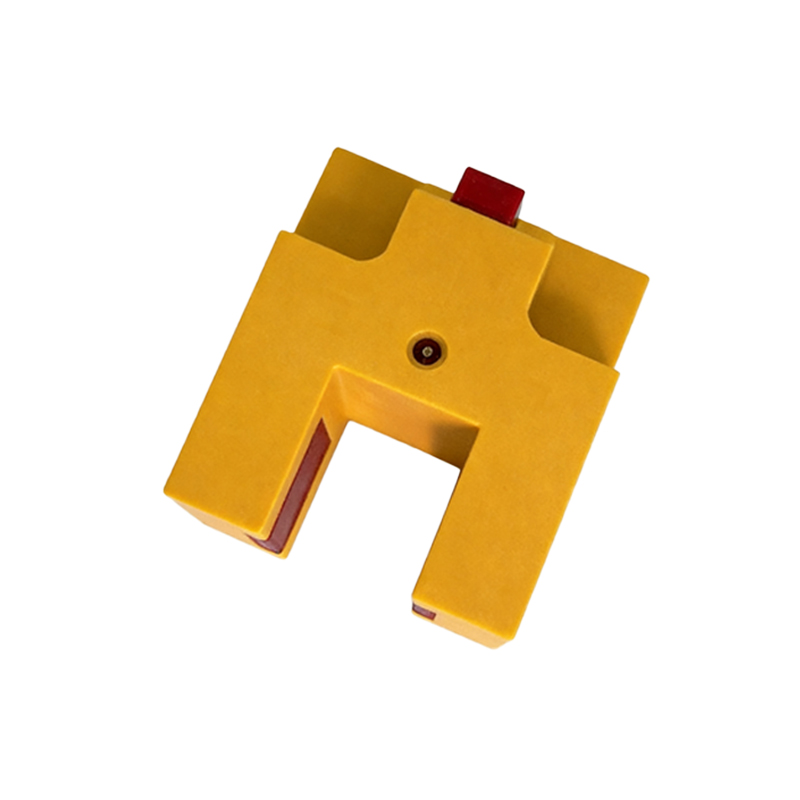
Core Operating Principle and Design
The fundamental operation of a non-light-emitting photoelectric sensor is based on photodetection. At its heart is a photosensitive element, such as a phototransistor, photodiode, or sometimes a more advanced component like a CCD or CMOS array. This element converts incident light photons into an electrical signal. The sensor's circuitry is then tuned to respond to specific characteristics of this ambient light, such as its intensity, modulation frequency, or spectral composition. For instance, a sensor might be calibrated to trigger when the ambient light level drops below a certain threshold (dark-on operation) or exceeds it (light-on operation). More sophisticated versions can synchronize with an external, modulated light source, ignoring constant ambient light to achieve high noise immunity. Their housing is often designed with lenses or filters to focus on specific areas or to only admit light of certain wavelengths, enhancing selectivity.
Primary Applications and Use Cases
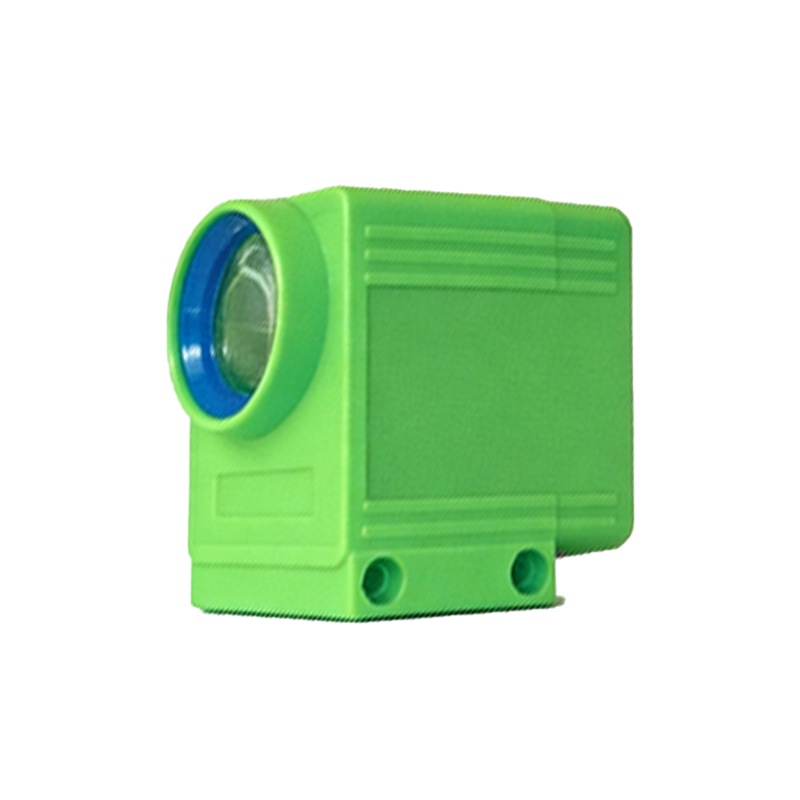
Non-light-emitting sensors find critical applications in scenarios where introducing an additional light source is problematic or where detection must be passive. A common application is in safety systems, such as light curtains and perimeter guarding systems. Here, an external transmitter array projects a curtain of modulated infrared light, and a separate receiver array (the non-light-emitting sensor) detects it. Any object interrupting this curtain triggers a safety stop. They are also pivotal in registration mark detection in printing and packaging machinery. The sensor detects the contrast between a printed mark and the background on a moving web, relying on the ambient or machine-mounted lighting. Furthermore, they are used in ambient light monitoring for building automation, in alignment systems where a distant beacon or laser line must be detected, and in scientific instrumentation for measuring light from processes or experiments without adding interference.
Key Advantages Over Active Sensors
The absence of an internal emitter bestows several distinct benefits. First, they have no LED or laser diode to degrade over time, potentially offering longer operational lifespans concerning the light source aspect. Second, they consume significantly less power since they do not need to drive an emitter, making them ideal for battery-powered or energy-sensitive applications. Third, they eliminate the issue of mutual interference (crosstalk) that can occur when multiple active sensors are placed close together, as they are not broadcasting any signal. Fourth, in applications detecting ambient light or specific external signals, they provide a simpler and more direct solution. Finally, their passive nature is crucial in hazardous environments where spark risk must be minimized or in delicate processes where the sensor's own light could affect the material being handled.
Considerations and Limitations
Despite their advantages, non-light-emitting photoelectric sensors come with inherent limitations that must be carefully considered during system design. Their performance is heavily dependent on the stability and characteristics of the ambient light or the external transmitter. Changes in factory lighting, sunlight intrusion, or dirt accumulation on the external source can lead to false triggers or detection failures. They generally offer shorter sensing ranges compared to active, focused-beam sensors because they rely on ambient or diffusely reflected light. Selecting the correct sensor type (e.g., for a specific modulation frequency or light wavelength) and precisely aligning it with an external transmitter can be more complex than setting up a self-contained retro-reflective or through-beam sensor. Therefore, a stable and controlled light environment is often a prerequisite for reliable operation.
Selection Criteria and Integration Tips
Selecting the appropriate non-light-emitting sensor requires a clear analysis of the application. Key parameters include the type of light to be detected (wavelength, modulated or steady), required response speed, output type (digital or analog), and the required sensing window or field of view. For synchronization with an external emitter, ensuring compatibility in modulation frequency and signal encoding is paramount. During installation, shielding the sensor from stray light sources is critical. Using hoods, tubes, or polarized filters can dramatically improve reliability. Regular maintenance should include cleaning the receiver lens and verifying the condition and alignment of any external light source. Integrating these sensors often involves connecting them to a programmable logic controller (PLC) or other control systems, where the output signal can be used to trigger actions, alarms, or data recording.
Future Trends and Developments
The evolution of non-light-emitting photoelectric sensors is closely tied to advancements in photodetection technology and signal processing. The integration of smarter onboard electronics allows for advanced functions like automatic background suppression, digital filtering of noise, and programmable sensitivity windows. The use of multi-element arrays and vision-based sensors (which are fundamentally sophisticated non-light-emitting receivers) is blurring the lines, enabling complex tasks like shape recognition and precise positioning. Furthermore, miniaturization and the development of low-power, high-sensitivity materials are expanding their use into consumer electronics, IoT devices, and advanced robotics. As industries demand more flexible and intelligent sensing solutions, the role of these passive detectors is set to grow, particularly in collaborative and mobile automation environments.