Introduction to Photoelectric Sensing
Photoelectric sensors are indispensable components in modern industrial automation, offering non-contact detection of objects based on light modulation. These devices operate by emitting a light beam—typically from an LED or laser diode—toward a target. The presence or absence of the target is determined by analyzing changes in the received light signal, such as intensity, reflection pattern, or beam interruption. This principle enables reliable detection across diverse materials, including metals, plastics, glass, and liquids, without physical contact. Industries leverage photoelectric sensors for tasks ranging from object counting and positioning to quality inspection and safety monitoring. Their versatility stems from the ability to function in harsh environments, resist vibration, and provide fast response times, making them superior to mechanical switches in many applications.
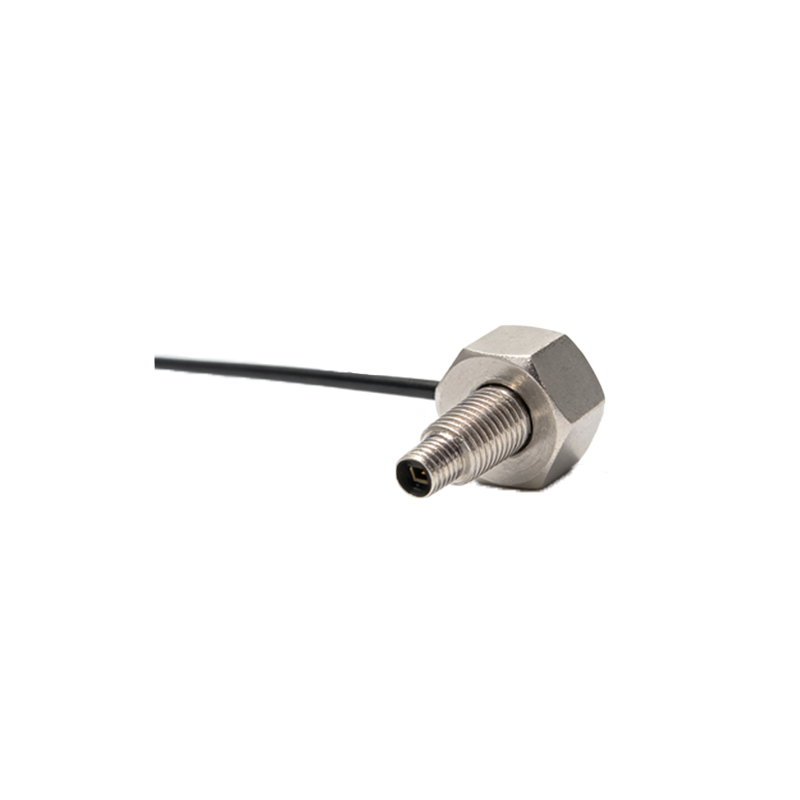
Core Operating Principles and Modes
Photoelectric sensors utilize three primary sensing modes: through-beam, retro-reflective, and diffuse reflective. Through-beam sensors consist of separate emitter and receiver units aligned opposite each other. Detection occurs when an object interrupts the light beam path between them, offering high accuracy and long sensing ranges up to several meters. Retro-reflective sensors integrate both emitter and receiver in a single housing, relying on a reflector to bounce light back. Objects are detected when they block this reflected beam, providing easier installation than through-beam systems. Diffuse reflective sensors detect objects by measuring light scattered directly from the target’s surface, with sensing distance influenced by color, texture, and reflectivity. Advanced variants include background suppression and fixed-field models, which minimize false triggers by ignoring objects beyond a set distance.
Light Source Technologies and Wavelength Selection
The performance of photoelectric sensors heavily depends on light source characteristics. Common sources include visible red, infrared (IR), and laser diodes. Visible red light (650 nm) facilitates easy alignment during setup but may be susceptible to ambient light interference. Infrared sensors (850–950 nm) offer improved immunity to visible light and are ideal for detecting opaque materials. Laser-based sensors provide highly collimated beams for precise detection of small objects or long-range applications. Specialized sensors employ blue or green light for enhanced detection of transparent materials like glass or films, as shorter wavelengths are less likely to pass through. Selecting the appropriate wavelength ensures optimal signal-to-noise ratio, environmental adaptability, and material-specific detection capabilities.
Key Electrical and Environmental Specifications
When integrating photoelectric sensors, engineers must evaluate electrical and environmental parameters to ensure reliability. Output configurations include NPN/PNP transistors for switching loads, analog outputs for distance measurement, and IO-Link for digital communication. Supply voltages typically range from 10–30 VDC, with current consumption under 200 mA. Environmental factors such as operating temperature (-25°C to 70°C), ingress protection (IP67/IP69K), and resistance to chemicals or dust define suitability for industries like food processing or automotive manufacturing. Response time, often below 1 ms, is critical for high-speed production lines. Additionally, built-in diagnostics via LED indicators or teach-in functions simplify maintenance and reduce downtime.
Application-Specific Design Considerations
Successful deployment requires tailoring sensor choice to application demands. For conveyor systems, through-beam sensors excel at detecting irregularly shaped items, while diffuse sensors monitor fill levels in containers. In packaging, background suppression sensors distinguish products from conveyor belts. Harsh environments demand housings with stainless steel or PTFE coatings to withstand washdowns or corrosive agents. Sensing range must account for target size and reflectivity—dark objects absorb more light, reducing effective range. Alignment tools like visible laser spots or alignment indicators aid installation. Furthermore, integrating sensors with PLCs via Ethernet/IP or PROFINET enables real-time data acquisition for Industry 4.0 initiatives, enhancing predictive maintenance and process optimization.
Future Trends and Innovations
Advancements in photoelectric sensor technology focus on miniaturization, intelligence, and connectivity. Micro-optical designs enable compact sensors for space-constrained robotics. Smart sensors with embedded processors offer adaptive threshold setting, temperature compensation, and fault prediction. The adoption of multi-pixel arrays allows for shape recognition and edge detection beyond simple presence sensing. Integration with IIoT platforms facilitates remote monitoring and analytics, while energy-efficient designs reduce overall system power consumption. Emerging applications include autonomous guided vehicles (AGVs) for navigation and collaborative robots requiring precise object avoidance. As industries embrace digital transformation, photoelectric sensors will evolve into interconnected nodes within smart factory ecosystems.