Introduction to Red Cylindrical Proximity Sensors
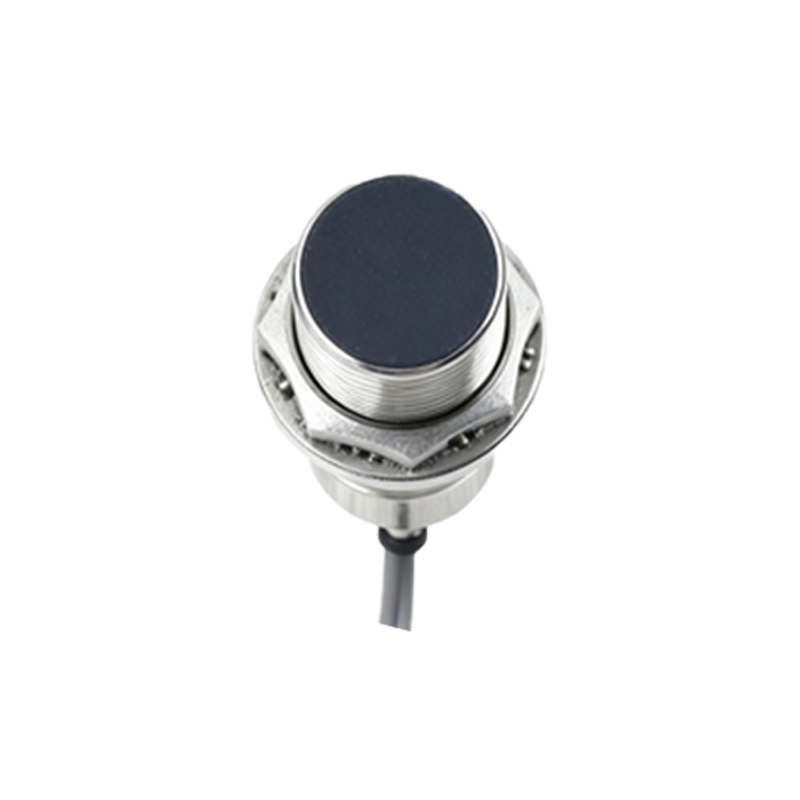
Red cylindrical proximity sensors are a ubiquitous and critical component in modern industrial automation. Characterized by their distinctive cylindrical housing, often in a vibrant red color for high visibility and safety indication, these non-contact sensing devices detect the presence or absence of metallic objects without any physical contact. Their robust design, typically featuring a threaded metal barrel, allows for easy mounting in harsh industrial environments where dust, coolant, and mechanical impacts are common. The fundamental operating principle usually relies on an electromagnetic field, making them exceptionally reliable for detecting ferrous and non-ferrous metals, depending on the specific type. Their primary function is to provide a precise, wear-free switching signal to a programmable logic controller (PLC) or other control system, triggering actions like counting, positioning, or end-of-travel detection in machinery.
Key Operating Principles and Technologies
The most common technology employed in red cylindrical sensors is the inductive proximity principle. Inside the sensor head, an oscillator generates a high-frequency electromagnetic field. When a metallic target enters this field, eddy currents are induced in the target, causing a change in the oscillation amplitude. This change is detected by a threshold circuit, which subsequently switches the output state of the sensor. For applications requiring detection of non-metallic objects, such as plastic, wood, or liquid levels, capacitive cylindrical sensors are used. These operate on a similar principle but are sensitive to changes in capacitance. Another variant is the cylindrical ultrasonic sensor, which uses sound waves for detection over longer ranges. The choice of technology is paramount and depends entirely on the target material and the specific application requirements.
Critical Specifications and Selection Criteria
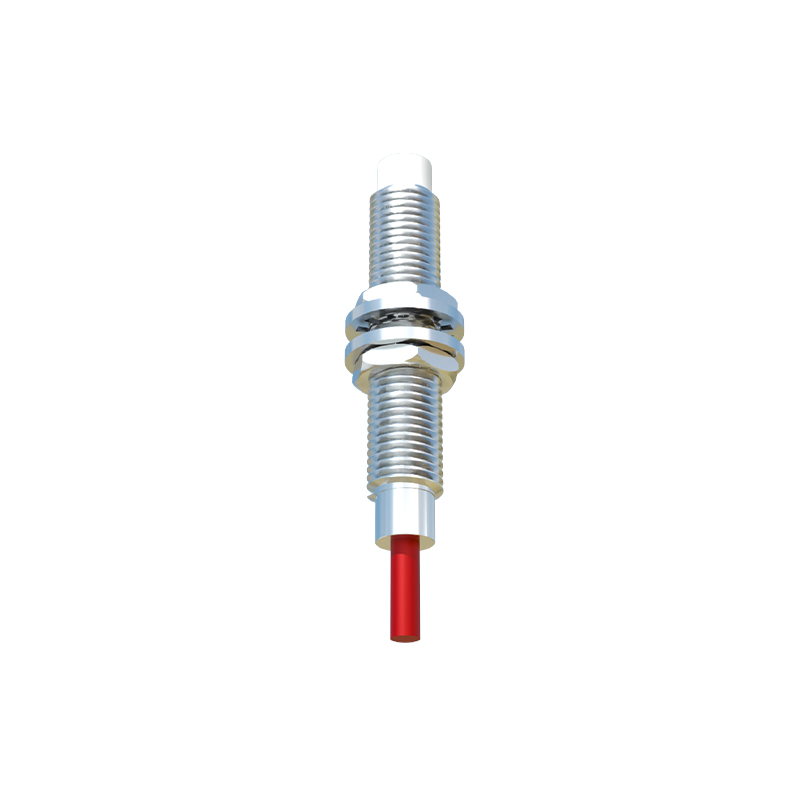
Selecting the correct red cylindrical proximity sensor requires careful analysis of several key specifications. The sensing distance, or nominal range, is the first consideration, typically ranging from 2mm to 40mm for standard inductive models. It is crucial to note that this rating is based on a standard mild steel target; for other metals, a correction factor must be applied. The housing material, often nickel-plated brass or stainless steel, determines environmental resistance. The IP (Ingress Protection) rating, such as IP67 or IP69K, defines the level of protection against dust and water ingress. Electrical output type is another vital factor: NPN (sinking) or PNP (sourcing) transistor outputs are standard for DC models, while AC models may have relay or solid-state outputs. Engineers must also consider the switching frequency, temperature range, and connection method (pre-wired cable or quick-disconnect).
Installation and Mounting Best Practices
Proper installation is essential for optimal sensor performance and longevity. The threaded barrel allows for flush or non-flush mounting in a drilled and tapped hole. For flush-mountable sensors, they can be installed level with a metal surface without loss of sensing range. Non-flush models require a clearance zone around the sensing face. It is critical to ensure that no surrounding metal (like the mounting nut or machine frame) intrudes into this active area, as it can cause false triggering. Adequate tightening torque should be applied to prevent loosening from vibration but avoid damaging the housing. Cable routing should be away from high-voltage power lines and motor drives to minimize electromagnetic interference (EMI). Using shielded cables and proper grounding techniques further enhances signal integrity in electrically noisy environments.
Common Industrial Applications and Use Cases
The versatility of red cylindrical proximity sensors makes them indispensable across countless industries. In automotive manufacturing, they are used for robot end-effector positioning, part presence verification on conveyor pallets, and detecting piston positions in hydraulic systems. Packaging machinery utilizes them for label detection, cap placement verification, and product counting. In metalworking, they serve as limit switches for CNC machine tool axes, detect broken tools, and monitor material feed. Their robust nature also makes them ideal for harsh applications in material handling, wood processing, and agricultural equipment. A classic example is detecting the position of a cylinder rod in pneumatic or hydraulic actuators, providing feedback for sequential control logic.
Troubleshooting and Maintenance Guidelines
Despite their durability, proximity sensors can encounter issues. Common problems include failure to detect the target, intermittent operation, or permanent activation. A systematic approach to troubleshooting begins with verifying power supply voltage and polarity. Next, inspect the sensing face for buildup of dirt, metal chips, or paint, which can insulate the target and reduce effective range. Using a multimeter, check the output switching state relative to the target's presence. If the sensor is permanently on, nearby metal (grounded or ungrounded) may be influencing it. For sensors in vibrating environments, check mounting and connection integrity. Preventive maintenance involves regular cleaning of the sensing face