Introduction to Photoelectric Sensors
Photoelectric sensors are indispensable components in modern industrial automation, providing non-contact detection of objects. They operate by emitting a beam of light, typically infrared, visible red, or laser, and detecting changes in the received light signal. The core principle involves an emitter and a receiver. When an object interrupts or reflects the light beam, the sensor's output state changes, triggering a control action. This technology offers significant advantages over mechanical limit switches, including faster response times, longer sensing distances, minimal physical wear, and the ability to detect a wide variety of materials regardless of color, surface texture, or material composition. Common types include through-beam (opposed), retro-reflective, and diffuse (proximity) sensors, each suited for specific applications based on required sensing distance, environmental conditions, and object characteristics.
Understanding Industrial Contactors
A contactor is an electrically controlled switch designed for repeatedly establishing and interrupting high-current power circuits. Unlike relays, which handle lower control currents, contactors are built to manage the substantial currents required by motors, heaters, and lighting loads. The fundamental operation involves an electromagnet (coil). When a control voltage is applied to the coil, it generates a magnetic field that pulls in a movable armature, physically closing a set of heavy-duty power contacts. When the coil is de-energized, a spring mechanism returns the armature, opening the contacts. Key specifications include the coil voltage (e.g., 24V DC, 120V AC), the rated operational current and voltage for the main contacts, the number and type of auxiliary contacts (NO/NC), and electrical endurance. They are the workhorses for motor starting, stopping, and reversing in control panels.
The Critical Interface: Sensor Output to Contactor Coil
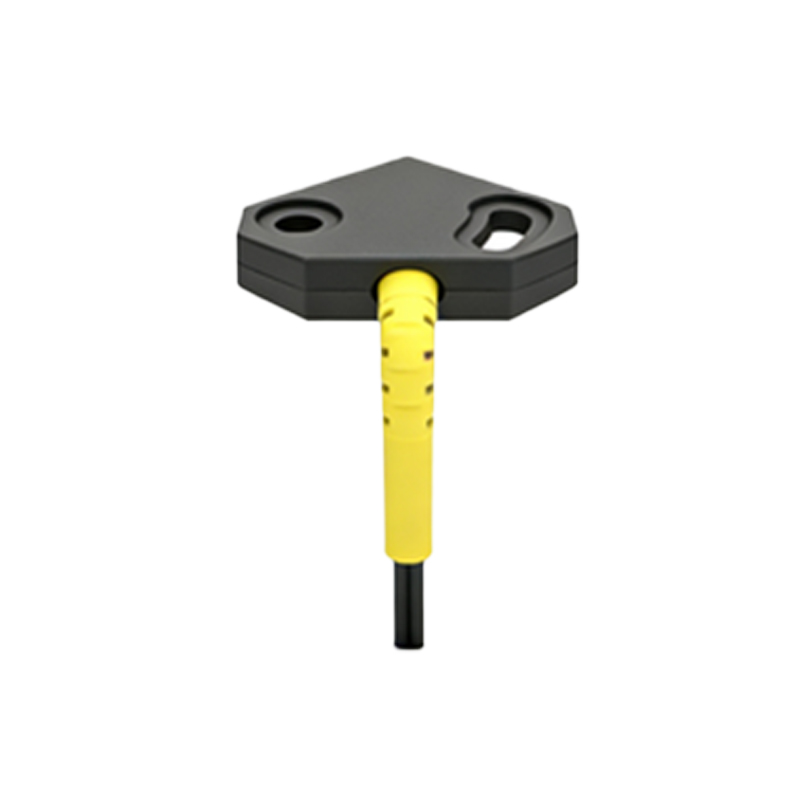
The synergy between photoelectric sensors and contactors forms the backbone of automated control sequences. The sensor acts as the "eyes" of the system, providing a discrete digital signal (often PNP or NPN transistor output) indicating the presence or absence of an object. This low-power signal is typically unsuitable for directly switching a high-current load. Therefore, it is connected to the coil circuit of a contactor. For instance, a sensor detecting a part on a conveyor might send a 24V DC signal to energize the coil of a contactor, which in turn closes its main power contacts to start a motor driving the conveyor. This interface often involves intermediate devices like programmable logic controllers (PLCs) for complex logic, but the fundamental direct connection remains a classic and reliable control method.
Design Considerations for Reliable Integration
Successful integration requires careful planning. For the sensor, factors such as sensing range, response time, light source type, environmental immunity (to dust, moisture, or ambient light), and housing material (e.g., metal or plastic) must be selected based on the application. The contactor selection hinges on the load characteristics: motor horsepower and inrush current, operational voltage (AC or DC), duty cycle, and the need for auxiliary contacts for interlocking or status indication. Electrical compatibility is paramount. The sensor's output rating (voltage, current, and type - sourcing or sinking) must match the requirements of the contactor's coil. Proper wiring, shielding of sensor cables to prevent electrical noise interference, and adherence to safety standards for isolation and disconnection are non-negotiable for system reliability and personnel safety.
Common Applications in Automation Systems
The combination is ubiquitous across industries. In material handling, photoelectric sensors count boxes on a line, triggering a contactor to divert them via a pusher or stop a belt. In packaging machinery, sensors detect product position to precisely control the sealing or filling motor via a contactor. Automated assembly lines use sensors to verify component presence before allowing a robotic welder (powered through a contactor) to activate. They are essential in elevator control for floor positioning and door safety, and in automotive manufacturing for sequencing painting robots or conveyor systems. In each case, the sensor provides the precise, non-contact detection, and the contactor provides the robust, high-power switching capability.
Maintenance and Troubleshooting Practices
Proactive maintenance ensures longevity. For photoelectric sensors, regular lens cleaning is crucial to prevent false triggers from dust or grime buildup. Alignment checks for through-beam and retro-reflective types are necessary. The sensing range and output should be periodically verified. For contactors, maintenance involves inspecting for signs of contact arcing, pitting, or wear, which increase resistance and cause overheating. The mechanical action should be checked for smooth operation, and the coil should be tested for proper resistance and signs of overheating. Common troubleshooting steps include verifying power supply to both devices, checking the sensor's output signal with a multimeter or indicator, ensuring the contactor coil is receiving the signal, and listening for the characteristic "click" of the contactor engaging, which indicates mechanical operation.
Future Trends and Advancements
The evolution of both technologies continues to enhance automation. Photoelectric sensors are becoming smarter with integrated IO-Link communication, providing detailed diagnostic data (like lens contamination levels or signal strength) directly to control systems, enabling predictive maintenance. Background suppression and true color detection capabilities are expanding their application scope. For contactors, trends include more compact designs with higher current ratings, integrated electronic motor protection modules, and connectivity features for Industry 4.0. The integration of safety-rated sensors with safety relays and monitored contactors is critical for building compliant safety circuits (e.g., for light curtains or area scanners). Ultimately, the seamless digital integration of the sensing signal and the switching device within networked automation architectures is driving the future of efficient and intelligent manufacturing.