Understanding the Core Technologies
In the realm of industrial automation, reliable object detection is paramount. Two prevalent solutions for non-contact sensing are photoelectric sensors and retroreflective tapes (or targets). While often used in conjunction, they serve distinct roles. A photoelectric sensor is an active electronic device that emits a light beam—typically infrared, visible red, or laser—and detects changes in the received light to sense an object's presence, absence, or distance. Retroreflective tape, on the other hand, is a passive optical material designed to reflect light directly back to its source over a wide range of incidence angles. It acts as a cooperative target to enhance the performance and range of reflective-type photoelectric sensors.
Photoelectric Sensor: The Active Sensing Workhorse
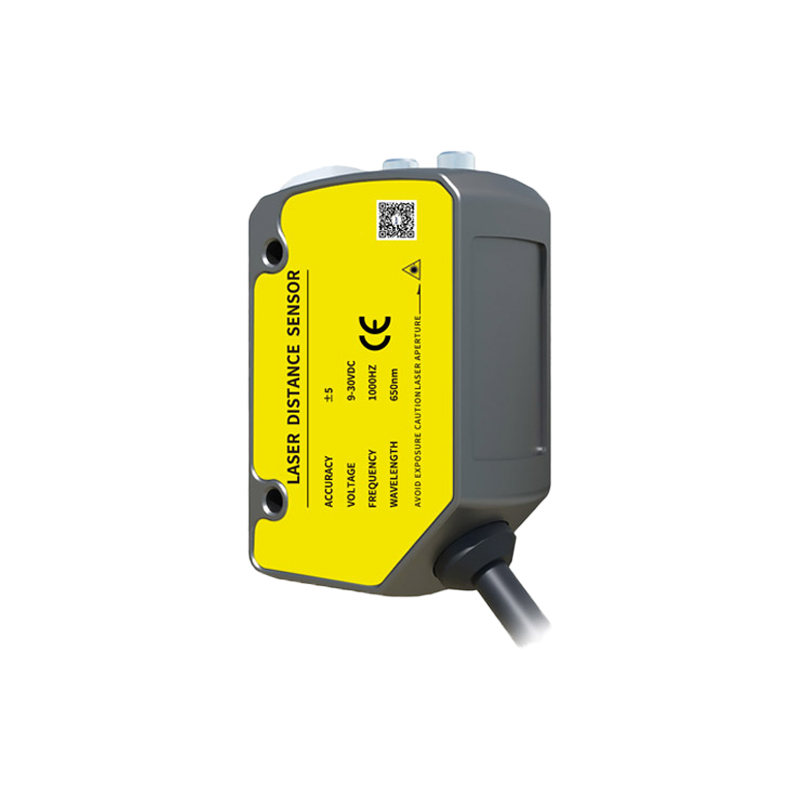
Photoelectric sensors come in several primary operating modes: through-beam, retroreflective, diffuse (proximity), and background suppression. The retroreflective mode is most relevant for this comparison. In this setup, the sensor contains both an emitter and a receiver. It projects light toward a specialized retroreflective target (the tape). When the beam is uninterrupted, the tape efficiently reflects the light back to the receiver. An object breaking this beam causes a detectable drop in the received light intensity. These sensors offer significant advantages, including long sensing ranges, high precision, and excellent reliability in challenging environments. They can detect virtually any opaque object that interrupts the beam. Modern sensors feature advanced diagnostics, adjustable sensing parameters, and robust housings for harsh conditions.
Retroreflective Tape: The Passive Performance Enhancer
Retroreflective tape is not a sensor but a critical component that enables specific sensing modes. Its microstructure, composed of tiny glass beads or prismatic corners, ensures that incoming light is reflected back along a path parallel to the incident light. This property provides a much stronger and more consistent return signal compared to a standard diffuse reflector. Key characteristics include its coefficient of retroreflection, which defines its efficiency, and its angularity, which indicates the working range of incident angles. High-quality industrial-grade tapes are designed to withstand dirt, moisture, and abrasion. The choice of tape color (typically red or gray) is also important, as it is optimized for the wavelength of the sensor's light source to maximize signal strength.
Head-to-Head Comparison: Key Decision Factors
The question of which is "better" is not a direct comparison, as one is an active system and the other is a passive component. The correct question is: which solution best fits the application? For detecting objects that do not inherently provide a good reflective surface, a system combining a retroreflective sensor and tape is often superior to a diffuse sensor. The sensor-tape combination allows for longer ranges and more stable detection. However, if the application involves detecting objects with varied surfaces or colors, a diffuse or background suppression sensor operating without tape might be preferable. Factors like required sensing distance, environmental contaminants (dust, fog), target object characteristics, installation constraints, and maintenance access all influence the decision.
Typical Application Scenarios
The combined use of a retroreflective photoelectric sensor and tape is ideal for applications requiring long-range, precise detection of object presence or passage. Common examples include pallet positioning in warehouses, conveyor line gap detection, door and gate control, and robotic cell safety curtains. In these cases, the tape provides a consistent, high-performance target. Conversely, in packaging machinery where products with shiny or dark wrappers pass by, a diffuse sensor with foreground suppression might be chosen to detect the object itself without any tape, as the object's reflectivity could be unreliable.
Installation and Maintenance Considerations
Proper alignment is critical for a retroreflective sensor-tape system. The sensor must be aimed directly at the tape within its specified angular tolerance. Vibration or misalignment can cause false triggers. The tape surface must be kept relatively clean; however, due to its efficient reflection, it often performs better than diffuse targets when lightly soiled. Sensors themselves require periodic lens cleaning. A key maintenance advantage of the through-beam mode (using separate emitter and receiver) is its immunity to dirt on reflectors, but it requires wiring two devices. The retroreflective mode offers a good compromise of range and installation simplicity with one wired device.
Conclusion: A Synergistic Relationship
In industrial sensing, photoelectric sensors and retroreflective tapes are not competitors but complementary technologies. The sensor is the intelligent, active decision-maker, while the retroreflective tape is a precision tool that extends its capabilities for specific tasks. The optimal choice depends entirely on the application's specific parameters. For long-range, reliable detection of object interruption against a fixed background, the synergy of a quality retroreflective photoelectric sensor and a high-performance industrial retroreflective tape is frequently the most robust and effective solution. Engineers must evaluate the target object, environmental conditions, and performance requirements to select the ideal sensing mode and components.