Introduction to ABB Proximity Sensors
ABB proximity switches represent a cornerstone of modern industrial automation, offering reliable non-contact detection of metallic and non-metallic objects. These sensors are engineered for durability and precision in demanding environments, from manufacturing assembly lines to heavy machinery. Utilizing electromagnetic fields or capacitive sensing principles, ABB proximity sensors provide a critical function in position sensing, object counting, and limit switching without physical contact, thereby minimizing wear and tear. The brand's reputation for quality ensures these components deliver consistent performance, contributing to enhanced operational safety and efficiency across various sectors including automotive, packaging, and material handling.
Key Technologies and Sensing Principles
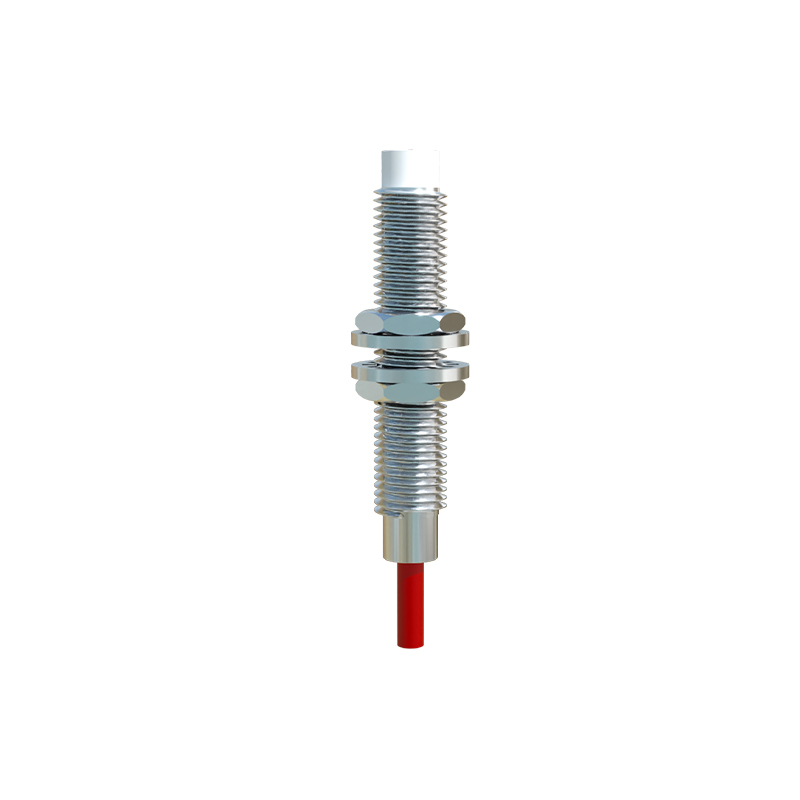
ABB's proximity sensor portfolio primarily employs two fundamental technologies: inductive and capacitive sensing. Inductive proximity switches are designed to detect ferrous and non-ferrous metals. They generate an oscillating electromagnetic field; when a metal object enters this field, it causes a change in oscillation amplitude, triggering the sensor's output switch. Models like the ABB 1SFA... series are typical inductive sensors known for their robustness. Capacitive proximity sensors, such as those in the ABB CM... range, can detect a wider variety of materials, including liquids, plastics, and wood, by sensing changes in capacitance. This versatility makes them indispensable in complex applications beyond simple metal detection.
Overview of Popular ABB Proximity Switch Model Series
ABB offers a structured model numbering system that indicates key specifications. Prominent series include the inductive "1SFA" and "2SFA" families, and the capacitive "CM" series. For instance, the ABB 1SFA899301R1001 is a cylindrical inductive sensor with a standard sensing range, featuring a PNP normally-open output. The ABB CM18-08BPP-KC1 represents a capacitive barrel sensor with an 8mm sensing distance. Another notable line is the "T" series for long-range detection. Each series encompasses numerous variants differing in housing shape (cylindrical, rectangular, ring-shaped), sensing distance, output type (PNP/NPN, NO/NC), connection method (cable or connector), and housing material (nickel-plated brass, stainless steel, PBT plastic).
Critical Selection Criteria and Specifications
Selecting the correct ABB proximity sensor model requires careful analysis of application parameters. The sensing distance, or "sn," is paramount and must account for installation tolerances. Output configuration is another vital decision: PNP (sourcing) or NPN (sinking) transistors, and 2-wire AC/DC options, must match the control system's input card. Environmental ratings, denoted by IP (Ingress Protection) codes like IP67 or IP69K, indicate resistance to dust and water, crucial for washdown or outdoor use. Operating voltage range (e.g., 10-30V DC), temperature tolerance, switching frequency, and housing style (threaded barrel, block-style) are all integral to ensuring reliable integration and long-term performance in the target installation.
Installation, Wiring, and Configuration Guidelines
Proper installation is key to optimal sensor performance. For inductive sensors, ensure the target material and size meet the sensor's specifications. Maintain the recommended lateral and axial distances between multiple sensors to prevent mutual interference. Flush-mounted or non-flush-mounted styles affect the usable sensing range. Wiring must adhere to the datasheet: brown wire to DC+, blue wire to DC-, and black (or white) wire as the switched output load. Always implement electrical protection, such as surge suppressors, in circuits with inductive loads like relays or solenoids. Configuration for capacitive sensors may involve adjusting a potentiometer to set sensitivity precisely for the target material, avoiding false triggers from background objects.
Common Applications and Industry Use Cases
ABB proximity sensors are deployed in countless automation scenarios. In automotive plants, they verify the presence of engine blocks on conveyor pallets. In packaging machinery, they detect foil lids or count bottles. Capacitive sensors monitor fluid levels in transparent tanks or detect non-metallic granules in hoppers. Long-range inductive sensors are used for position feedback on crane systems or door open/close status. Their hermetically sealed and weld-field immune variants are essential in robotic welding cells. The reliability of ABB models ensures minimal downtime, supports Just-In-Time manufacturing processes, and enhances overall equipment effectiveness (OEE) by providing accurate, maintenance-free sensing.
Maintenance, Troubleshooting, and Best Practices
While known for their durability, ABB proximity switches require periodic checks. Common issues include false signals or failure to detect. Troubleshooting steps involve verifying power supply voltage, checking for excessive accumulation of metallic debris