Introduction to Photoelectric Sensors
Photoelectric sensors are indispensable components in modern industrial automation, utilizing light beams to detect the presence, absence, or distance of objects. Their operation is based on the principle of light emission and reception, offering non-contact detection which is crucial for applications requiring high precision, speed, and reliability. These sensors are broadly categorized based on their optical design, with the direct reflective type and through-beam type being two of the most fundamental and widely used configurations. Each type has distinct operational characteristics, advantages, and ideal application scenarios, making the selection process critical for optimal system performance. Understanding the nuances between these types enables engineers to design more efficient and robust automation solutions across various industries, from manufacturing and packaging to automotive and logistics.
Working Principle of Through-Beam Sensors
Through-beam photoelectric sensors, also known as opposed-mode sensors, consist of two separate units: a transmitter and a receiver. The transmitter emits a continuous or modulated light beam, typically from an LED or laser source, which is directed towards the receiver unit positioned opposite to it. The receiver continuously monitors the intensity of this incoming light. An object is detected when it passes between the two units, interrupting the light beam and causing a significant drop in the received light intensity at the receiver. This interruption triggers a change in the sensor's output signal. This configuration provides the longest sensing range and highest excess gain among photoelectric sensor types, making it exceptionally reliable even in environments with dust, mist, or minor misalignments. The physical separation of emitter and receiver also makes it immune to issues like color or surface reflectivity of the target object.
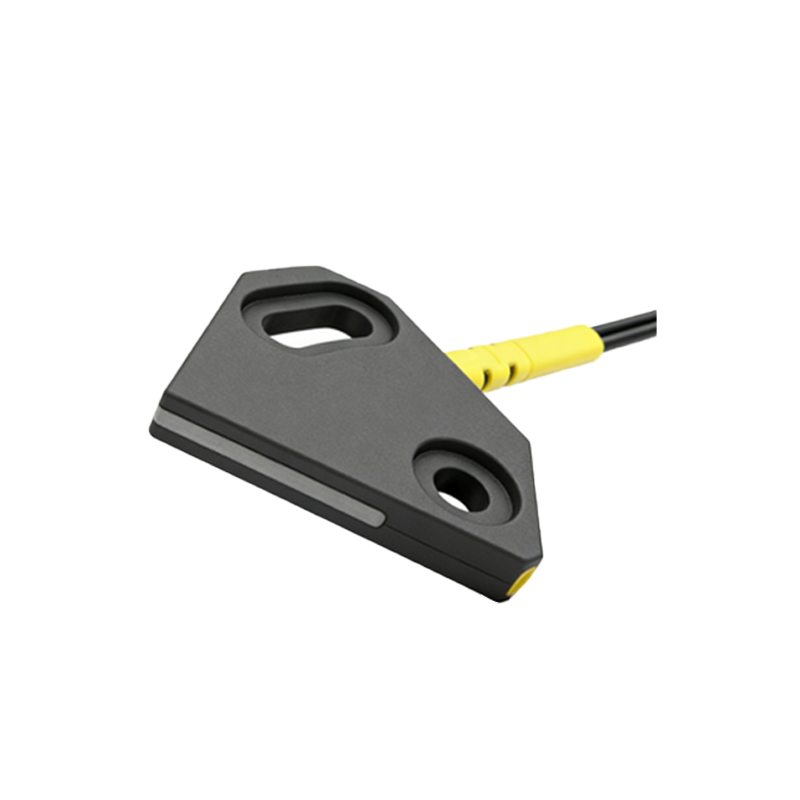
Working Principle of Direct Reflective Sensors
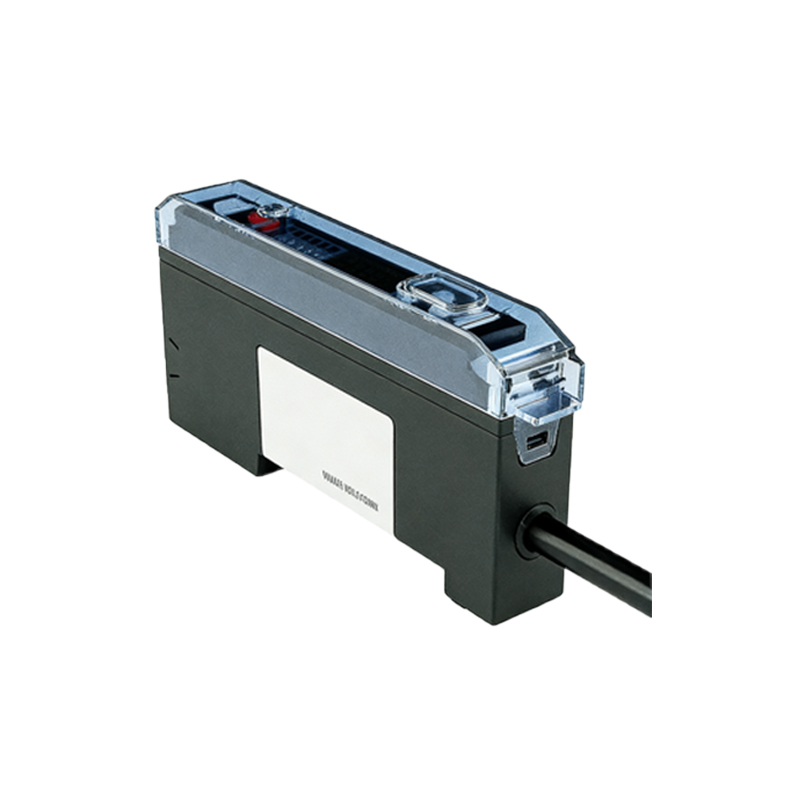
Direct reflective sensors, often called diffuse reflective sensors, integrate both the light emitter and the receiver into a single housing. The emitter projects a light beam towards the target object. Upon striking the object's surface, the light is diffusely reflected in many directions. A portion of this scattered light returns to the receiver located in the same housing. The sensor's internal circuitry detects this returned light. Detection occurs when the intensity of the reflected light exceeds a pre-set threshold. Unlike through-beam sensors, the detection is dependent on the reflectivity of the target's surface. Factors such as color, material, texture, and distance significantly influence the amount of light reflected back, which directly affects the sensor's reliability and effective sensing range. These sensors are simpler to install as they require wiring only on one side.
Key Advantages of Through-Beam Type
The through-beam configuration offers several compelling advantages. Its primary strength is the long and stable sensing distance, which can extend up to several tens of meters in some high-performance models. It provides the highest excess gain, meaning it can tolerate significant attenuation of the light beam due to dirty lenses or adverse environmental conditions before failing to detect an object. This makes it exceptionally reliable in harsh industrial settings. Since detection relies solely on beam interruption, it is completely independent of the target's color, shape, or surface finish. A black, non-reflective object is detected as reliably as a white, highly reflective one. This type also offers high positional accuracy and is ideal for counting or detecting very small objects.
Key Advantages of Direct Reflective Type
Direct reflective sensors excel in applications where convenience and cost-effectiveness are paramount. The most significant advantage is the simplified installation process. With only one device to mount and wire, alignment is straightforward, and installation time and cost are reduced. This single-unit design also saves space, which is beneficial in compact machinery. They are versatile for detecting objects at relatively short to medium ranges. Modern direct reflective sensors often feature background suppression or foreground suppression technology, which allows them to detect an object within a defined sensing window while ignoring objects beyond a set distance, greatly enhancing their utility in complex applications. They are generally more economical for applications that do not require the extreme range or environmental immunity of through-beam sensors.
Comparative Analysis and Selection Criteria
Choosing between a through-beam and a direct reflective sensor depends on a detailed analysis of the application requirements. For long-range detection, demanding environmental conditions (presence of dust, steam, or vibration), or when detecting objects with low reflectivity, the through-beam type is the unequivocal choice. It offers superior reliability and immunity to target properties. Conversely, for shorter-range applications, where easy installation and lower cost are critical, and where the target object has a reasonably reflective surface, the direct reflective sensor is often sufficient. Engineers must also consider factors like required sensing precision, response speed, maintenance accessibility, and overall system budget. In some complex systems, a combination of both sensor types is employed to leverage their respective strengths.
Common Industrial Applications
Through-beam sensors are typically deployed in high-reliability scenarios. Common applications include object detection on high-speed conveyor lines, break detection in web processes (like paper, plastic, or textile), safety light curtains for personnel protection, and precise counting in bottling or packaging machinery. Their robustness makes them ideal for outdoor use or in dirty environments like mining or wood processing. Direct reflective sensors find widespread use in material handling for detecting the presence of boxes or pallets, in automated assembly lines for part verification, in printing industry for paper jam detection, and in consumer electronics assembly. Their compact size allows for integration into robots and small automated guided vehicles (AGVs) for obstacle detection.
Installation and Maintenance Considerations
Proper installation is vital for optimal sensor performance. For through-beam sensors, precise alignment of the transmitter and receiver is critical. Mounting them on stable platforms with adjustment mechanisms is recommended. Lenses must be kept clean to maintain signal strength. Regular maintenance should include checking for physical misalignment due to vibration and cleaning optical surfaces. For direct reflective sensors, installation involves ensuring the target object passes within the specified sensing range and at an appropriate angle. The sensor should be positioned to avoid interference from highly reflective backgrounds. Maintenance primarily involves lens cleaning and occasionally recalibrating the sensitivity threshold if the application or target material changes. Both types benefit from protective housings in harsh environments.
Conclusion and Future Trends
Both direct reflective and through-beam photoelectric sensors are foundational technologies in industrial sensing. The choice is not about which is universally better, but which is optimally suited for a specific set of operational conditions and performance requirements. The ongoing evolution in this field includes the development of sensors with integrated IO-Link communication for advanced diagnostics and parameter setting, miniaturization of components, enhanced resistance to ambient light interference, and the use of laser diodes for more precise and longer-range detection. As Industry 4.0 and smart factories advance, these sensors will continue to evolve, offering greater intelligence, connectivity, and adaptability to meet the ever-increasing demands of automated production systems.