Introduction to Proximity Sensing
Proximity sensors are essential components in modern industrial automation, robotics, and countless electronic devices. Their primary function is to detect the presence or absence of an object within a specified range without any physical contact. This non-contact detection offers significant advantages, including high reliability, long operational life, and the ability to function in harsh environments where contaminants like dust, oil, or moisture are present. By converting information about the presence of an object into an electrical signal, these sensors form a critical link between the physical and control worlds, enabling precise automation, safety interlocks, and object counting.
Inductive Proximity Sensors
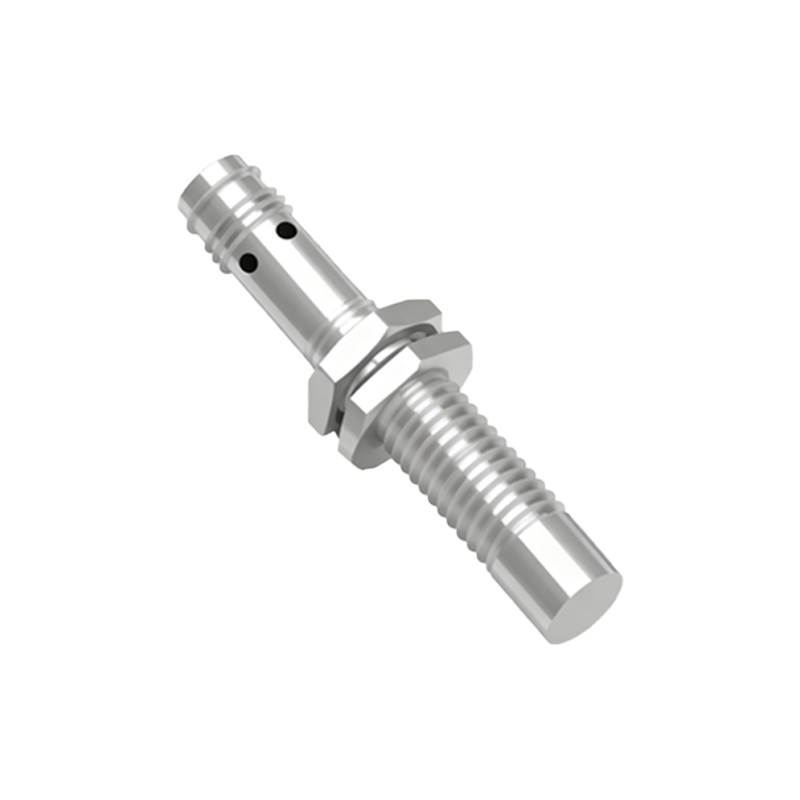
Inductive proximity sensors are among the most common types used in industrial settings. They operate on the principle of electromagnetic induction. The sensor generates an oscillating electromagnetic field from its coil and oscillator circuit. When a metallic object, typically ferrous metals like steel or iron, enters this field, eddy currents are induced on the object's surface. This causes a change in the oscillation amplitude, which is detected by the sensor's circuitry, triggering a solid-state output signal. These sensors are highly robust, resistant to environmental factors, and excel at detecting only metals. Common applications include position sensing of machine parts, limit switching, and metal detection in automated assembly lines.
Capacitive Proximity Sensors
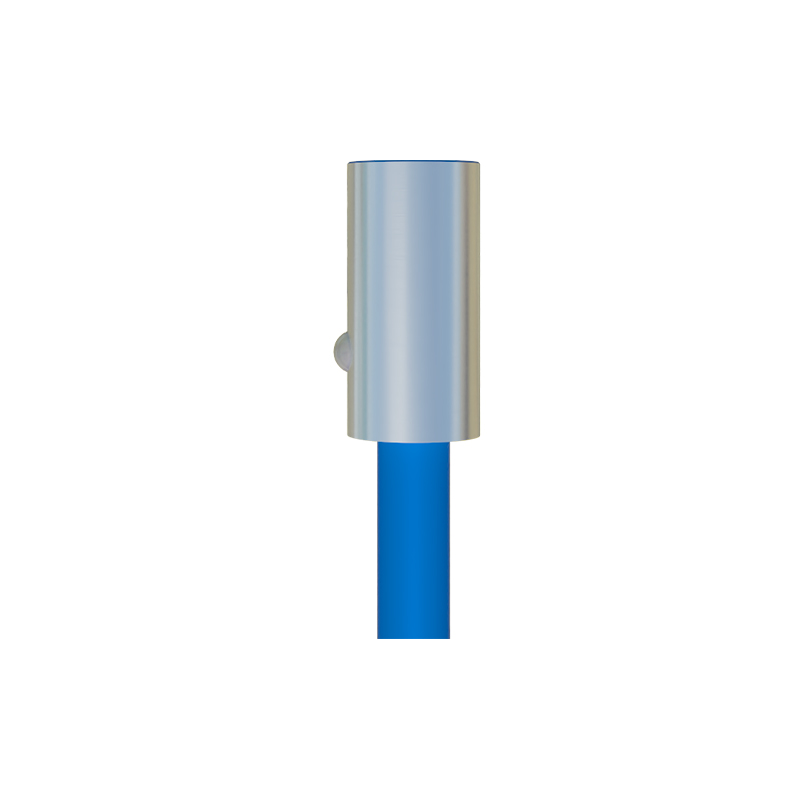
Capacitive proximity sensors are versatile devices capable of detecting a much wider range of materials compared to their inductive counterparts. They function by generating an electrostatic field. Any object that enters this field alters the capacitance of the sensor's circuit. This change in capacitance is measured, and when it exceeds a preset threshold, the sensor switches its output state. Crucially, capacitive sensors can detect both metallic and non-metallic materials, including liquids, plastics, glass, wood, and granular substances. This makes them ideal for applications such as liquid level detection, material handling of non-metals, and presence detection of packaged goods.

Ultrasonic Proximity Sensors
Ultrasonic sensors utilize sound waves at frequencies above the human hearing range (typically above 20 kHz). They operate on the time-of-flight principle: the sensor emits an ultrasonic pulse and then listens for the echo reflected from a target object. By precisely measuring the time interval between the emission and reception of the echo, the sensor can calculate the distance to the object. These sensors are effective for detecting objects of virtually any material, color, or transparency, as long as the surface is capable of reflecting sound. They are commonly used for distance measurement, level sensing of bulk solids or liquids in tanks, and object detection in challenging environments with dust or fog.
Photoelectric Sensors
Photoelectric proximity sensors use light beams to detect objects. They consist of a light emitter (usually an LED) and a receiver. When the emitted light beam is interrupted or reflected by an object, the change in light intensity at the receiver is detected, causing an output change. There are three main operating modes: through-beam (separate emitter and receiver), retro-reflective (emitter and receiver in one housing with a reflector), and diffuse (emitter and receiver in one housing, detecting light reflected directly from the object). Photoelectric sensors offer long sensing ranges and can detect small objects. They are perfect for packaging, material handling, and assembly automation, though their performance can be affected by ambient light and the color or reflectivity of the target.
Magnetic Proximity Sensors (Reed Switches and Hall Effect)
Magnetic proximity sensors detect the presence of a magnetic field, typically from a permanent magnet. Two primary technologies are used. Reed switches consist of two ferromagnetic reeds sealed in a glass tube. When a magnet approaches, the reeds are magnetized and attract each other, closing the electrical contact. Hall Effect sensors are solid-state devices that produce a voltage output proportional to the strength of an applied magnetic field. Both types are used for position sensing, such as detecting the open/closed state of doors or windows, and in speed sensing applications (e.g., detecting gear teeth or motor RPM). They are highly reliable for low-speed, non-contact switching.
Selection Criteria and Conclusion
Choosing the correct proximity sensor depends on several key factors: the material of the target object (metal, plastic, liquid), the required sensing distance, the operating environment (temperature, presence of contaminants), the required output type (digital or analog), and the response speed. Inductive sensors are the default for metals in industrial environments. Capacitive sensors handle diverse materials including liquids. Ultrasonic sensors are chosen for longer ranges and difficult conditions, while photoelectric sensors provide precision for non-metallic objects. Magnetic sensors offer simple, reliable solutions for