Understanding Intrinsic Safety and the Core Principle
Intrinsically Safe (IS) magnetic proximity sensors represent a critical category of sensing technology designed for operation in hazardous locations where flammable gases, vapors, or combustible dusts may be present. The fundamental principle of intrinsic safety is to limit the electrical and thermal energy within the sensor and its connected circuit to a level below what is required to ignite a specific hazardous atmospheric mixture. This is achieved through meticulous design and the use of approved safety barriers or isolators installed in the safe area. These barriers limit current and voltage to the sensor in the hazardous zone, ensuring that even under fault conditions, any spark or thermal effect is insufficient to cause ignition. Magnetic proximity sensors are inherently well-suited for this concept due to their non-contact, wear-free operation and typically low power requirements.
Operational Mechanism and Key Components
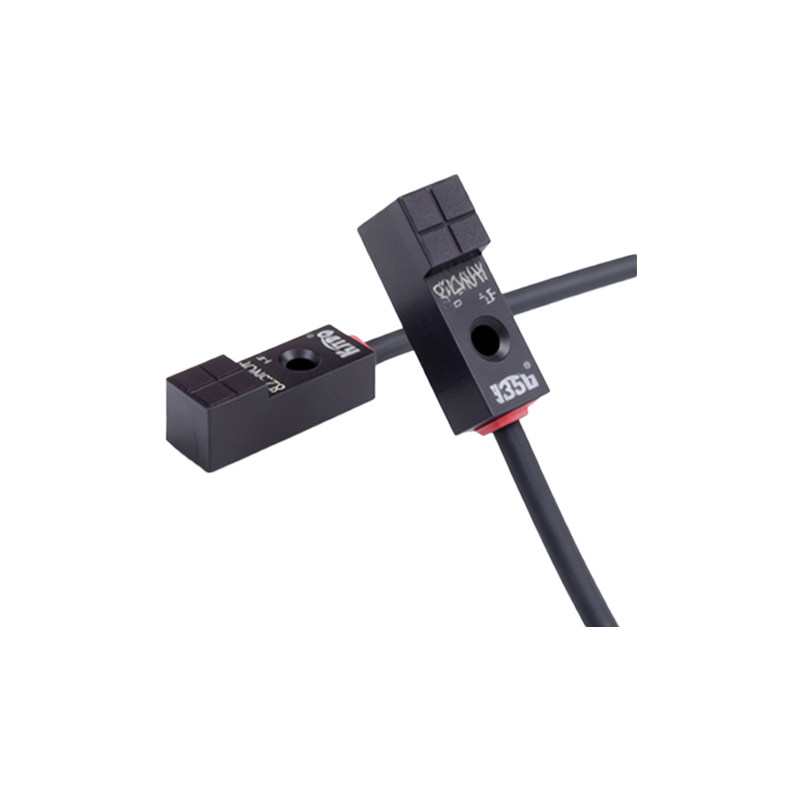
An IS magnetic proximity sensor operates by detecting the presence of a magnetic field, typically from a permanent magnet attached to a moving target. The core sensing element is often a reed switch or a solid-state Hall effect sensor. When the magnet approaches, the reed contacts close, or the Hall element triggers a state change, sending a signal. In an IS design, this entire assembly is encapsulated within a robust, often stainless-steel housing that prevents the ingress of environmental contaminants. Crucially, the internal circuitry is designed with current-limiting resistors and other components that ensure the energy stored and dissipated remains within the intrinsically safe limits certified for the device. The certification, such as ATEX, IECEx, or UL, specifies the precise conditions (gas groups, temperature classes) under which the sensor can be safely used.
Primary Advantages in Industrial Settings
The deployment of intrinsically safe magnetic proximity sensors offers several compelling advantages. Foremost is the enhanced safety, allowing for reliable sensing in Zone 0, 1, 2 (for gases) or Zone 20, 21, 22 (for dust) areas without the need for bulky explosion-proof enclosures. This leads to easier and more cost-effective installation and maintenance, as the sensors themselves are typically compact and lightweight. Their non-contact nature ensures long operational life with no mechanical wear on the sensing face, providing high reliability for position detection, limit switching, or speed monitoring. Furthermore, because the energy is limited, live maintenance and calibration can often be performed without requiring a hot work permit or a complete shutdown of the process, significantly improving operational efficiency in critical industries.
Critical Application Areas and Use Cases
These sensors are indispensable across a wide range of industries where explosive atmospheres are a constant concern. In the oil and gas sector, they are used on offshore platforms, in refineries, and along pipelines to monitor valve positions, tank levels, and safety system actuators. Chemical and pharmaceutical plants utilize them on mixing vessels, filling lines, and reactor doors to ensure process integrity and safety. In grain silos, flour mills, and other powder handling facilities (ATEX Dust applications), they monitor conveyor systems, hatches, and rotary airlocks. Additional common applications include detecting the position of doors on hazardous material storage cabinets, monitoring crane movements in potentially explosive environments, and serving as safety interlocks on pressurized systems.
Essential Selection Criteria and Installation Guidelines
Selecting the correct IS magnetic proximity sensor requires careful consideration of several parameters. First and foremost is the safety certification; the sensor's marking must match the hazardous area classification (e.g., ATEX II 2G Ex ia IIC T6 Ga). The sensing distance, switching frequency, output type (PNP/NPN, NO/NC), and electrical specifications must align with the control system and the application's speed requirements. Environmental factors like temperature range, pressure, and chemical resistance of the housing material are also critical. Installation must strictly adhere to the manufacturer's instructions and relevant standards. This includes using certified IS barriers or isolators, employing proper grounding techniques, and ensuring all connections are made with the correct, approved apparatus. Cables must be separated from non-IS wiring, and the integrity of the IS loop must never be compromised by unauthorized modifications.
Maintenance, Certification, and Future Trends
While inherently reliable, periodic inspection of IS magnetic proximity sensors is recommended. This involves checking the physical condition of the housing and cable entries, verifying the mounting stability, and ensuring the target magnet is clean and properly aligned. The sensor's performance should be tested according to the maintenance schedule. It is vital to understand that any repair or modification must be performed by authorized personnel using original parts to maintain the IS integrity; tampering voids the certification. Looking forward, trends include the integration of advanced diagnostics (via IO-Link within IS parameters), miniaturization for