Introduction to Photoelectric Sensors
Photoelectric sensors are versatile devices widely used in industrial automation for detecting the presence, absence, or distance of objects without physical contact. They operate by emitting a light beam—typically infrared, visible, or laser—and measuring changes in the received light due to interruption or reflection. These sensors consist of three main components: an emitter (light source), a receiver (photodetector), and signal processing circuitry. Their non-contact nature makes them ideal for applications where hygiene, speed, or object fragility is a concern, such as in packaging, material handling, and assembly lines. By converting light signals into electrical outputs, photoelectric sensors enable precise control and monitoring in dynamic environments, contributing to enhanced efficiency and safety in modern manufacturing systems.
Key Characteristics of Photoelectric Sensors
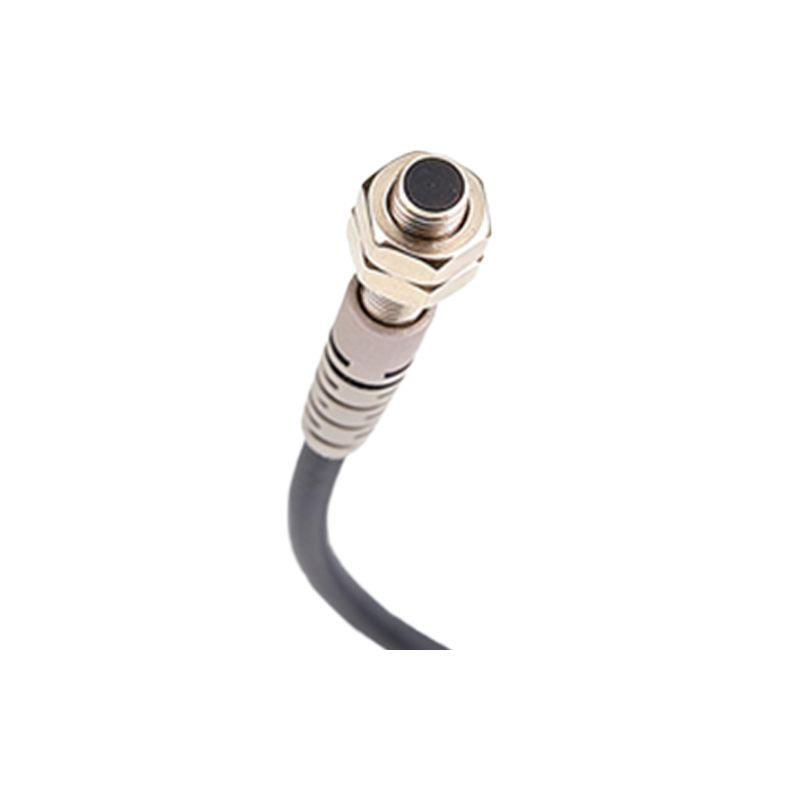
Photoelectric sensors offer several distinct features that set them apart from other sensing technologies. First, they provide high accuracy and repeatability, with detection ranges varying from a few millimeters to over 100 meters, depending on the model and light type. For instance, laser-based sensors excel in long-range applications, while diffuse-reflective types are suited for short-distance tasks. Second, these sensors boast fast response times, often in the microsecond range, allowing for real-time detection in high-speed processes like conveyor belt sorting. Third, they are highly adaptable to diverse environments; many models are built with rugged housings rated IP67 or higher, ensuring resistance to dust, moisture, and mechanical shocks. Additionally, photoelectric sensors can detect a wide variety of materials, including transparent, opaque, and reflective surfaces, though adjustments may be needed for optimal performance. Their low maintenance requirements and energy efficiency further reduce operational costs in industrial settings.
Types of Photoelectric Sensors and Their Specific Traits
There are three primary types of photoelectric sensors, each with unique characteristics tailored to different applications. Through-beam sensors consist of separate emitter and receiver units aligned opposite each other; they offer the longest detection range and highest reliability, as the receiver directly detects beam interruptions. However, installation can be complex due to the need for precise alignment. Retro-reflective sensors use a single unit with both emitter and receiver, along with a reflector to bounce light back; they provide moderate ranges and are easier to set up than through-beam types, but may struggle with shiny objects that cause false signals. Diffuse-reflective sensors rely on light reflecting off the target itself, making them compact and simple to install for close-range detection, though their performance can vary with object color and surface texture. Advanced variants include background suppression sensors, which ignore distant objects, and color recognition sensors, which differentiate based on hue. Understanding these traits helps in selecting the right sensor for tasks like object counting, level monitoring, or edge detection.
Advantages Over Other Sensing Technologies
Compared to proximity sensors (e.g., inductive or capacitive types), photoelectric sensors provide superior versatility and range. Inductive sensors only detect metals, while capacitive sensors are sensitive to non-metals but have shorter ranges and can be affected by environmental factors like humidity. In contrast, photoelectric sensors work with almost any material and maintain consistent performance over longer distances. They also outperform ultrasonic sensors in terms of speed and precision, as sound waves are slower and more prone to interference from temperature or air turbulence. Moreover, photoelectric sensors are less invasive than mechanical limit switches, which require physical contact and may wear out over time. Their ability to integrate with digital networks—such as IO-Link or Ethernet/IP—enables smart factory capabilities, including remote diagnostics and data logging. These advantages make photoelectric sensors a preferred choice for industries seeking reliability and scalability in automation solutions.
Common Applications in Industrial Automation
Photoelectric sensors are integral to numerous industrial processes, enhancing productivity and safety. In packaging lines, they detect label positions, verify fill levels, and count products on high-speed conveyors. For material handling, they monitor pallet presence, control robotic arm movements, and prevent collisions in automated guided vehicles (AGVs). In the automotive sector, sensors ensure precise part alignment during assembly and inspect weld quality. They also play a critical role in food and beverage production, where hygiene standards require non-contact detection of bottles or containers on filling machines. Additionally, photoelectric sensors are used in security systems for intrusion detection and in agriculture for sorting crops. Their adaptability allows customization via adjustable sensitivity, time delays, and output modes (e.g., NPN/PNP). As Industry 4.0 evolves, these sensors contribute to predictive maintenance by providing real-time data on machine health, reducing downtime and optimizing resource use.
Considerations for Selection and Installation
Choosing the right photoelectric sensor involves evaluating several factors to ensure optimal performance. First, consider the operating environment: factors like ambient light, dust, or temperature extremes may necessitate specialized models with protective coatings or modulated light to prevent interference. Second, assess the target properties—such as size, color, and material—as these influence sensor type selection; for example, a through-beam sensor is better for detecting clear glass than a diffuse type. Third, determine the required detection range and response time based on application speed. During installation, proper alignment is crucial to avoid false triggers; using mounting brackets and testing under real conditions can help. Regular maintenance, like cleaning lenses and checking connections, prolongs sensor life. It’s also advisable to consult manufacturer guidelines for wiring and compatibility with control systems like PLCs. By addressing these aspects, users can leverage photoelectric sensors to achieve reliable, cost-effective automation.
Future Trends and Innovations
The future of photoelectric sensors is shaped by advancements in miniaturization, connectivity, and intelligence. Smaller, more compact designs are emerging, allowing integration into tight spaces without sacrificing functionality. Enhanced connectivity features, such as wireless communication and IoT compatibility, enable sensors to transmit data directly to cloud platforms for analytics and remote management. Smart sensors with embedded processors can now perform self-diagnostics, adjust parameters autonomously, and detect anomalies in real-time. Innovations in light sources, like energy-efficient LEDs and laser diodes, are extending detection ranges and improving accuracy. Additionally, the rise of Industry 4.0 drives demand for sensors that support digital twins and AI-driven optimization. As sustainability gains emphasis, eco-friendly models with reduced power consumption are being developed. These trends promise to expand the role of photoelectric sensors in smart factories, robotics, and beyond, making automation more adaptive and efficient.