Introduction to Photoelectric Sensors
Photoelectric sensors are fundamental components in modern industrial automation, offering non-contact detection of objects based on the modulation of a light beam. Their operation hinges on a simple yet powerful principle: a light source emits a beam (visible, infrared, or laser), and a receiver detects changes in this beam caused by the presence, absence, or specific characteristics of a target object. This technology provides significant advantages over mechanical limit switches, including higher speed, longer sensing distances, minimal wear and tear, and the ability to detect a wide variety of materials, from metals and plastics to glass and liquids. As an engineer, understanding the core types, selection criteria, and application nuances is crucial for designing robust and efficient systems. This reading note consolidates key practical insights from technical literature and field experience.
Core Operating Principles and Types
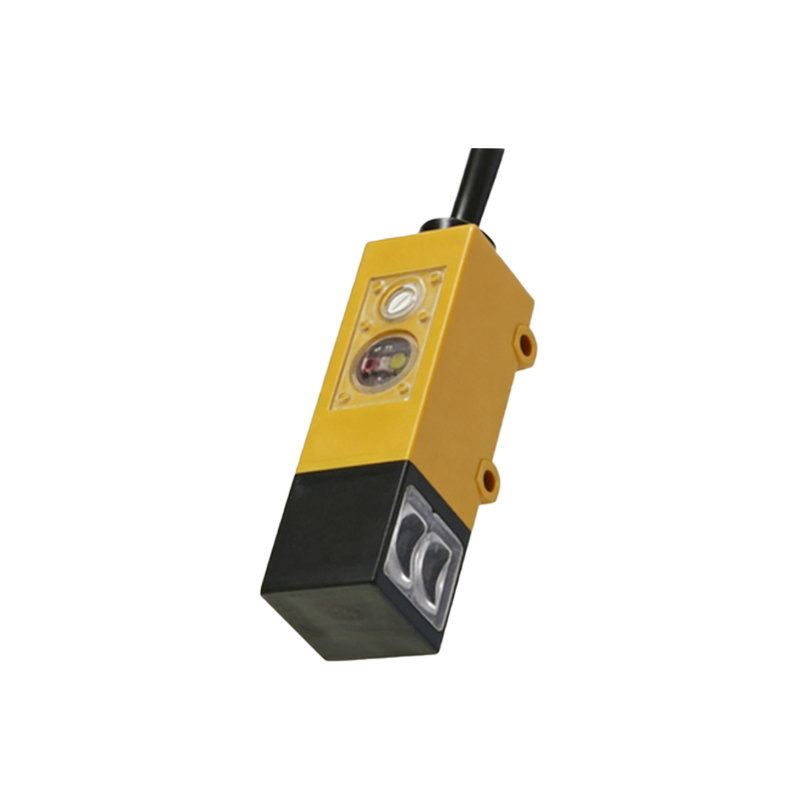
The functionality of photoelectric sensors is defined by their light source and the method of beam delivery and reception. The three primary types are through-beam, retro-reflective, and diffuse reflective. Through-beam sensors consist of separate, opposing emitter and receiver units. The object is detected when it interrupts the beam path. This type offers the longest sensing range and highest reliability, as it is largely immune to object color, texture, or reflectivity. However, installation requires precise alignment of two separate components, which can be more complex and costly. Retro-reflective sensors house both emitter and receiver in a single housing. The emitted beam is directed towards a specialized reflector (corner-cube reflector) that returns the light directly to the receiver. An object is detected when it breaks this beam. This simplifies wiring and mounting compared to through-beam but requires a clear path to the reflector. Diffuse reflective sensors, also known as proximity-mode sensors, detect objects by receiving light reflected directly off the target's surface. The emitter and receiver are in the same unit. Sensing distance is influenced by the object's color, size, and surface finish, making them versatile but requiring careful consideration of the target's properties.
Critical Selection Parameters
Selecting the appropriate sensor is a systematic process. First, define the sensing distance and required excess gain. Excess gain is a multiplier indicating how much stronger the received signal is compared to the minimum needed for reliable detection. It accounts for environmental factors like dust, dirt, and misalignment. A higher excess gain ensures stability in harsh conditions. Second, consider the light source. Infrared LEDs are common for general-purpose use due to their invisibility and resistance to ambient light interference. Visible red LEDs are useful for easy alignment. Laser diodes provide a very narrow, precise beam for small object detection or long-range applications. Third, the output type must match the control system: NPN (sinking) or PNP (sourcing) transistor outputs, or relay contacts. Fourth, environmental rating is paramount. An IP67 or IP69K rating is essential for washdown areas, while specific certifications (e.g., ATEX, IECEx) are mandatory for hazardous locations. Finally, consider special functions like background suppression, which allows the sensor to ignore objects beyond a set distance, or color contrast detection for sorting applications.
Application Challenges and Troubleshooting
Even with correct selection, real-world applications present challenges. A common issue is optical interference from ambient light sources like sunlight or high-intensity factory lighting. Choosing sensors with modulated light (pulsing the LED at a specific frequency) and corresponding tuned receivers effectively filters out DC ambient light. Another frequent problem is sensing highly reflective or transparent objects. For shiny surfaces, a polarized retro-reflective sensor or a diffuse sensor with background suppression can prevent false triggers. For clear glass or plastic, through-beam sensors are typically the most reliable. Acoustic noise from variable frequency drives (VFDs) can sometimes interfere with sensor electronics; proper grounding and shielding of both the sensor and motor cables are critical. Regular maintenance, including lens cleaning to prevent buildup of dust or oil film, is often overlooked but vital for sustained performance. A systematic troubleshooting approach always starts with verifying power, checking alignment (using the sensor's alignment indicator if available), and measuring the output signal.
Integration with Control Systems
Modern photoelectric sensors are not isolated devices but integral nodes in a networked control architecture. Beyond simple discrete I/O connections, many sensors now offer IO-Link communication. IO-Link provides a point-to-point serial connection that enables detailed parameter setting (e.g., setting sensitivity, switching hysteresis, timers), real-time diagnostic data (e.g., signal strength, operating temperature), and advanced event messaging directly to the PLC. This facilitates predictive maintenance, faster changeovers in flexible manufacturing, and centralized configuration management. When integrating, pay close attention to wiring practices: use shielded cables in electrically noisy environments, ensure correct wire gauge for the distance, and implement proper fuse protection. The sensor's response time, often in the microsecond range, must be compatible with the process speed to avoid missed counts or delayed reactions.
Future Trends and Conclusion
The evolution of photoelectric sensors continues to align with Industry 4.0 trends. Miniaturization allows for installation in increasingly tight spaces. Enhanced intelligence, through built-in microprocessors and IO-Link, is turning simple sensors into smart devices that provide process data, not just a switch signal. There is also a growing convergence with other technologies; for instance, sensors combining photoelectric sensing with distance measurement (using time-of-flight principles) or vision-based inspection capabilities. For the practicing engineer, staying updated on these developments is key. In summary, photoelectric sensors are versatile, reliable workhorses of automation. A deep understanding of their operating modes, a meticulous selection process based on application requirements, and awareness of integration best practices are the cornerstones of leveraging their full potential to create efficient, resilient, and intelligent automated systems.