Introduction to Ultra-Thin Proximity Sensing Technology
The evolution of sensor technology has consistently pushed the boundaries of what is possible in automation and control systems. Among the most significant recent advancements is the development of the ultra-thin, or micro-thin, proximity sensor. These devices represent a paradigm shift, offering the core functionality of traditional inductive, capacitive, or photoelectric sensors in a form factor that is remarkably slim, often measuring less than a few millimeters in thickness. This miniaturization is not merely a matter of size reduction; it enables integration into applications where space constraints were previously insurmountable. The core principle remains the detection of an object's presence, absence, or position without physical contact, but the ultra-thin design unlocks new levels of design flexibility and precision.
Core Technologies and Operating Principles
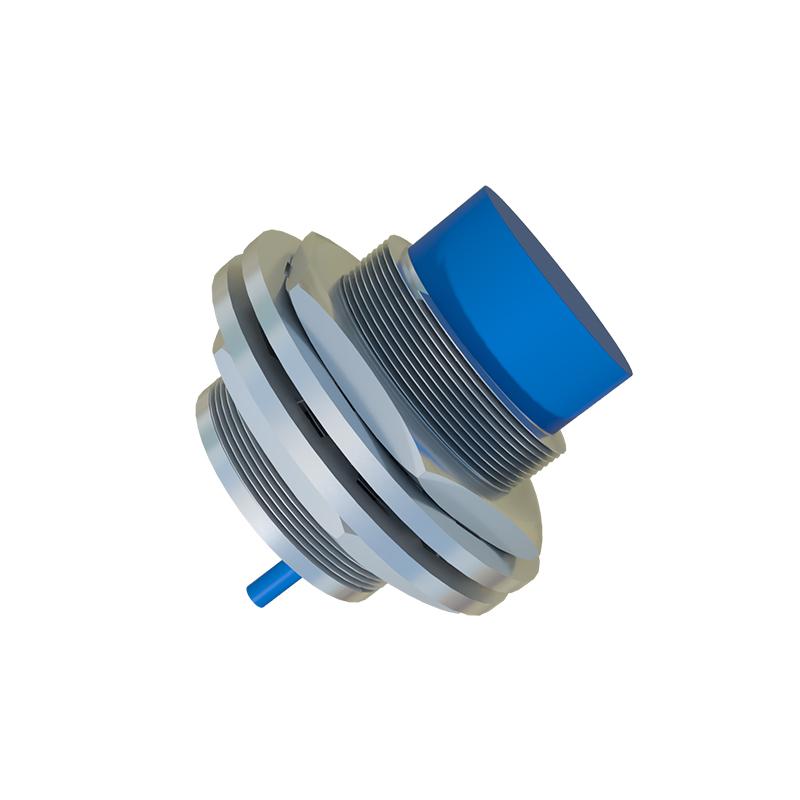
Ultra-thin proximity sensors primarily utilize inductive or capacitive sensing technologies, adapted for a flattened architecture. Inductive types generate an electromagnetic field and detect changes caused by metallic objects. The challenge in miniaturization lies in maintaining a sufficient sensing range and field stability with a drastically reduced coil size. Advanced materials and sophisticated electronic circuitry compensate for this, allowing these sensors to detect small metallic components reliably. Capacitive variants, on the other hand, detect changes in an electrostatic field caused by both conductive and non-conductive materials, making them versatile for detecting liquids, plastics, or granular substances. Their ultra-thin design often employs specialized electrode patterns printed on flexible substrates.
Key Advantages and Design Benefits
The primary benefit of these sensors is their minimal spatial footprint. They can be mounted directly onto machine surfaces, embedded into thin panels, or installed behind non-metallic covers without protruding, thereby eliminating risks of snagging or mechanical damage. This flush or sub-flush mounting capability is critical in cleanrooms, packaging machinery, and robotic grippers where hygiene and unobstructed movement are paramount. Furthermore, their low mass reduces inertia, making them ideal for high-speed or vibrating applications. The sleek profile also contributes to improved aesthetics in consumer electronics and automotive interiors, where sensors must be invisible yet functional.
Critical Applications in Modern Industry
The application spectrum for ultra-thin proximity sensors is vast and growing. In semiconductor manufacturing, they are used for wafer presence detection and robot arm end-effector positioning within extremely confined spaces inside fabrication tools. In automated assembly lines, they verify the placement of miniature components on printed circuit boards (PCBs). The automotive sector integrates them into seat occupancy detection systems, sliding door mechanisms, and gear shifters. Beyond heavy industry, they are found in consumer devices like smartphones and tablets for features such as screen-off detection during calls, and in medical devices for precise fluid level monitoring in compact diagnostic equipment.
Installation Considerations and Environmental Robustness
Despite their delicate appearance, high-quality ultra-thin proximity sensors are engineered for industrial durability. Key specifications to consider include the sensing distance, which is typically shorter than bulkier sensors but highly repeatable, and the target material compatibility. Proper installation is crucial; they must be mounted on a stable, flat surface to prevent bending or stress that could damage internal components. Shielding from adjacent metals (for inductive sensors) and environmental factors like temperature extremes, humidity, and chemical exposure must be evaluated based on the sensor's Ingress Protection (IP) rating. Many models offer built-in diagnostics via LED indicators or IO-Link communication for predictive maintenance.
The Future Outlook and Integration with Industry 4.0
The trajectory for ultra-thin proximity sensors points toward even greater integration and intelligence. The convergence with flexible and printed electronics will lead to sensors that can conform to curved surfaces. The integration of wireless connectivity and energy-harvesting capabilities will facilitate deployment in mobile and hard-to-wire locations. As a fundamental data point provider for the Internet of Things (IoT) and Industry 4.0 ecosystems, these sensors will feed real-time positional data into digital twins and AI-driven control systems, enabling more adaptive, efficient, and autonomous operations. Their role in enabling miniaturized and smarter machines is unequivocally central to the next wave of technological innovation.