Introduction to Photoelectric Sensing Technology
Photoelectric sensors are fundamental components in modern industrial automation, utilizing light beams to detect the presence, absence, or distance of objects. Among the diverse types available, the planar reflective photoelectric sensor represents a specialized and highly effective solution for specific detection challenges. This sensor category operates on the principle of light reflection but is distinguished by its unique optical design and sensing field characteristics. Unlike standard diffuse or retro-reflective sensors, the planar reflective variant is engineered to create a precise, two-dimensional detection zone, offering superior performance in applications requiring accurate edge or surface detection. Its design integrates a light emitter and receiver within a single housing, projecting a beam onto a fixed, highly reflective background or surface. The operational principle hinges on detecting changes in the intensity of the reflected light when an object interrupts or alters this beam path. This technology has become indispensable in sectors demanding high precision and reliability, such as semiconductor manufacturing, packaging, and automated assembly lines, where consistent and accurate object detection is critical for process integrity and efficiency.
Core Operating Principle and Design
The fundamental operation of a planar reflective photoelectric sensor is based on the triangulation method. The sensor emits a focused beam of light, typically from an LED or laser diode, at a specific angle towards a reflective background. This background is often a specialized, high-reflectivity tape or a polished machine surface. The receiver, positioned at a calculated angle relative to the emitter, captures the light reflected from this background. When an object enters the detection zone, it interrupts the light path, causing a significant reduction or complete absence of the reflected signal at the receiver. The key innovation lies in its "planar" design. The optics are configured to generate a thin, fan-shaped beam, creating a precise detection plane rather than a conical or spot-based field. This allows for the detection of objects based on their leading or trailing edges with exceptional accuracy, independent of the object's color or surface texture to a large degree. Advanced models incorporate background suppression functionality, electronically filtering out signals from objects beyond a set distance, thereby enhancing reliability by ignoring the fixed background.
Key Advantages Over Other Sensor Types
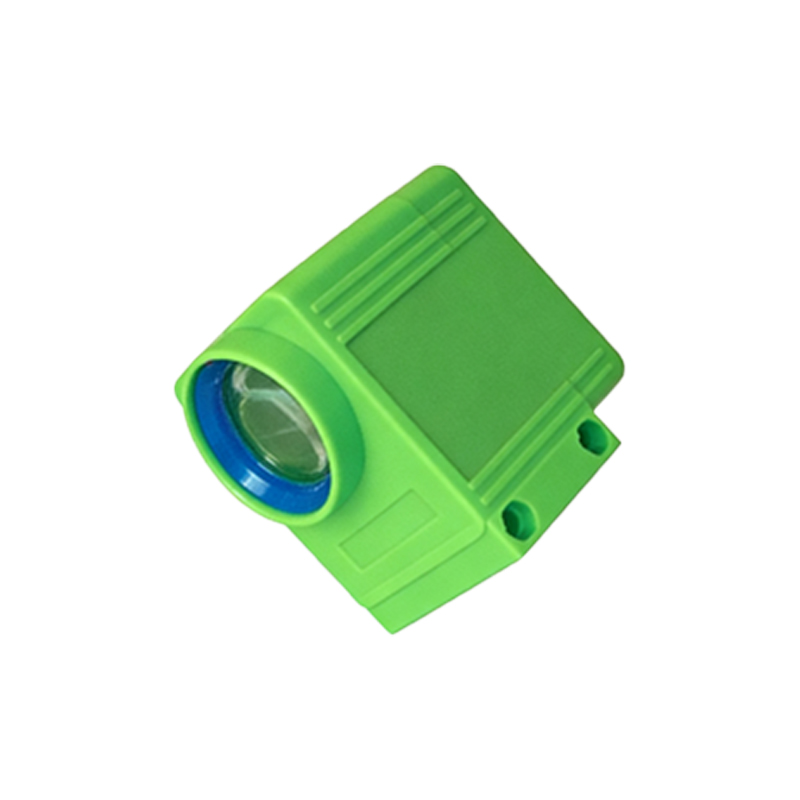
Planar reflective photoelectric sensors offer several distinct benefits that make them the preferred choice for numerous applications. First is their exceptional precision in edge detection. The well-defined planar beam allows for detection resolutions down to sub-millimeter levels, crucial for tasks like wafer positioning or label registration. Second, they exhibit remarkable stability and are less susceptible to interference from ambient light or the color variations of the target object, as they are calibrated to a consistent, high-contrast background reflection. Third, their installation and alignment are generally more straightforward than through-beam sensors, which require separate emitter and receiver units, reducing setup time and complexity. Furthermore, they are highly effective in detecting transparent or glossy objects, such as glass or plastic films, which often pose challenges for standard diffuse sensors. The ability to ignore objects beyond a specified background distance also minimizes false triggers, ensuring robust operation in dynamic industrial environments.
Primary Industrial Applications
The unique capabilities of planar reflective photoelectric sensors have led to their widespread adoption across various industries. In the electronics and semiconductor sector, they are pivotal for precise wafer and PCB (Printed Circuit Board) handling, detecting the exact edges for alignment in lithography and assembly equipment. Within packaging machinery, these sensors reliably detect the leading edge of labels, films, and cartons on high-speed production lines, ensuring accurate cut-off and placement. They are also extensively used in printing for web guidance and mark registration, detecting printed marks on reflective substrates. Another critical application is in robotic pick-and-place systems, where they verify the presence and correct orientation of components on feeders or conveyors. Additionally, they play a vital role in automated inspection systems, identifying minute defects, gaps, or overlaps in manufactured products by detecting deviations in the expected reflective pattern.
Critical Selection Criteria and Installation Tips
Selecting the appropriate planar reflective photoelectric sensor requires careful consideration of several technical parameters. The sensing range is paramount; it must be compatible with the required working distance to the reflective background. The size and nature of the target object dictate the necessary beam shape and width—thinner beams for precise edge detection, wider beams for larger surface monitoring. Response time is another crucial factor, especially for high-speed production lines; the sensor's switching frequency must exceed the rate of object passage. Environmental conditions cannot be overlooked. Sensors with high IP (Ingress Protection) ratings are necessary for dusty, humid, or washdown environments common in food and beverage or pharmaceutical manufacturing. Regarding installation, achieving optimal performance hinges on precise alignment. The sensor must be perpendicular to the reflective background to ensure the beam returns correctly to the receiver. Using the manufacturer's recommended reflective material is essential, as its reflectivity coefficient directly impacts sensing range and stability. Regular maintenance, including lens cleaning to prevent dust accumulation, is vital for long-term reliability.
Future Trends and Technological Evolution
The evolution of planar reflective photoelectric sensors is closely tied to advancements in industrial automation and the Internet of Things (IoT). Future trends point towards increased miniaturization, allowing for integration into more compact machinery. Enhanced connectivity features, such as IO-Link, are becoming standard, enabling digital communication for parameter setting, diagnostics, and process data integration into higher-level control systems. There is also a growing emphasis on developing sensors with even higher resistance to harsh industrial environments, including extreme temperatures and aggressive chemicals. Furthermore, the integration of intelligent functions, like automatic calibration and adaptive threshold adjustment based on ambient conditions, is on the rise, reducing setup complexity and improving operational resilience. As machine vision and simpler photoelectric sensing converge, we may see hybrid sensors that combine precise planar detection with basic imaging capabilities for more sophisticated inspection tasks, further solidifying their role in the smart factories of Industry 4.0.