Introduction to Proximity Sensor Market Dynamics
The factory price of a proximity sensor is not a simple figure derived from a single component cost. It is a complex amalgamation of research and development investments, raw material procurement, manufacturing precision, and the intrinsic value of the technology embedded within. For engineers and procurement specialists, understanding these factors is crucial for making informed purchasing decisions that balance budget constraints with application requirements. The global market for these devices is highly competitive, with pricing tiers reflecting everything from basic inductive sensors for general automation to sophisticated ultrasonic or laser sensors for critical measurement tasks. This guide delves into the core elements that manufacturers consider when setting the ex-factory price, providing a clear framework for industry evaluation.
Core Technology and Sensing Principle Impact
The fundamental sensing technology is the primary driver of cost. Inductive sensors, detecting metallic objects, are typically the most cost-effective due to mature, high-volume production and relatively simple electronic circuitry. Capacitive sensors, capable of detecting non-metallic materials, often carry a slight premium due to more complex calibration needs to handle varying dielectric constants. Moving up the price ladder, ultrasonic sensors involve piezoelectric transducers and sophisticated echo-processing algorithms, increasing both component and development costs. Photoelectric sensors vary widely; basic diffuse models are affordable, while precise through-beam or background suppression models with specialized lenses and filters are more expensive. The most advanced, like laser triangulation or Time-of-Flight (ToF) sensors, command the highest prices due to their precision optics, high-speed processors, and advanced software.
Construction Materials and Housing Design
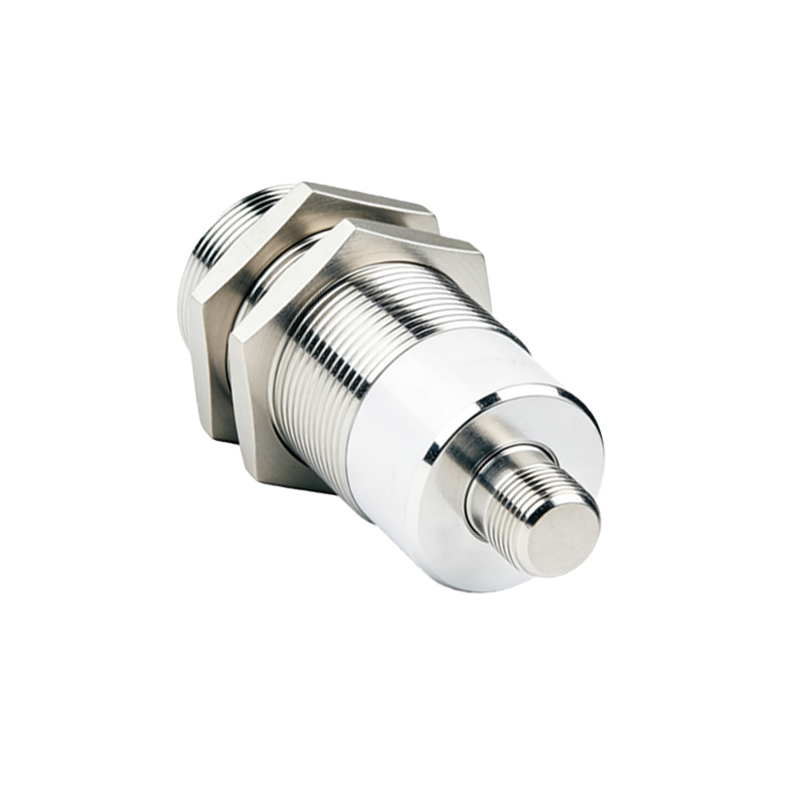
The choice of materials directly influences durability, performance, and price. Standard industrial sensors often feature nickel-plated brass or PBT plastic housings, offering a good balance of cost and resistance to common coolants and oils. For harsh environments—such as food and beverage, chemical processing, or washdown applications—sensors require stainless steel (e.g., 316L) housings and specialized sealing (IP67, IP69K). These materials and the machining or molding processes involved significantly increase the unit cost. Furthermore, the size and form factor (e.g., cylindrical, rectangular, ring-shaped) impact material usage and manufacturing complexity. A miniature sensor designed for tight spaces may require more precise tooling and assembly, adding to its price compared to a standard-sized counterpart.
Performance Specifications and Accuracy
Performance parameters are quantifiable cost multipliers. The sensing range is a key factor; a standard 5mm inductive sensor is inexpensive, but one with a 15mm or 20mm range requires a larger coil and more power, raising its cost. Switching frequency is another critical spec. A sensor rated for 1 kHz is commonplace, but high-speed applications demanding 10 kHz or more necessitate faster electronic components and optimized design, leading to a higher price. Repeatability and temperature stability are also premium features. Sensors guaranteeing micron-level repeatability or stable operation across an extended temperature range (-40°C to 85°C) involve higher-grade internal components, rigorous testing, and calibration, all contributing to the final factory price.
Output Configuration and Electrical Features
The type of electrical output is a fundamental cost differentiator. Basic two-wire AC/DC or three-wire NPN/PNP transistor outputs are standard and economical. However, analog outputs (0-10V, 4-20mA), which provide continuous distance measurement, require additional circuitry for signal conditioning and linearization, increasing the price. IO-Link, the emerging standard for smart sensors, adds a digital communication layer on top of the standard switching signal. Sensors with IO-Link functionality include a microcontroller and communication stack, offering benefits like parameterization, diagnostics, and process data, but at a notable premium over standard digital models. Other features like short-circuit protection, reverse polarity protection, and programmable teach-in functions also add incremental value and cost.
Certifications and Compliance Standards
Meeting international standards and certifications is non-negotiable for market access but adds substantial cost to the development and production process. CE marking for the European market and UL/cUL listing for North America involve testing fees and potential design modifications. For specific industries, certifications like ATEX/IECEx for hazardous areas, FDA compliance for food contact, or marine approvals require specialized materials, unique construction methods, and extensive documentation. The rigorous testing and audit processes for these certifications are factored into the sensor's price. A sensor with ATEX certification for use in explosive atmospheres will be significantly more expensive than a standard industrial model with identical sensing specs.
Order Volume and Supply Chain Considerations
Economies of scale play a decisive role in factory pricing. A purchase order for 100 units will have a much higher per