Introduction to the RY3015B Proximity Sensor
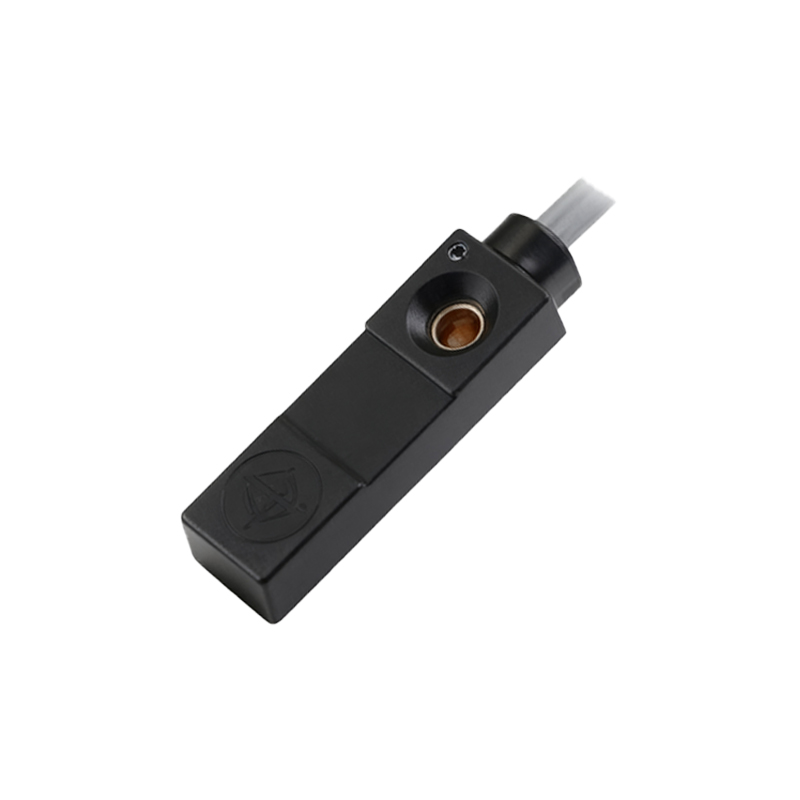
The RY3015B is a high-performance, inductive proximity sensor designed for robust industrial automation and control applications. As a non-contact sensing solution, it reliably detects the presence of metallic objects without physical interaction, making it indispensable in harsh environments where mechanical wear, dust, and moisture are concerns. Its core principle of operation is based on generating an electromagnetic field. When a metallic target enters this field, it induces eddy currents within the target, causing a change in the sensor's oscillation amplitude. This change is detected by the internal circuitry, which subsequently triggers a solid-state output switch. The RY3015B is renowned for its durability, long operational life, and consistent performance, forming a critical component in modern manufacturing, packaging, material handling, and automotive assembly lines.
Key Technical Specifications and Features
The RY3015B sensor is characterized by a set of precise technical parameters that define its operational envelope. Typically, it operates on a DC supply voltage ranging from 10 to 30 VDC, with a low current consumption, ensuring energy efficiency. Its standard sensing distance, or nominal range, is often 1.5mm, 2mm, or 5mm, depending on the specific model variant, with a guaranteed operational distance accounting for manufacturing tolerances and temperature variations. The output configuration is usually a 3-wire system, providing either a PNP (sourcing) or NPN (sinking) transistor output, compatible with standard programmable logic controllers (PLCs) and relay modules. Key features include short-circuit and reverse polarity protection, which safeguard the sensor from common wiring errors. Furthermore, it boasts a high switching frequency, allowing it to detect rapidly moving objects on high-speed production lines. The housing is typically constructed from nickel-plated brass or stainless steel, offering excellent resistance to mechanical impact and industrial chemicals.
Electrical Connection and Wiring Diagrams
Correct installation is paramount for the reliable operation of the RY3015B. The standard three-wire configuration includes a brown wire for the positive supply voltage (+V), a blue wire for the negative supply or common (0V), and a black wire for the load output signal. For a PNP (sourcing) type sensor, when a target is detected, the black output wire switches to connect to the positive supply, providing voltage to the load. The load (e.g., a PLC input) is connected between the black wire and the blue (0V) wire. Conversely, for an NPN (sinking) type, the black output switches to connect to the negative supply, sinking current from the load, which is then connected between the brown (+V) wire and the black wire. It is crucial to refer to the manufacturer's datasheet for the specific model. Always ensure power is disconnected during wiring, and use shielded cables in electrically noisy environments to prevent false triggering.
Environmental Considerations and Mounting
The RY3015B is engineered to withstand challenging industrial conditions. Its ingress protection (IP) rating, commonly IP67, signifies it is dust-tight and can withstand temporary immersion in water, making it suitable for washdown areas in food processing or outdoor applications. Operating temperature ranges typically span from -25°C to +70°C, ensuring functionality in both freezing cold and hot industrial settings. For optimal performance, proper mounting is essential. The sensor should be mounted securely to minimize vibration. It is critical to observe the specified flush-mounting or non-flush-mounting capabilities. Flush-mounted sensors can be installed embedded in metal without affecting their sensing range, while non-flush types require a clear area around the sensing face. Users must also maintain the recommended lateral and axial distances between multiple sensors to prevent mutual interference, a phenomenon known as "crosstalk."
Typical Industrial Applications and Use Cases
The versatility of the RY3015B makes it a workhorse across numerous sectors. In automated assembly, it is used for part presence verification, ensuring a component is in place before a robotic arm performs an operation. On conveyor systems, it counts objects, detects jams, or positions items for sorting and packaging. Within the automotive industry, these sensors monitor the position of cylinders, confirm the closure of doors or hoods, and control robotic welding arms. In metalworking machinery, they serve as end-of-travel limit switches for CNC machines or press brakes. Furthermore, their robustness allows them to function reliably in heavy machinery for position feedback on hydraulic cylinders. The sensor's ability to detect all metals, albeit with different correction factors for steel, aluminum, and copper, provides flexibility for diverse material handling tasks.